
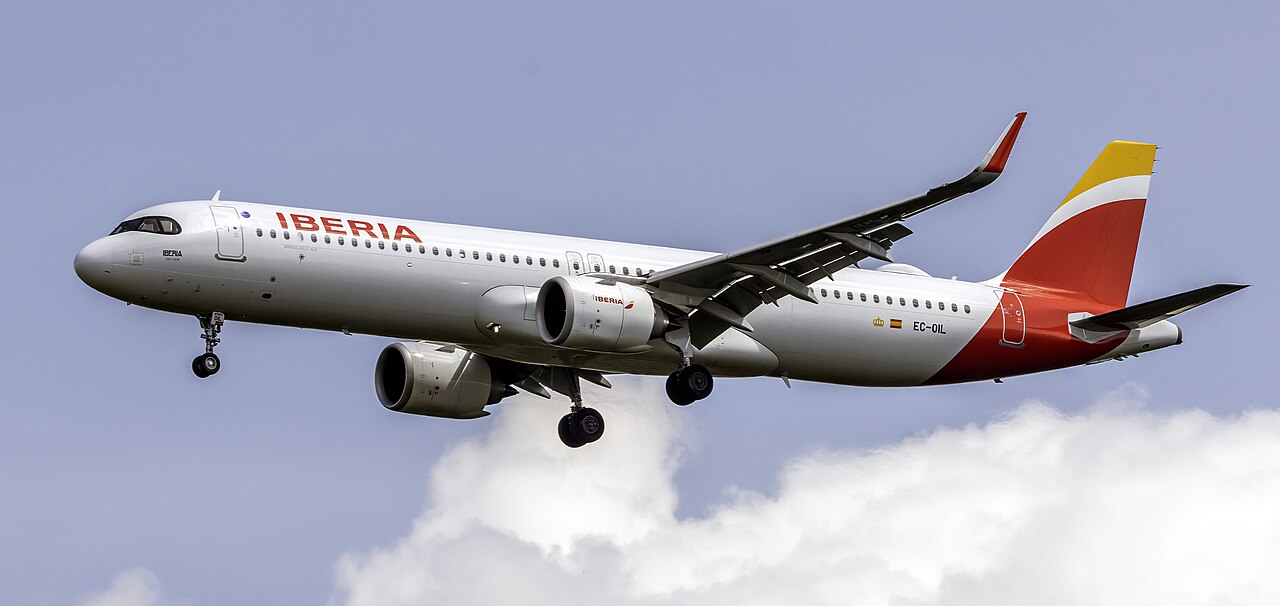
Airbus announced the delivery of Air Canada’s first A321XLR in Hamburg on April 24. Leased from SMBC Aviation Capital, it begins a planned 30-jet fleet. The handover gives the airline its first aircraft of the type to prepare for service. Air Canada plans to use it on transatlantic routes serving markets with less demand than those typically assigned large widebody aircraft.
Air Canada says fifteen aircraft will be leased and fifteen bought directly from Airbus. The first has lie-flat business-class seats, a first for the airline on a single-aisle jet. This cabin allows a premium service on long routes with fewer seats than a widebody. The carrier places the type within its fleet renewal plan.
Airbus technical data puts the A321XLR’s maximum range at 4,700 nautical miles. A permanent 12,900-litre rear centre tank and higher maximum takeoff weight help deliver that reach. The additional fuel permits longer sectors in a single-aisle airframe. Actual airline range will depend on each route’s payload and operating conditions, rather than matching the catalogue maximum on every flight.
The network strategy preceded delivery. In November 2025, Air Canada planned to put the A321XLR on Montréal–Berlin three times weekly from July 2026. That schedule illustrates the aircraft’s role: opening a city pair without assigning a widebody every day. The jet gives planners an intermediate combination of capacity and range for long routes with thinner demand.
The rear tank also matters to route economics. An Airbus production note from 2020 explains that it sits inside the fuselage behind the main landing gear and frees more underfloor space than several additional tanks. That space can carry baggage and freight on long sectors. The XLR therefore combines range, seats and hold capacity; Air Canada can put that balance to work on its first routes.