
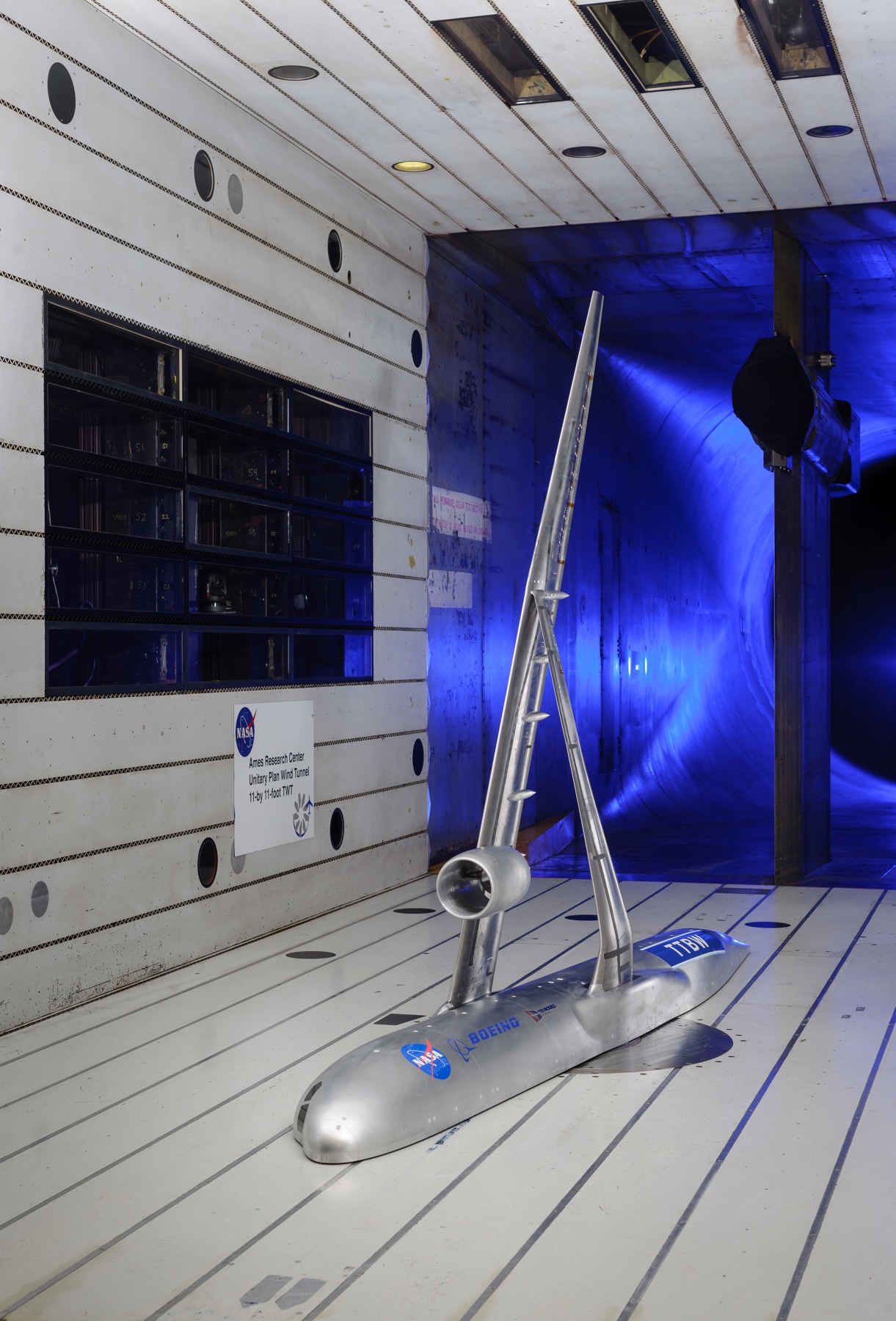
NASA said on April 29 that it and Boeing had completed another wind-tunnel campaign on the SUGAR truss-braced wing concept. The tests took place in December 2025 at QinetiQ’s Farnborough facility. A half-span airliner model was mounted on the tunnel floor so researchers could measure airflow and aerodynamic loads.
A long, thin wing can reduce drag but needs structural support. Aerodynamically shaped struts carry part of that load beneath the wing. In this test, engineers adjusted slats, flaps and other moving surfaces to reproduce the high-lift settings used at lower speeds during takeoff and landing, both decisive phases for a commercial aircraft.
SUGAR belongs to NASA’s research on more efficient subsonic aircraft. The Subsonic Flight Demonstrator programme describes a staged effort to mature technologies before they reach a complete aircraft. Wind-tunnel work supplies aerodynamic data for design decisions; it is a different step from flying or producing an airliner.
Thin wings raise questions beyond drag. Earlier work at NASA Glenn examined ice accretion on this design because it can affect lift and safety. Farnborough’s aerodynamic data therefore sits alongside icing and structural evidence. A cruise benefit only matters if the aircraft also retains acceptable margins in other flight conditions.
The work also covers the wing’s structure. At Armstrong, engineers loaded and vibrated a ten-foot test article to compare calculated and measured strains. Those results complement Farnborough’s aerodynamic data: a long wing must provide low-speed lift while keeping its structural response under control. NASA is still comparing models with tests before an airframer can settle on a commercial configuration.