
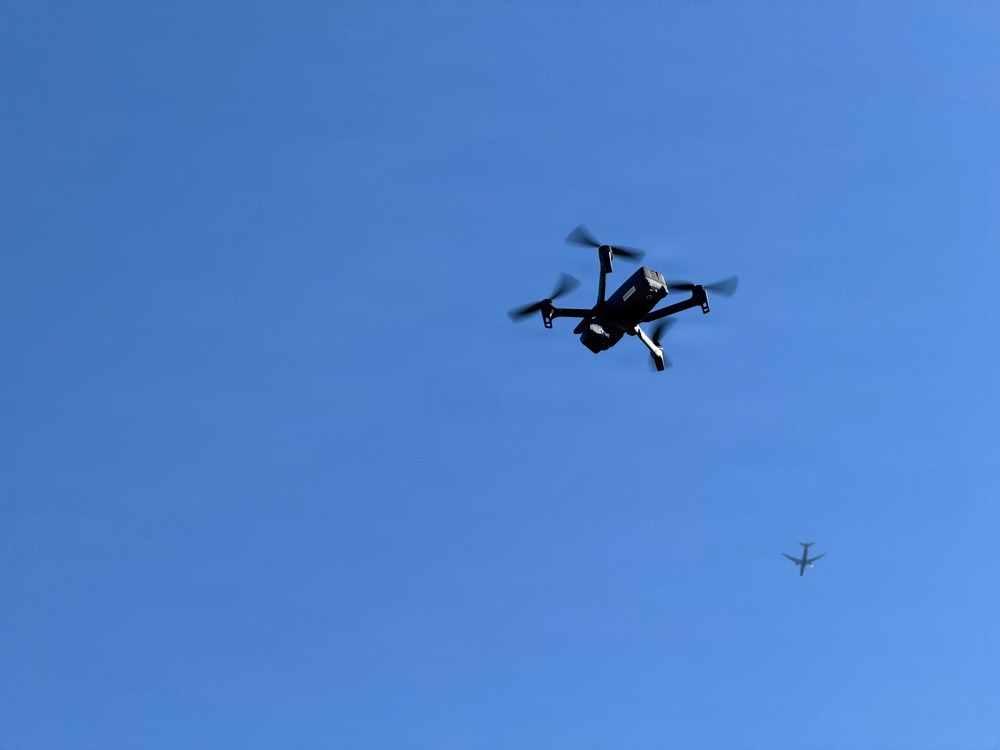
NASA reported on April 30 an exercise held on February 18 in Texas with the FAA, responders and companies. Its scenarios sought to give a police, fire or rescue drone priority in airspace shared with commercial deliveries. Other drones altered their paths to clear the space needed for the emergency flight.
NASA’s 2019 Texas UTM trials had already examined priority. Their report separates the status of a first-response mission from the temporary priority assigned to a drone in distress or low on battery. In two scenarios, observers tracked how priority information reached operators through traffic-management tools and other channels. The February 2026 exercise brought the same coordination problem into airspace shared with deliveries.
The demonstration builds on low-altitude drone traffic management. In the Dallas area, NASA says commercial operators already share planned routes and flight data through tools derived from its UTM research. The new exercise adds an operational rule: when an urgent mission appears, the system needs to communicate its priority early enough for other users to avoid conflict.
The FAA places drone deliveries within a safety framework that includes flights below 400 feet and eventual use of UTM to coordinate multiple operations beyond the pilot’s sight. Parcel delivery and emergency response have different requirements. The test addresses their coexistence in already-used airspace, rather than assigning the entire sky to one type of operator.
NASA performance reporting also describes portable airspace-management tests for wildfire response. Together with the Texas exercise, that points to two linked needs: planning routine traffic and making an unplanned emergency visible to other users. NASA will use the exercise data to develop the tools further with the FAA and operators.