
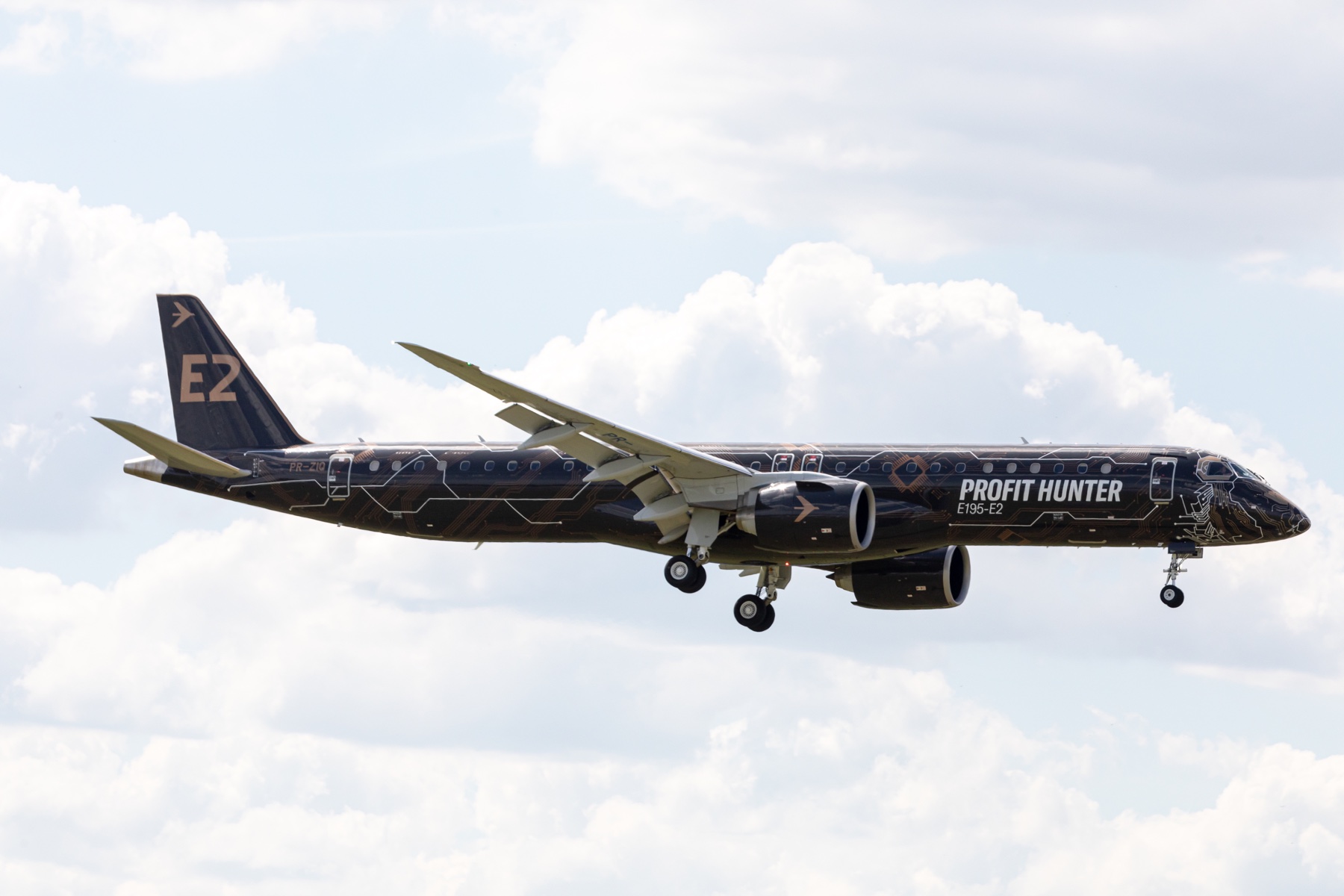
On 23 October, Embraer reported a record $35.7 billion third-quarter backlog, up 3% since June and 14% year on year. Commercial jets account for $15.8 billion, business aircraft $8.2 billion, defence $6.1 billion and services $5.6 billion. Backlog records commitments to fulfil, not deliveries or revenue earned.
In commercial aviation, Abra Group illustrates the distinction between a firm sale and commercial potential. Its July agreement covers 20 ordered E195-E2 aircraft plus ten options and fifteen purchase rights: as many as 45 if the additional rights are exercised. The largest E2 is intended to let group airlines match capacity to regional routes. Initial deliveries are expected from the final quarter of 2027. The 25 conditional aircraft should not be described as secured deliveries.
Production provides another view of that backlog. Embraer delivered 66 aircraft in the third quarter: 22 commercial jets, 41 business jets, one KC-390 and two A-29s. That was 6% more than a year earlier, but it is a quarterly output beside orders to be filled over several years. The 22 commercial deliveries split equally between E175 and E2 aircraft. Moving firm orders through factories and on to customers will determine how the backlog becomes revenue and whether promised schedules can be met.
Defence growth includes Colombia’s August order for two KC-390s. The contract also includes mission equipment, integrated support and industrial offsets. The military transport can carry troops and freight, airdrop loads, refuel other aircraft and support humanitarian relief. One order therefore fills both assembly and support work. It helps explain why defence backlog is up 56% year on year without implying that the aircraft included in it have already been delivered.
Services also represent contracted future work. Renewal of component support for Australian carrier Alliance Airlines’ E190 fleet concerns repairs and parts availability, not another aircraft sale. Embraer says this is Australia’s largest E190 fleet. As commercial and military aircraft enter service, maintenance agreements extend the industrial relationship beyond initial delivery. That is why the $5.6 billion services backlog should be read separately from airframes still to be built.