
The UK government and Rolls-Royce announced a joint £2.5 billion, ten-year programme on 28 October to develop new aircraft-engine technologies. It targets future narrowbody jets, the aircraft category serving many short- and medium-haul routes. The industrial policy aims to restore a UK position in their propulsion supply chains.
Rolls-Royce plans first to develop research and testing capacity, including an engine demonstrator. The company says delivery of the initial stages still depends on a final agreement with the government. Its projection of 3,300 UK jobs supported by late 2029 rests on that initial phase. Entry into the narrowbody market is the longer-term industrial goal.
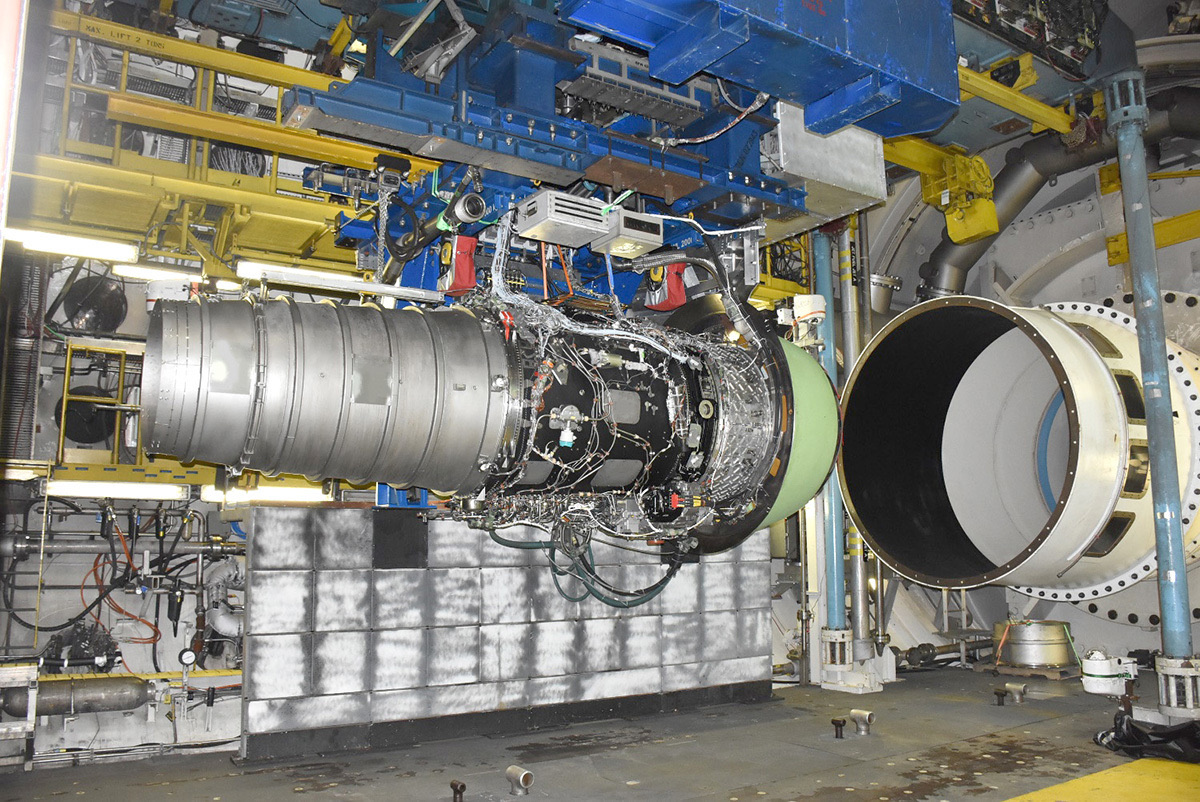
The effort builds on UltraFan 30, a demonstrator sized for narrowbody thrust and scheduled for ground tests in 2028. In March, Rolls-Royce announced €64 million in European funding for its UNIFIED consortium, with partners in six countries, to mature the architecture. That European work brings design and test expertise to the UK programme.
Rolls-Royce combines a composite fan, power gearbox and improved combustion in UltraFan. For UltraFan 30, the company targets 20% lower fuel burn than engines currently in service. Ground tests will show how those elements work together and provide data for designers of future aircraft. This is the engineering purpose of the demonstrator.
CFM International, the GE Aerospace–Safran joint venture, is pursuing RISE, which studies an open fan, compact core and hybrid systems. The companies are exploring different architectures for the next narrowbody generation. The UK investment strengthens Rolls-Royce’s ability to present its technology when aircraft makers prepare future programmes.
Documents and references
- UK Department for Business, Innovation, Science and TradeGovernment and Rolls-Royce agree £2.5bn programme
- Rolls-RoyceTransformative jet engine technology programme
- Rolls-RoyceUNIFIED partnership for UltraFan 30
- Rolls-RoyceThe next evolution of aviation: UltraFan
- CFM InternationalOpen Fan advances toward flight test demonstration