
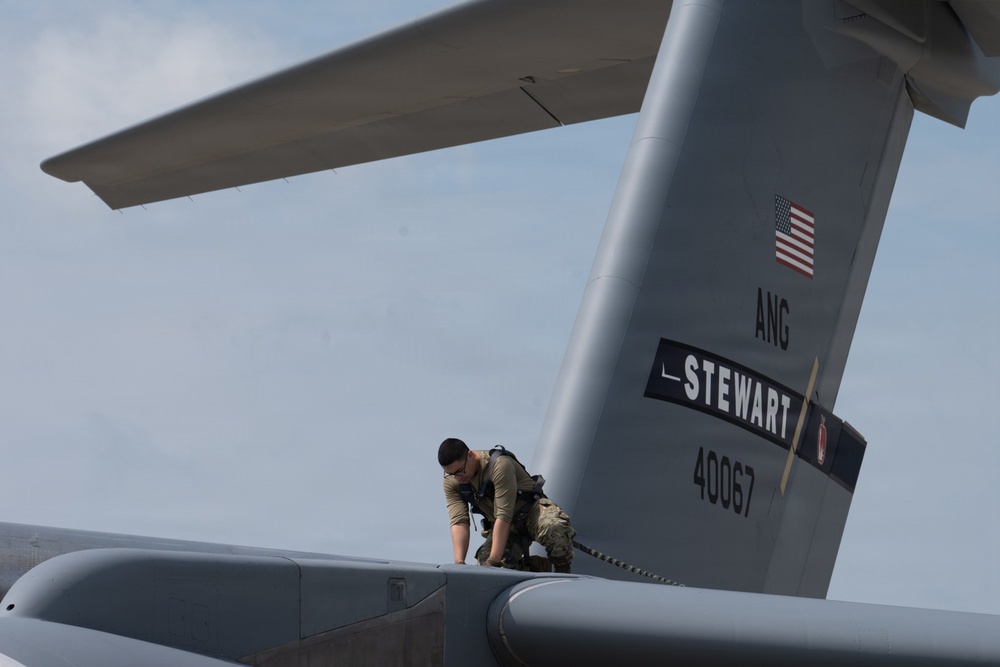
At San Antonio, Boeing Global Services is developing C-17 inspections using autonomous drone flight, photographs and anomaly-detection software. Advanced Aircraft Inspection creates a digital visual record for technicians. Boeing says it has validated core procedures ahead of wider use. The approach should reduce reliance on lifts and walking on wings during these checks.
The aircraft is a high-wing, four-engine heavy transport. It carries troops or oversized cargo into small airfields and also supports humanitarian missions. Boeing lists 275 C-17s in service worldwide and provides sustainment, including depot maintenance and base support. The size of the airframe and the need to return aircraft to service make a repeatable, archived exterior inspection particularly useful.
Imaging the aircraft skin addresses only part of the maintenance task. In April Boeing described its Aircraft Data Reasoner, which analyses onboard system data to identify signs of failure and help position spare parts. That tool follows component health, while the drone records a visible surface. The methods generate different information for the teams diagnosing faults and planning repairs.
Planning heavy maintenance visits is another effort. Since July Boeing and Pelico have been assessing a platform that links supply, engineering and depot operations for C-17 maintenance. It targets parts shortages and steps that delay aircraft return. The system is intended to give teams a shared view of priorities and constraints so they can adjust the work schedule.
The work belongs to the sustainment of a fleet whose production ended in 2015. Boeing noted in September that C-17s receive depot maintenance, on-base support and successive upgrades. A photograph in that account already showed a drone inspecting an aircraft. Aerial inspection joins other efforts to extend the transport’s service life within a support programme that also covers engineering and logistics.