
GE Aerospace’s Colibrium Additive announced a $31 million contract on April 22 for NAVAIR’s additive manufacturing initiative. Its purpose is to generate the data needed to test, qualify and certify metal parts for naval aviation. The package includes six machine-and-alloy combinations, a thin-wall fatigue study, four printers and training for the teams that will use them.
The order was awarded on March 27, according to the federal notice reproduced by GovTribe. It specifies three M Line systems, one M2 Series 5 and licensed data covering material properties, manufacturing instructions and selected specifications. Those records matter because a printed part’s shape alone does not establish its strength, repeatability or suitability for aircraft service.
The M Line separates laser processing from the station that handles powder and upstream and downstream work. Colibrium describes an inert-gas powder cycle that limits exposure to oxygen and moisture. The architecture is intended for repeatable production at scale. For NAVAIR, machine settings must be tied to each tested alloy so that successive builds deliver comparable properties.
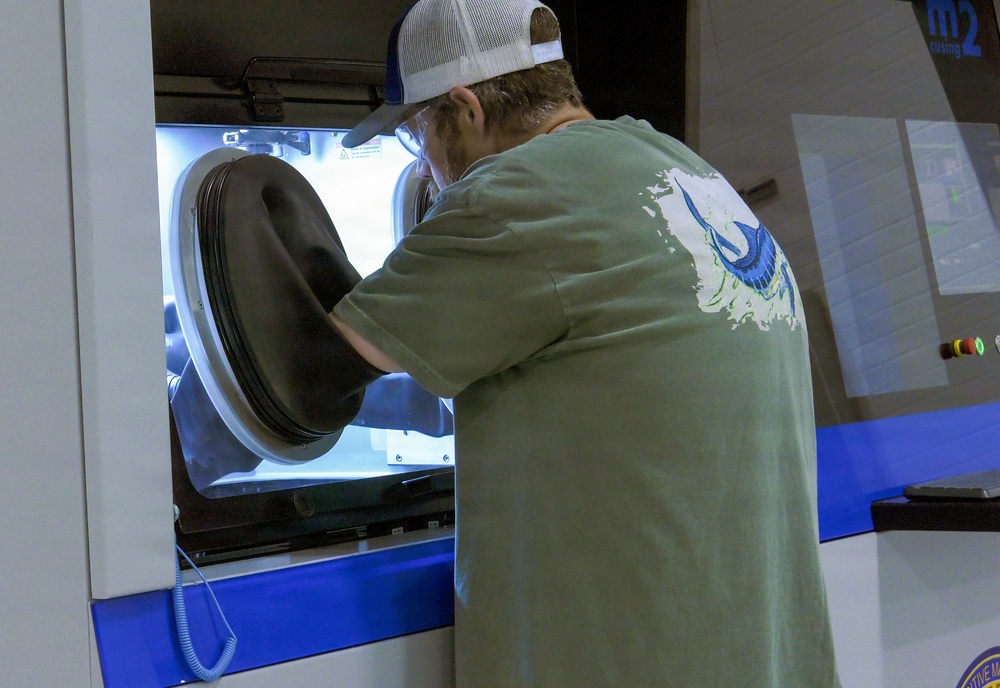
The M2 Series 5 is the other printer platform in the order. Colibrium positions this laser powder-bed machine for part quality and repeatability in regulated sectors. Using it alongside the M Line lets engineers evaluate several process-and-material combinations instead of assuming that one digital design behaves identically on every printer. The separate fatigue work addresses thin-walled shapes in particular.
NAVAIR already used additive manufacturing for urgent maintenance needs. In 2025, its teams helped maintainers reproduce an F-15 cooling duct unavailable through the supply chain after technical approval. The Colibrium order aims to make metal production more systematic: licensed data, documented processes and trained staff should allow a result to be repeated beyond a single workshop.
Documents and references
- GE AerospaceColibrium Additive awarded NAVAIR contract
- GovTribeAward Notice for NAVAIR Additive Manufacturing Capability
- Colibrium AdditiveM Line L-PBF Printer
- Colibrium AdditiveM2 Series 5 L-PBF Printer
- NAVAIRNAVAIR enables cross-service collaboration with additive manufacturing