
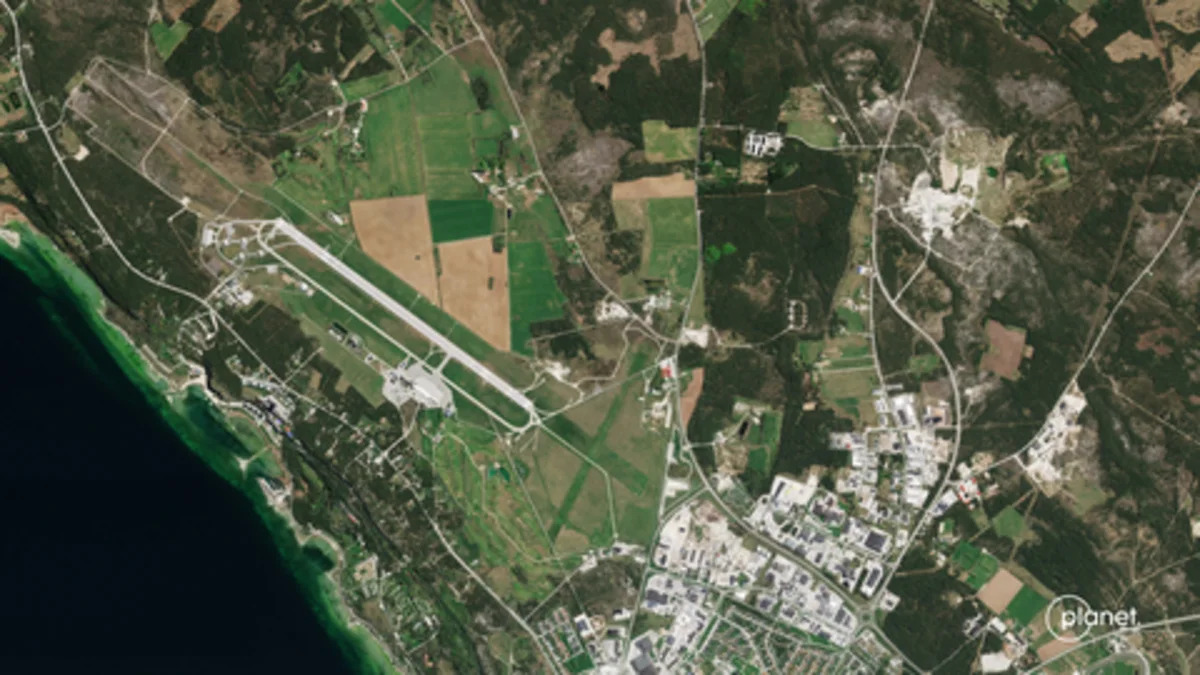
The Swedish Armed Forces announced on May 3 the launch of their first operational military reconnaissance and surveillance satellite. Built by Planet Labs, it left Vandenberg on a Falcon 9 at about 09:00 Swedish time. It is designed to collect high-resolution images from low Earth orbit, adding a nationally controlled source to the information available to Swedish commanders.
Rear Admiral Anders Sundeman, the armed forces’ space chief, linked the capability to monitoring difficult areas including the Arctic and to a stronger operational picture for NATO. Orbital imagery becomes useful only through tasking, reception and analysis. The Swedish air force is therefore establishing a space operations centre to control satellites and assemble a picture of activity in space itself.
Planet says the flight added three high-resolution Pelican spacecraft, including the one for Sweden’s military. This commercial platform gave the country a dedicated orbital capability roughly four months after signing. The model reduces the need to build a complete satellite manufacturing chain alone, while creating an industrial dependence on the American supplier.
Planet’s nine-figure agreement with Sweden announced in January covered a suite of satellites, data and awareness services. The May launch moved that contract to its first physical asset in orbit. Planet presents dedicated satellite services as a repeatable offer for governments seeking control over their imagery.
The rocket also carried CAS500-2 and other payloads, Spaceflight Now reported. For Sweden the key change is a national intelligence asset and its place in NATO operations. The number of fellow passengers describes the launch service, not the military capability Sweden will obtain from its own spacecraft.
Documents and references
- Swedish Armed ForcesFörsvarsmaktens första operativa satellit
- Planet LabsPlanet Launches Three Additional High-Resolution Pelican Satellites
- Planet LabsPlanet Signs 9-Figure Deal with Sweden
- Spaceflight NowSpaceX launches South Korean Earth observation satellite, plus 44 more payloads
- Zone MilitaireLa Suède se dote de son premier satellite militaire d’observation