
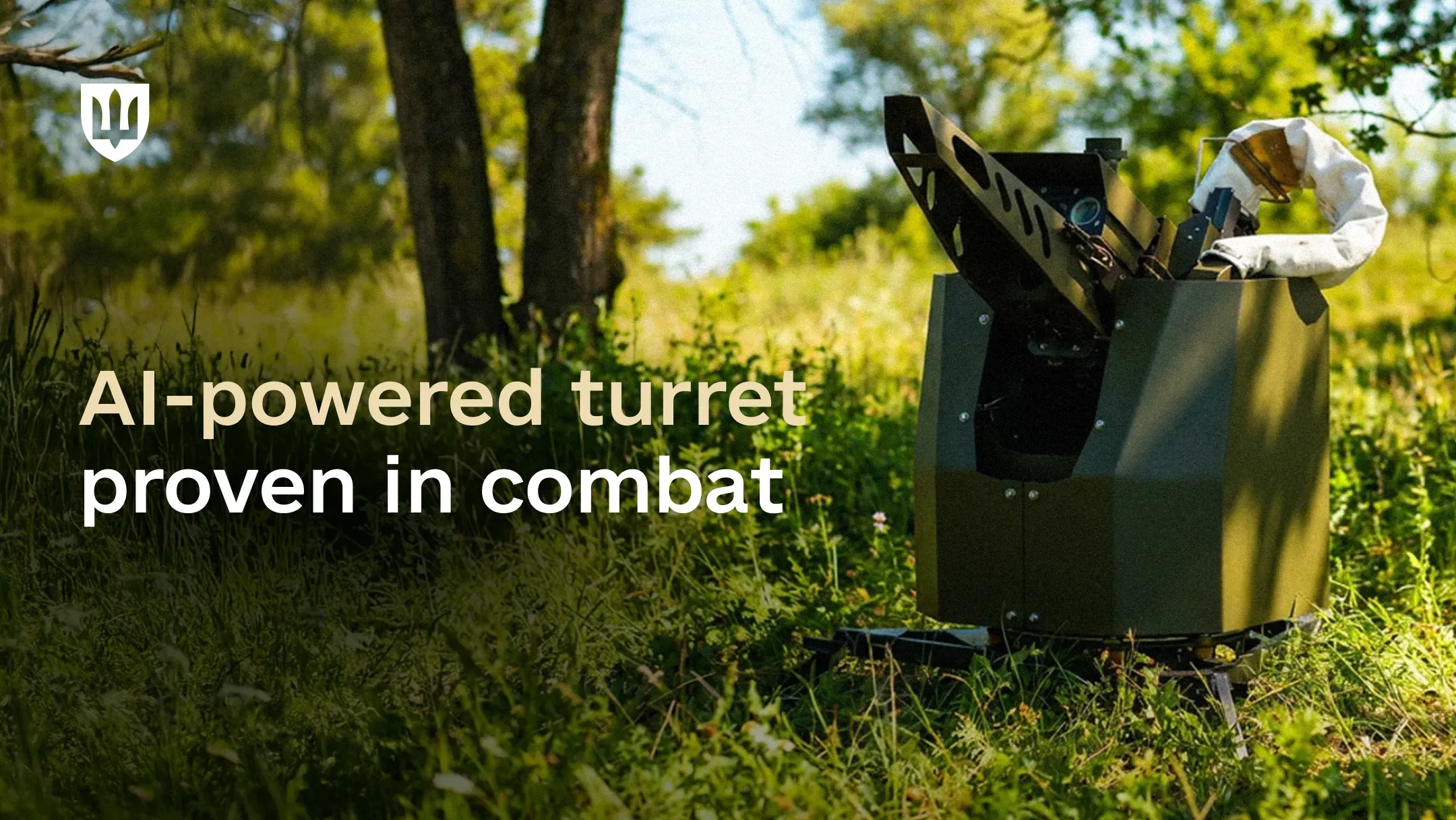
Defence publication Militarnyi reported on 9 May that more than ten Ukrainian units were using a compact counter-drone turret from the Brave1 cluster. It detects a target, tracks it and calculates its path; an operator confirms engagement with one button. The K-2 Brigade was its first combat user, according to the defence-ministry information reported by Militarnyi.
The system addresses, among other threats, small FPV drones controlled through fibre-optic cable. In 2025 the ministry explained that this link carries video and commands without relying on radio, making conventional electronic jamming ineffective. Against a fast target near troops, defence therefore needs detection, tracking and physical interception rather than depending on disruption of its signal.
Brave1 connects developers, armed forces and public buyers through testing and deployment. Its website describes access to military units, evaluation and support for defence companies as cluster functions. The 9 May announcement shows that route from prototype to field use: K-2 soldiers employed the turret before its adoption in other front-line sectors.
The requirement is drawing different approaches. In February, NATO–Ukraine centre JATEC listed a Canadian radar, a US Sentradel autonomous turret and a Ukrainian DONS automated turret among solutions selected for the fibre-optic FPV challenge. These projects show competition between sensors and effectors.
Deployment fits an air-defence effort using different effectors. On the same day Kyiv Post described an interception by Wild Hornets drones and another from an unmanned naval platform. The Brave1 turret supplies a ground-based response that can engage a target during the short window in which it approaches troops.
Documents and references
- MilitarnyiUkraine Develops AI-Controlled Turrets to Shoot Down Drones Using Fiber Optics
- Ukraine Ministry of DefenceDefense Forces arsenal reinforced with new interceptor drones
- Brave1Brave1: about the cluster
- Ukraine Ministry of DefenceAI solutions against Shahed drones, a drone wall, and autonomous defence systems – one year of JATEC
- Kyiv PostUkraine Deploys AI-Powered Turrets to Counter Fiber-Optic Drones
- Ukraine Ministry of DefenceOver 10 military units are now equipped with a Ukrainian AI-powered turret