
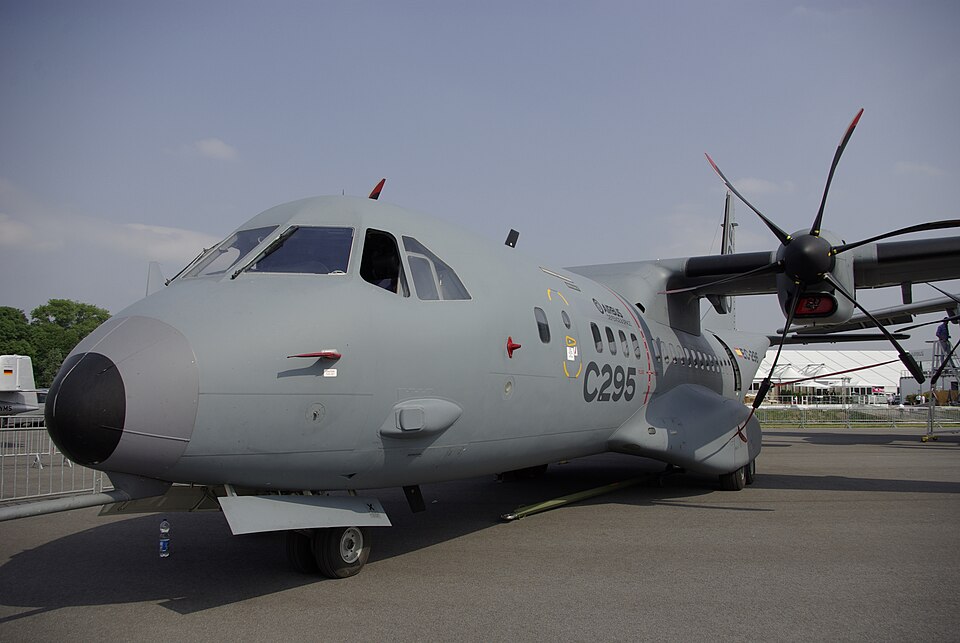
The Royal Thai Air Force has acquired two Airbus C295 aircraft in tactical transport configuration, the manufacturer announced on 22 May. They are assigned to the 46th Wing at Phitsanulok, with assembly in Seville and the first delivery planned for the first half of 2029. The order takes the type into a second Thai service, after three C295s operated by the army since 2016.
The C295 is a twin-engine transport designed to move personnel, pallets and supplies between main bases and forward strips. Its ability to use short or unprepared runways matters where a heavier aircraft cannot land. Airbus describes an adaptable cabin for palletised freight, troop transport and medical evacuation. Thailand’s order concerns this logistics role rather than the maritime-patrol variants.
The new order extends a local presence already supported by Thai Aviation Industries. Airbus says the partner helps maintain the army’s C295 fleet under its local support arrangements. For a small fleet, availability and technical skills matter as much as nominal aircraft capacity. Adding two aircraft to the air force broadens the national user base while leaving the army and air force with separate chains of command.
C295 production is concentrated in Spain. Airbus conducts engineering at Getafe, prepares major fuselage sections at Tablada and assembles the aircraft on its San Pablo Sur final line in Seville. That arrangement means the Thai order feeds an established industrial line rather than creating a new assembly site. The period to 2029 also allows preparation of crews, parts and support before aircraft arrive.
In tactical airlift, the C295 sits alongside aircraft such as Leonardo’s C-27J Spartan. Leonardo lists a 7.8-tonne tactical payload and a cabin suited to pallets and vehicles. Both types address the need to carry supplies into constrained airfields, with different dimensions and performance. The published Thai order does not identify the C-27J as a bidder; the comparison places the selected aircraft within its operational category.