
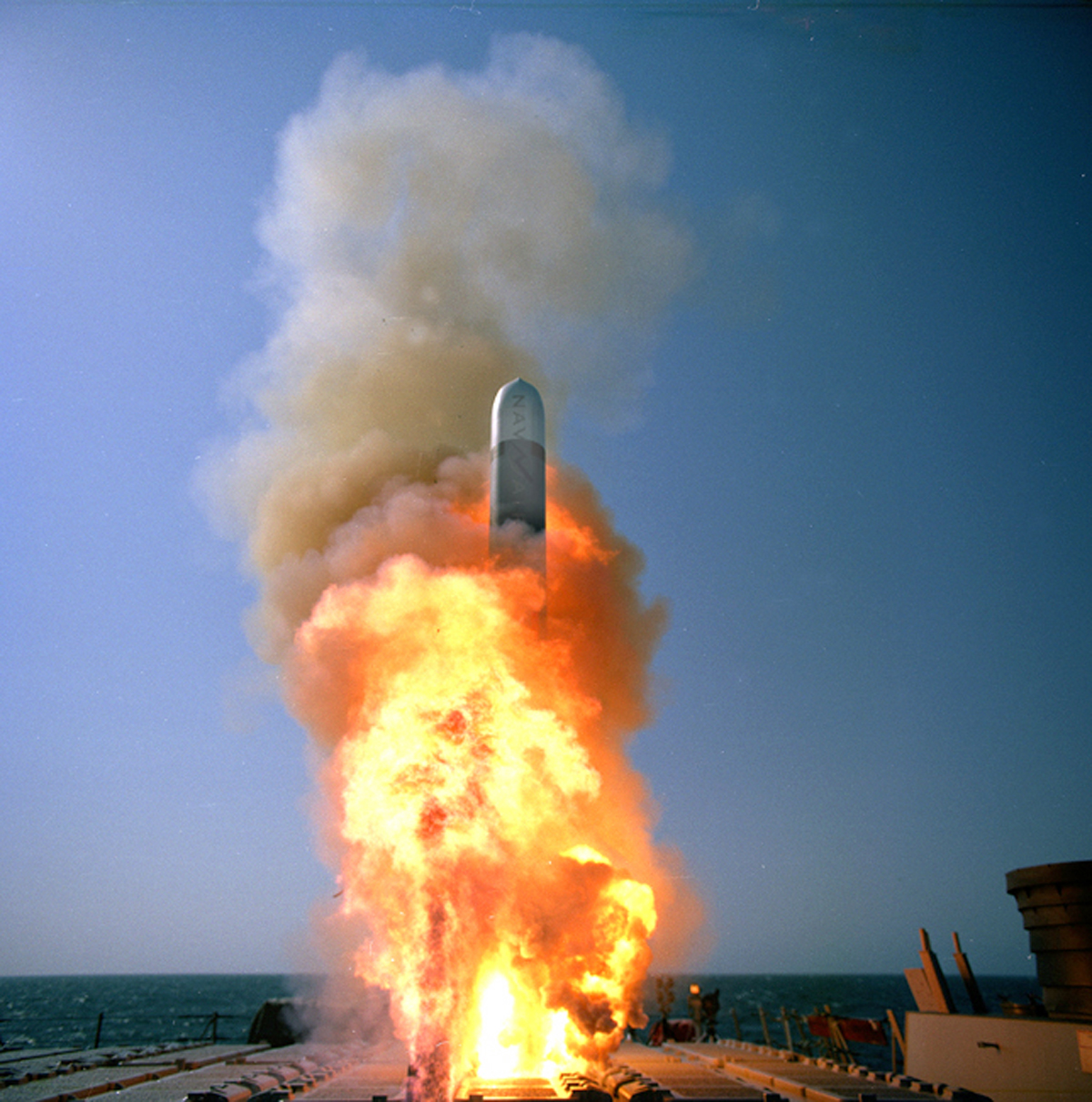
On 17 August the US Navy announced a $22.9 billion Raytheon contract to accelerate Tomahawk production. RTX says the arrangement spans seven years and supports a ramp to more than 1,000 missiles a year, alongside related support. That figure is a target annual rate, not the total quantity ordered or a report of missiles delivered.
The Navy–Raytheon relationship has a long history. In 2004 NAVAIR announced a $1.6 billion multi-year award for up to 2,200 Block IV Tomahawks. The Navy then emphasised industrial visibility and a nominal rate of 38 missiles a month. The 2026 programme involves different variants, costs and requirements; comparing the headline values directly or deriving a unit price from them would mislead.
RTX says it delivered three times as many Tomahawks in the first half of 2026 as in the same period of 2025. That comparison shows acceleration, but without absolute totals it cannot establish the annual rate already achieved. RTX cites investment in facilities, workers and hundreds of smaller suppliers. Their output must scale alongside final assembly. A larger final-assembly line would have little effect if specialised inputs arrived late or failed acceptance checks.
Tomahawk is an established but evolving family. US naval aviation’s product sheet distinguishes Block V from planned maritime-strike and warhead variants. Producing more is therefore more than repeating a fixed design: configurations, components and in-service support change while the fleet seeks to replenish stocks.
The US Navy fact file shows what that production rate must support: its attack submarines can strike ashore with Tomahawk. On Virginia-class boats, the tubes introduced with Block III each hold six missiles; an additional payload module is planned from the second Block V boat. Production must therefore support platforms with evolving payloads as well as missile stocks.
At a September investor conference, RTX’s chief executive said the Tomahawk agreement and other frameworks were not yet included in its backlog. He argued that their long horizon gives smaller suppliers the visibility needed to invest. That accounting point does not erase the August award; it underlines that the contract headline is not revenue already earned.
Documents and references
- US NavyUS Navy and RTX accelerate Tomahawk production
- RTXRaytheon awarded seven-year Tomahawk contract
- US Naval Air Systems CommandTomahawk product information
- US NavyAttack submarines fact file
- NAVAIRUS Navy awards Tomahawk Block IV multi-year contract
- RTX / LSEGRTX Corporation at Morgan Stanley Laguna Conference