
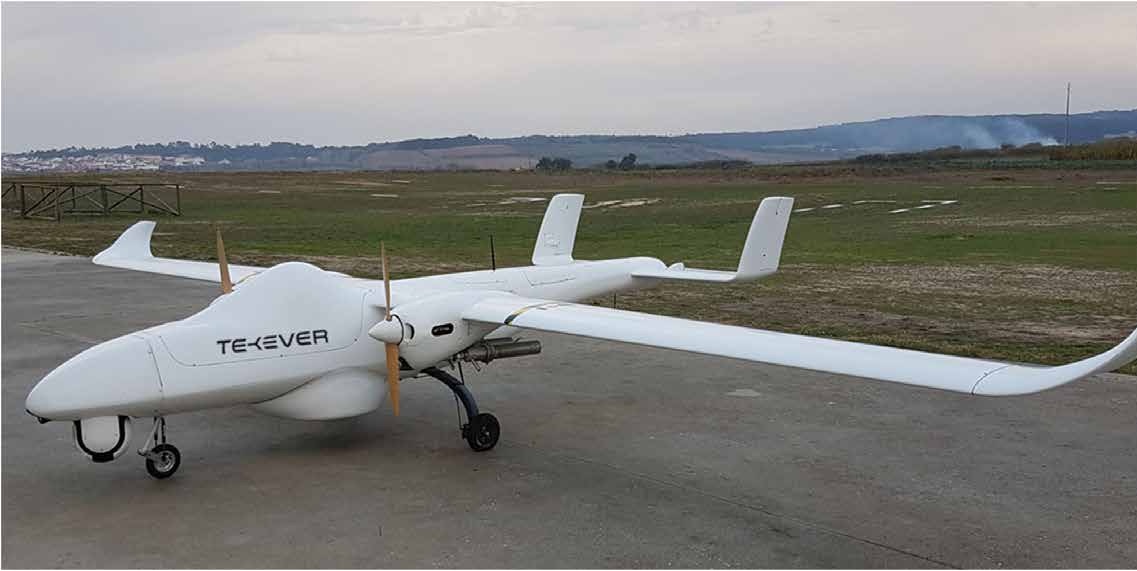
Britain’s defence ministry announced on 16 September a contract with Tekever for AR5 drones worth up to £400 million. The initial order covers six long-endurance surveillance aircraft; the total could rise to 24 by 2029. AR5 is intended to replace Watchkeeper, in service since 2014. A separate purchase covers over a thousand small drones. Those are different contracts serving different surveillance distances.
AR5’s selection had already been made public on 25 July. The government then described a possible ten-year deal and an initial batch of six aircraft, before the formal September award. The sequence matters: neither the 24-aircraft ceiling nor the financial cap is an immediate delivery or payment. Selection must be converted into manufacturing, support and integration with army units. The September step gives that transition a contractual basis.
Production is intended to rely on Tekever’s new factory in Swindon. Announced in 2025, the site was expected to open in 2026 as part of the company’s investment in Britain. The ministry also places AR5 within a domestic drone ecosystem involving testing and skilled employment. For the customer, the industrial value will depend on output pace and the ability to support aircraft throughout the contract. The factory announcement preceded the army’s formal award.
At the Defence Vehicle Dynamics exhibition, minister Luke Pollard described AR5 as the persistent-surveillance element of a mix that also includes smaller, faster-deploying drones. The two tiers serve different observation needs: sustained intelligence for commanders and immediate awareness for soldiers near the front. That division explains the Watchkeeper replacement without reducing Britain’s modernization to one aircraft type. The separate small-drone contracts form part of the same broader army effort.
Britain’s drone strategy had already stressed connecting uncrewed systems to military networks and speeding innovation cycles, drawing lessons from Ukraine. The AR5 contract puts that approach into a programme lasting several years: sensors, data links, training and support will matter as much as the airframe. The first six aircraft will provide an early measure of how an industrial policy becomes usable capability. Follow-on quantities remain tied to the programme’s subsequent decisions and delivery pace.
Documents and references
- UK Ministry of DefenceNew spy drones for the Army
- UK Ministry of DefenceFleet of spy drones to equip British soldiers
- UK Ministry of DefenceNew drone factory in Swindon
- UK Ministry of DefenceLuke Pollard speech at Defence Vehicle Dynamics 2026
- UK Ministry of DefenceDefence Drone Strategy