
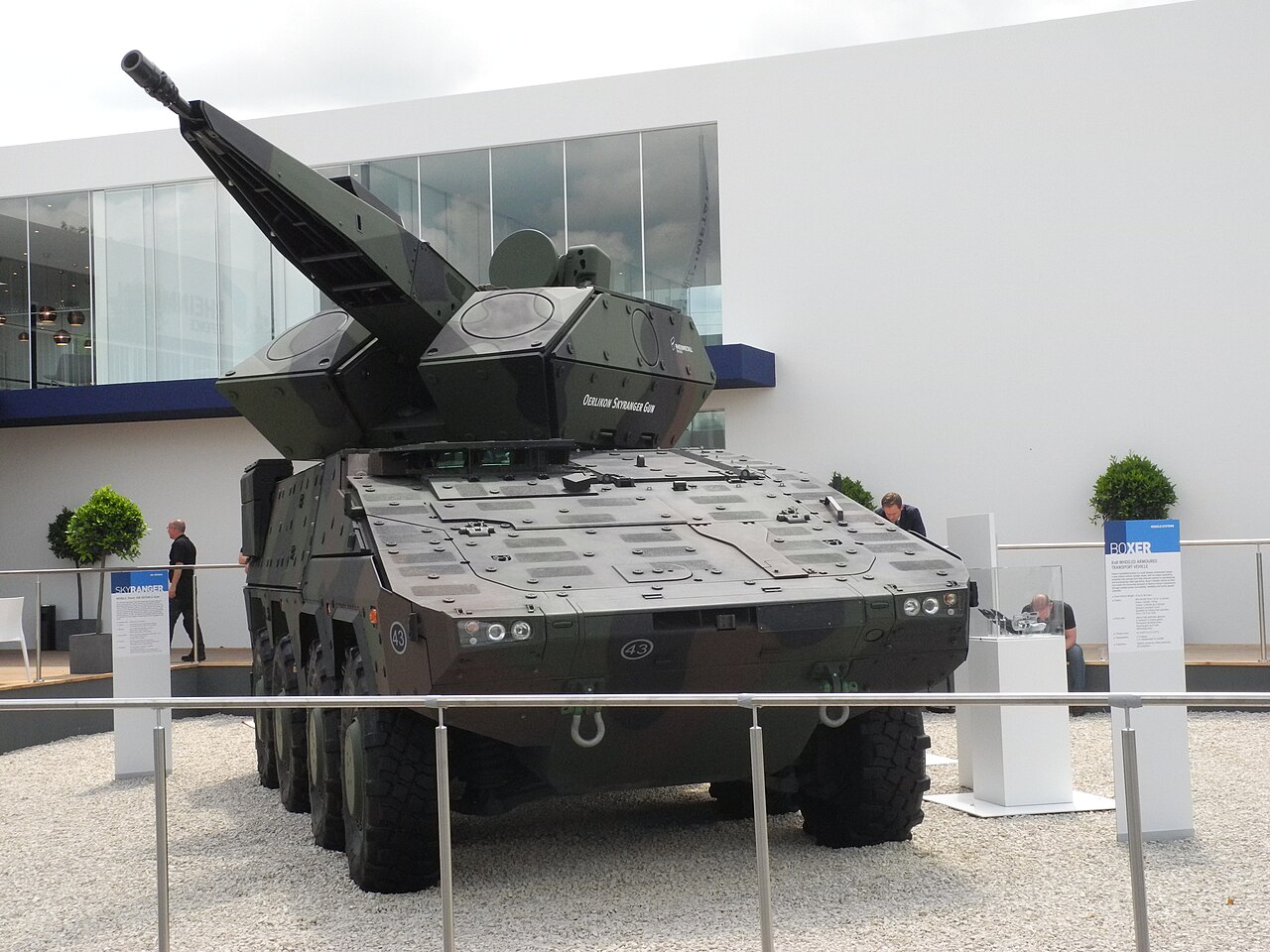
On 23 September, Rheinmetall says it has delivered the Leopard 1-mounted Skyranger 35, without specifying quantities. The anti-aircraft gun joins its Ukrainian offering alongside Gepard, Skynex and their ammunition supplies.
The programme benefits from European funding. An order announced in October 2025, valued in the hundreds of millions of euros, was to be financed by an EU state using proceeds from frozen Russian assets. Rheinmetall Italia was assigned manufacturing and integration, making the programme a multinational industrial undertaking.
The Gepard experience illustrates the supply challenge. In January 2025, Rheinmetall announced a further order for 180,000 rounds, funded by Germany, with deliveries scheduled from 2026. The manufacturer had previously rebuilt a production line in 2023: returning vehicles to service also required restarting the supply of consumables.
Demand extends beyond Ukraine. At Eurosatory in June, Rheinmetall highlighted German and Austrian orders for Skyranger 30. It said it intended gradually to expand annual turret capacity, then assessed at between 70 and 100, to as many as 400. That industrial scale remains a stated objective.
Manufacturers are also developing cheaper munitions. In June 2025, Kongsberg signed a memorandum with a Ukrainian partner to develop cheaper missiles, produced in volume and capable of integration with NASAMS. Norway is funding development; this is a separate project from systems already delivered.
On 3 September, Zelenskyy called for faster work on interceptors against jet-powered Shaheds, with prototypes still under development.
London pledged £100 million through PURL on 8 September, for Patriot missiles and other air-defence equipment before winter.
The common thread is industrial: maintaining supplies while developing new capacity. These programmes commit suppliers over a period that extends well beyond the initial delivery of equipment.
Documents and references
- RheinmetallRheinmetall: A powerful partner at Ukraine’s side
- RheinmetallRheinmetall to supply Leopard 1 Skyranger 35 to Ukraine – order value in the three-digit million Euro range
- RheinmetallReplenishment for air defence: Rheinmetall delivers 35mm-ammunition for anti-aircraft gun Gepard to Ukraine
- RheinmetallRheinmetall to showcase its cutting-edge Skyranger air defence system at Eurosatory 2026
- KongsbergKONGSBERG to develop missiles and drone boats in Ukraine
- Présidence ukrainienneProgramme d’intercepteurs : réunion du 3 septembre
- Ministère britannique de la DéfenseAide antiaérienne britannique pour l’hiver