
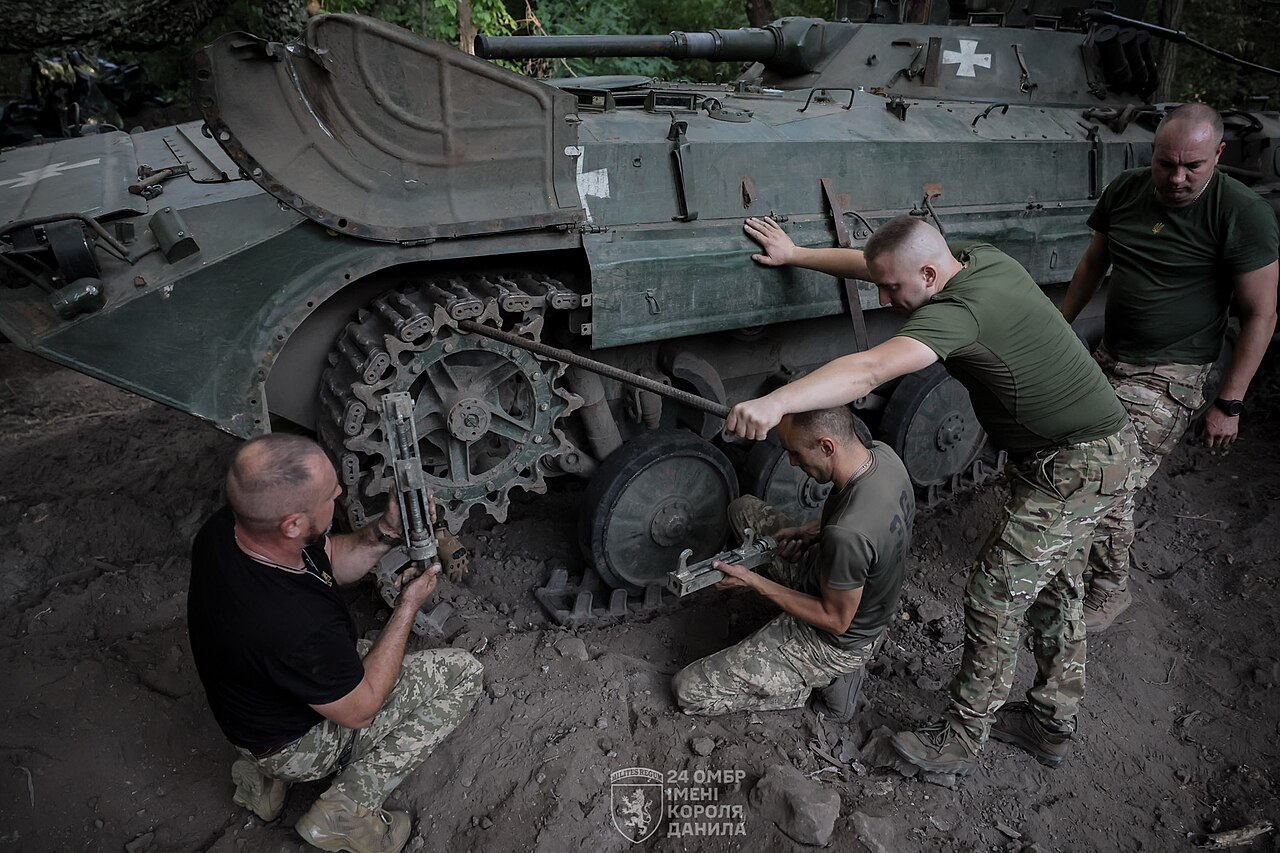
In a review published on September 27, Ukraine’s National Guard describes how war has reshaped technical support. Drones, electronic-warfare equipment, communications and independent power supplies now join conventional vehicles and weapons. Each family calls for different components, skills and maintenance intervals. The practical goal is to keep equipment available to units instead of waiting for a breakdown before acting.
Resources also move through Ukraine’s Digital Logistics Management System, known as ULZ in Ukrainian and DLMS in English. The military put the SAP-based platform into full operation in January after a pilot. It covers ground equipment, drones, electronic warfare and supplies, among other areas. The ministry then reported more than 1,000 military units using it, a figure for the wider system rather than the National Guard alone.
The link to the Guard began with the command of its 1st Azov Corps. In January, the Defence Ministry said its requests and allocation decisions could be handled in the same tool as those of the army’s Logistics Forces. The organisations answer to different ministries, so replacing paper exchanges is intended to shorten the path from request to allocation and delivery. Rollout to subordinate units was still planned at that stage.
In February, the ministry announced another step: digital tracking of vehicles from procurement through depots to units. It listed armoured ambulances, trucks, pickups and other vehicles. Shipments and receipt confirmations became visible online, replacing paperwork that could previously take days. This supply chain complements maintenance: knowing where an asset and its parts are matters alongside having a repair team ready.
Support demand is changing with ground robots as well. The Defence Ministry counted more than 50,000 logistics and evacuation missions by these systems from January to early June 2026. They can spare personnel some dangerous journeys, while creating demand for batteries, motors, radio links and workshops. The Guard’s review consequently treats technical availability and stock management as part of operational capability alongside buying equipment.
Heavy maintenance raises a further question: where can complex equipment be repaired, and with which parts? In 2025 the ministry discussed expanding an armoured-vehicle repair hub in Ukraine with Germany’s FFG, including Leopard work. That was a separate project, not a National Guard contract. It illustrates why the September 27 overhaul also depends on workshops, trained staff and suppliers beyond the software platform.
Documents and references
- National Guard of UkraineTransformation of the NGU support system during full-scale war
- Ukraine Ministry of DefenceMinistry of Defence of Ukraine digitizes military equipment supply
- Ukraine Ministry of DefenceThe military officially launches the Digital Logistics Management System
- Ukraine Ministry of DefenceCommand of the 1st Azov NGU Corps transitions to digital logistics management
- Ukraine Ministry of DefenceRobots instead of people on the front line: over 50,000 missions
- Ukraine Ministry of DefenceSergiy Boyev discussed with FFG repairing more armoured vehicles in Ukraine