
On 30 September, DroneShield announced a US indefinite-delivery, indefinite-quantity (IDIQ) contract for Domestic Shield. Its ceiling is $500 million over three years: agencies may place orders up to that amount, but the award itself is not a $500 million purchase. The framework provides a procurement route for the company’s counter-drone systems.
Domestic Shield is led by Joint Interagency Task Force 401, which coordinates the US response to small drones. On 29 September the Army named ten framework holders, including DroneShield, Echodyne and SmartShooter. Their technologies range from compact radars and tracking cameras to interception systems. The Army requires open architecture so capabilities can be combined for each protected site.
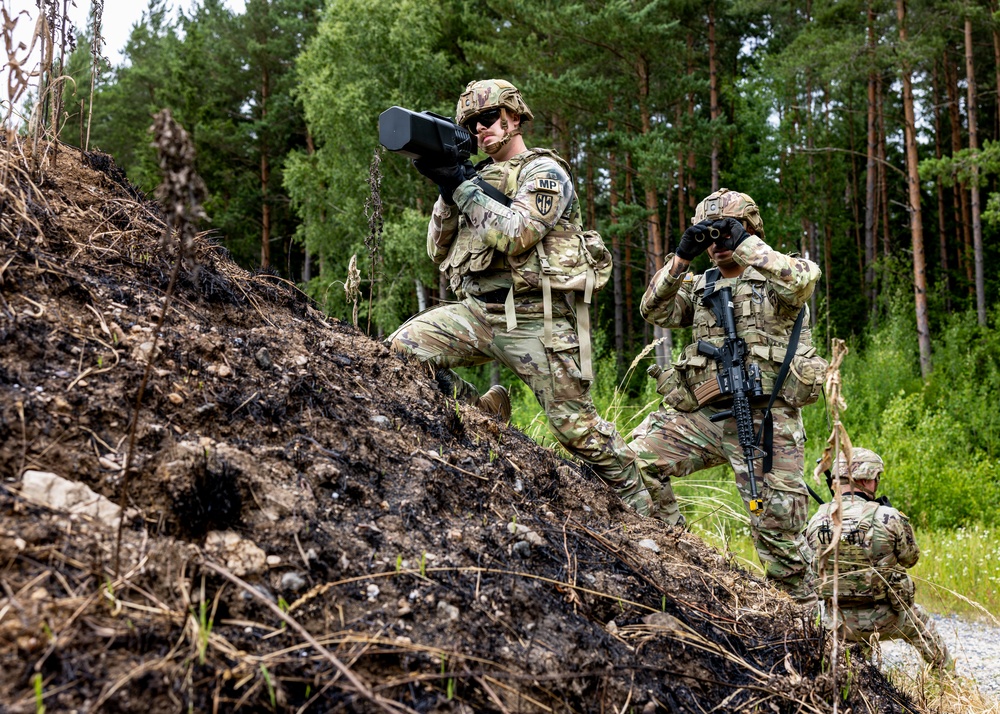
DroneShield’s range illustrates one of the functions being procured: DroneSentry-X Mk2 can be vehicle-mounted or installed at a site. The manufacturer describes a detection and adaptive-disruption system that can combine radio, radar and optical sensors, depending on its configuration. Its interface passes alerts to other equipment. It thus provides part of a protection chain that the US programme intends to assemble from several capabilities.
In June, DroneShield reported a separate $24.9 million contract: $19.3 million initially and $5.6 million in options for mobile and fixed-site systems. It covered hardware, subscriptions, warranties and services, with deliveries planned in 2026 and 2027.
In September the company said it had installed and secured acceptance of DroneSentry-X Mk2 units on US military light vehicles after testing and operator training. Three additional units were planned under a modification.
Vehicle-mounted DroneSentry-X Mk2 detects drones and provides electronic countermeasures while moving or stationary. Radio sensing can identify certain signals from an aircraft or its link; radar and cameras address other detection needs. That difference explains the US emphasis on interoperable sets of equipment rather than a single device expected to cover every threat. The mix also gives commanders more choices as drone designs change.
The Army aims to sustain supplier competition and select technologies for different threats. For DroneShield, the number of sites equipped and the mix of sensors and countermeasures selected will show the programme’s practical scale.
Documents and references
- DroneShieldDroneShield Awarded JIATF-401 Domestic Shield IDIQ Contract
- US ArmyJIATF-401 advances Domestic Shield with counter-UAS contract awards
- DroneShieldOn-the-Move Counter-UAS Systems Solutions
- DroneShieldDroneShield Announces U.S. Joint Interagency Task Force 401 Contract
- DroneShieldDroneShield Completes Installation and Acceptance of DroneSentry-X Mk2 Under U.S. JIATF-401 Program
- DroneShieldCUxS Capabilities: RF, AI/ML and EW