
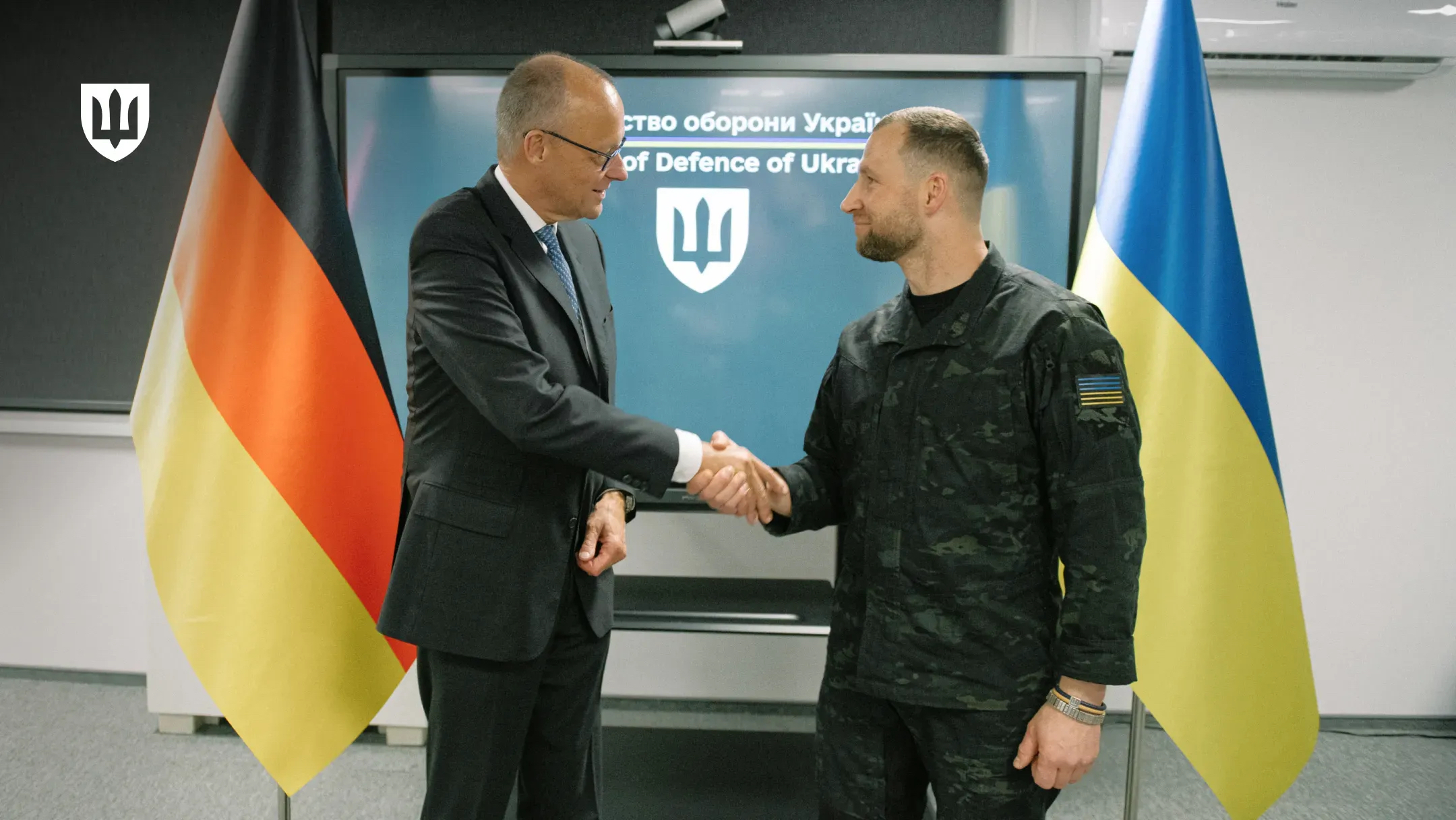
On 4 October, Ukraine’s Defence Minister Evgeniy Khmara said he had signed five documents with German defence companies enabling purchases of missiles, precision-guided munitions, radars and other weapons. His talks with Chancellor Friedrich Merz also covered urgent air-defence needs, including F-16 ammunition and IRIS-T and Patriot missiles.
At the Ukrainian-German forum in Ukraine, attended by Friedrich Merz, Volodymyr Zelenskyy announced 15 documents signed with German companies and agreements worth €8.5 billion. Those figures cover the forum overall, separate from the five documents cited by the Defence Ministry.
The forum linked purchases and production: Zelenskyy cited an IRIS-T order from Diehl and discussed co-production with German manufacturers. This connects immediate needs with Ukraine’s industrial base.
On 20 October, Ukraine’s Defence Ministry described cooperation with German manufacturers as an effort to expand joint production and attract financing. The next measure of progress will be whether signed frameworks and forum discussions turn into orders, production capacity and delivered equipment.
This industrial logic was already set out in the bilateral security agreement signed by Berlin and Kyiv in 2024. It calls for examining ways to reduce barriers to cooperation, encourage investment, localise some production in Ukraine and explore joint manufacturing. October’s documents fit that longer-term direction. The agreement also identifies supply-chain bottlenecks in priority weapons and ammunition, and examines localising repair and maintenance. These workstreams matter because components, servicing capacity and protected technical know-how determine whether industrial cooperation can increase the amount of equipment available to Ukrainian forces.
Documents and references
- Ministry of Defence of UkraineUkraine and Germany discuss strengthening Ukrainian air defence
- President of UkraineUkraine Not Only Receives Assistance but Also Buys from Germany, Co-Produces with Germany, and Shares Experience – President at the Ukrainian-German Business Forum
- Ministry of Defence of UkraineUkraine expands defence industry cooperation with Germany to scale up weapons production
- Federal Government of GermanyAgreement on Security Cooperation between Germany and Ukraine