
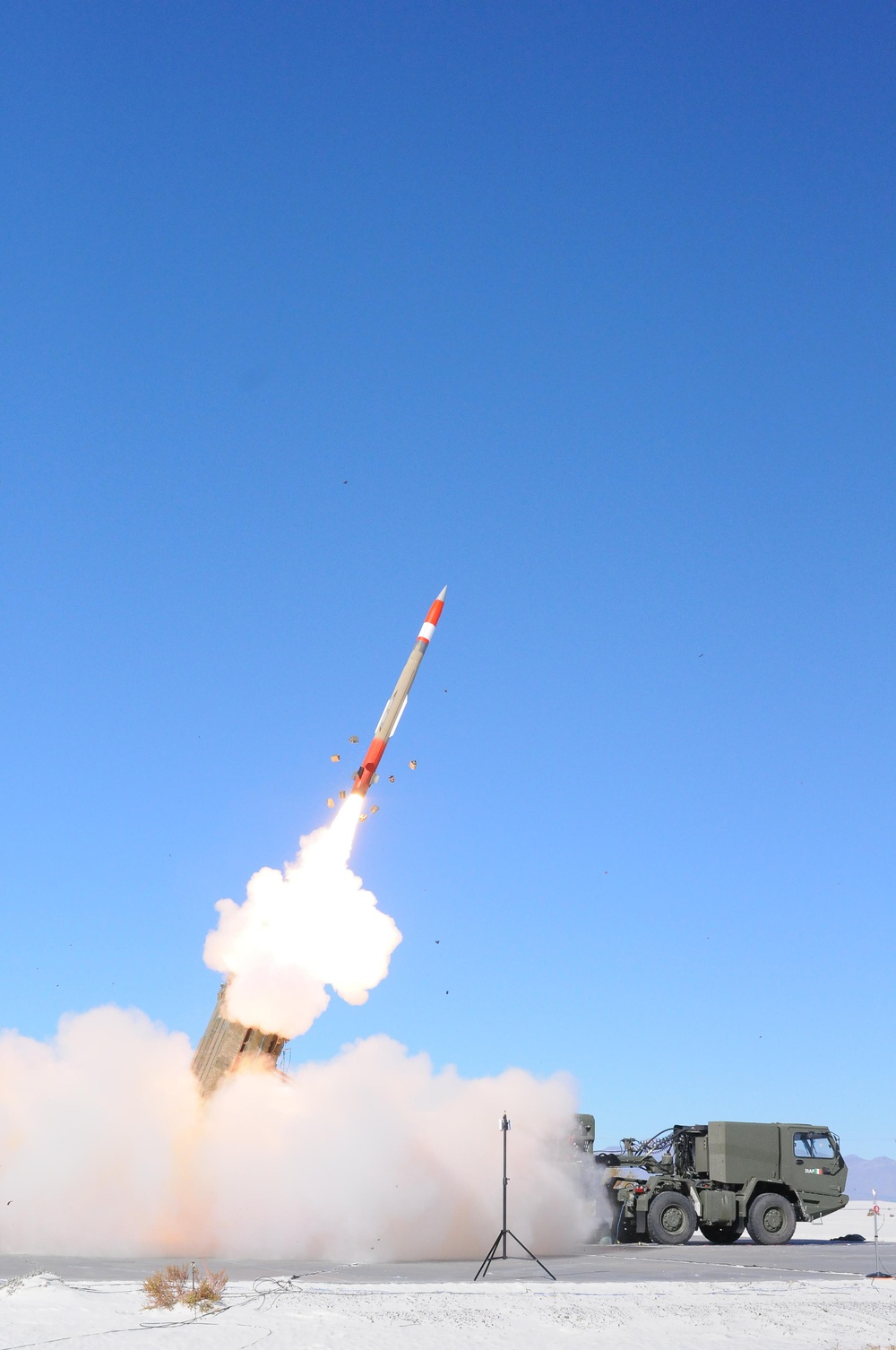
On 5 October Boeing announced an approximately $14.7 billion undefinitized contract action from Lockheed Martin for PAC-3 MSE seekers. The seven-year framework aims to triple output.
The seeker detects a target and refines the interceptor’s path during terminal flight. Boeing builds this active Ka-band millimetre-wave system in Huntsville, Alabama, as a Lockheed Martin subcontractor. PAC-3 MSE destroys targets by direct impact, making accurate tracking central against missiles and aircraft. Boeing’s seeker goes into a Lockheed Martin-assembled interceptor, so its production rate can constrain output of the complete missile.
The programme predated this announcement. In its first-quarter 2026 results, Boeing had already reported a seven-year PAC-3 Seeker production framework. The 5 October action therefore specifies the commercial implementation of that ramp-up. The distinction matters for the timetable: a multi-year framework gives visibility, while orders and execution determine actual volumes.
Boeing had already invested in its Huntsville plant and suppliers. Production and hiring began in 2026; hundreds of local jobs are expected.
Demand pressure also extends to the complete missile. In September 2025 the US Army announced a separate $9.8 billion Lockheed Martin contract covering 1,970 PAC-3 MSE interceptors and associated hardware. The 2025 contract covers complete interceptors; the 2026 action covers their seekers. The two awards therefore address different levels of the same industrial chain. The multi-year Army award also gives Lockheed Martin a demand signal for planning orders, suppliers and deliveries.