
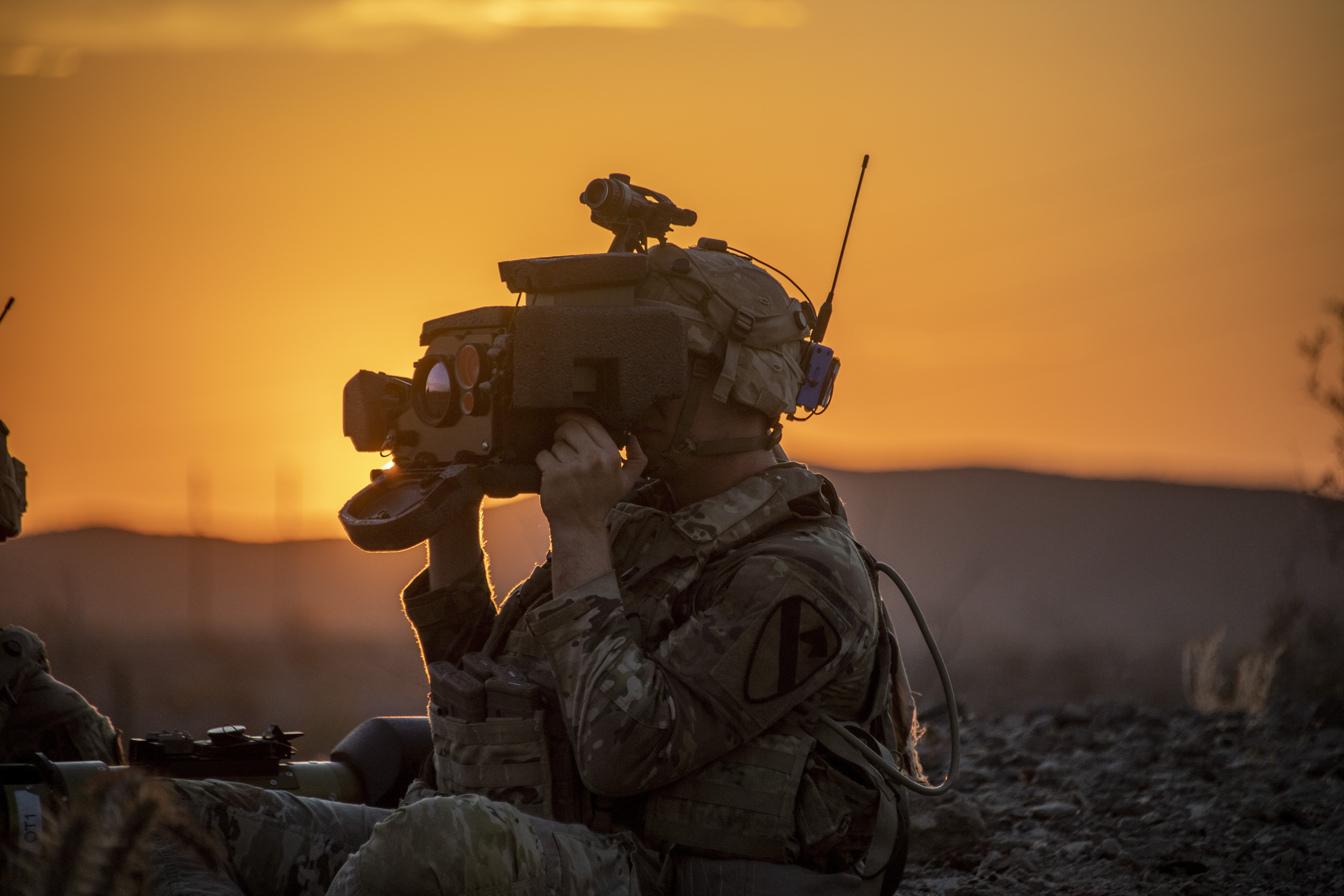
On 19 October the US Army awarded Raytheon and Lockheed Martin’s Javelin joint venture $215 million to produce Lightweight Command Launch Units. These LWCLUs are reusable sights and launchers replacing the Block I unit, rather than a separately announced missile order. The design is intended to remain compatible with past, current and future Javelin variants.
Production preceded this award. In May RTX announced delivery of the first LWCLUs to the Army and a $22 million investment to modernise its Tucson, Arizona, factory. The company aimed to raise manufacturing speed and annual capacity. The new unit is 30% smaller and 25% lighter than its predecessor, with doubled detection range. The October contract supports a line already running. It connects industrial investment with wider fielding of the new equipment among soldiers.
Javelin pairs a missile that guides itself after launch with a command unit used to spot and designate a target. Raytheon notes that LWCLU optics can also provide surveillance without firing a missile. The launcher thus doubles as a portable sensor for a small dismounted team. Bringing observation and engagement together reduces the separate equipment soldiers carry and helps them track movement before deciding whether to fire.
A new launcher also requires training for those who carry it. US Army DEVCOM describes a Javelin simulator that reproduces target acquisition, tracking and engagement without expending live rounds. Its team is preparing a Basic Skills Trainer version for the LWCLU alongside the operational equipment. That work connects hardware deliveries to crew proficiency: improved optics matter in the field when soldiers can use and sustain them effectively.
In 2023 the Army announced an indefinite-delivery, indefinite-quantity Javelin system contract for fiscal years 2023–2026, covering procurement and production support. That framework illustrates a supply chain spanning missiles, launch units, tests and training. For the manufacturers involved, production continuity matters alongside the performance of each new equipment generation. This indefinite-quantity contract provides a framework for successive orders.
Documents and references
- Raytheon / RTXU.S. Army awards Javelin Joint Venture $215 million contract for Lightweight Command Launch Unit production
- RTXFirst Javelin Lightweight Command Launch Units delivered to the U.S. Army
- RTX / RaytheonJavelin Weapon System
- U.S. Army DEVCOMJavelin simulator delivers cost-saving, high-impact training
- U.S. ArmyArmy announces contract award for Javelin Missile System