
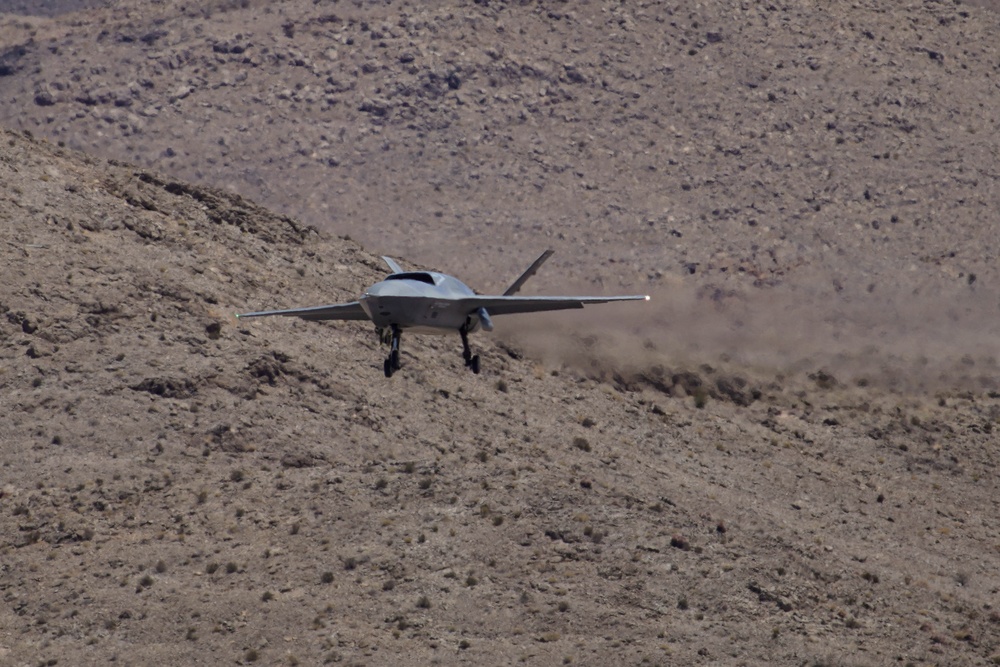
On 23 October, General Atomics selected Boeing-owned Spirit Defense to design and build FQ-42 Vengeance fuselages. The Air Force contract dates to June. It previously built its drones alone. The partner adds capacity and reduces reliance on one factory. No price, quantity or delivery schedule was disclosed.
The demand for scale comes from the US Air Force’s Collaborative Combat Aircraft programme. In September the service described the FQ-42 and Anduril’s FQ-44 as aircraft intended to work alongside crewed fighters. It said Increment 1 production covered 150 aircraft across the programme and stated a goal of 500 combat-ready systems by 2032. Those figures are programme totals, not Spirit Defense’s share. Its task covers the fuselage, a major component that alone does not make a mission-ready aircraft.
The programme is flying aircraft while its industrial arrangements continue to develop. General Atomics said an FQ-42 reached Creech Air Force Base in September for testing and evaluation with user units. That delivery shows flight examples exist; it does not show that Spirit-built production has begun. Scaling up means reproducing the tested airframes while integrating engines, sensors, communications and software whose configuration may still change during trials.
The Air Force separated airframe contracts from mission-software work. For Increment 1 it awarded engineering and production contracts to General Atomics and Anduril while opening a separate competition among six autonomy suppliers. That structure explains the value of a modular airframe: the aircraft must accept mission systems that need not come from its structural manufacturer. Spirit Defense’s contribution is therefore industrial capacity, not the aircraft’s autonomous decisions or operational use.
Ground control is developing as well. In August the Air Force completed an initial evaluation of portable control stations designed to supervise semi-autonomous aircraft from dispersed sites. Building airframes in quantity does not alone create a usable fleet: links, operators and control procedures must scale with them. October’s partnership addresses the manufacturing part of that wider problem. The decisive steps will be fuselages built, integrated into complete aircraft, and repeatedly tested with operational units.
Documents and references
- General Atomics Aeronautical SystemsGA-ASI partners with Spirit Defense for FQ-42 production
- US Air ForceAir Force dubs CCA FQ-42 Vengeance and FQ-44 Fury
- General Atomics Aeronautical SystemsFQ-42 Vengeance finds new home at Creech AFB
- US Air ForceAir Force advances future of air superiority with CCA contracts
- US Air Force Materiel CommandDAF completes prototype evaluations for CCA command-and-control enclave