
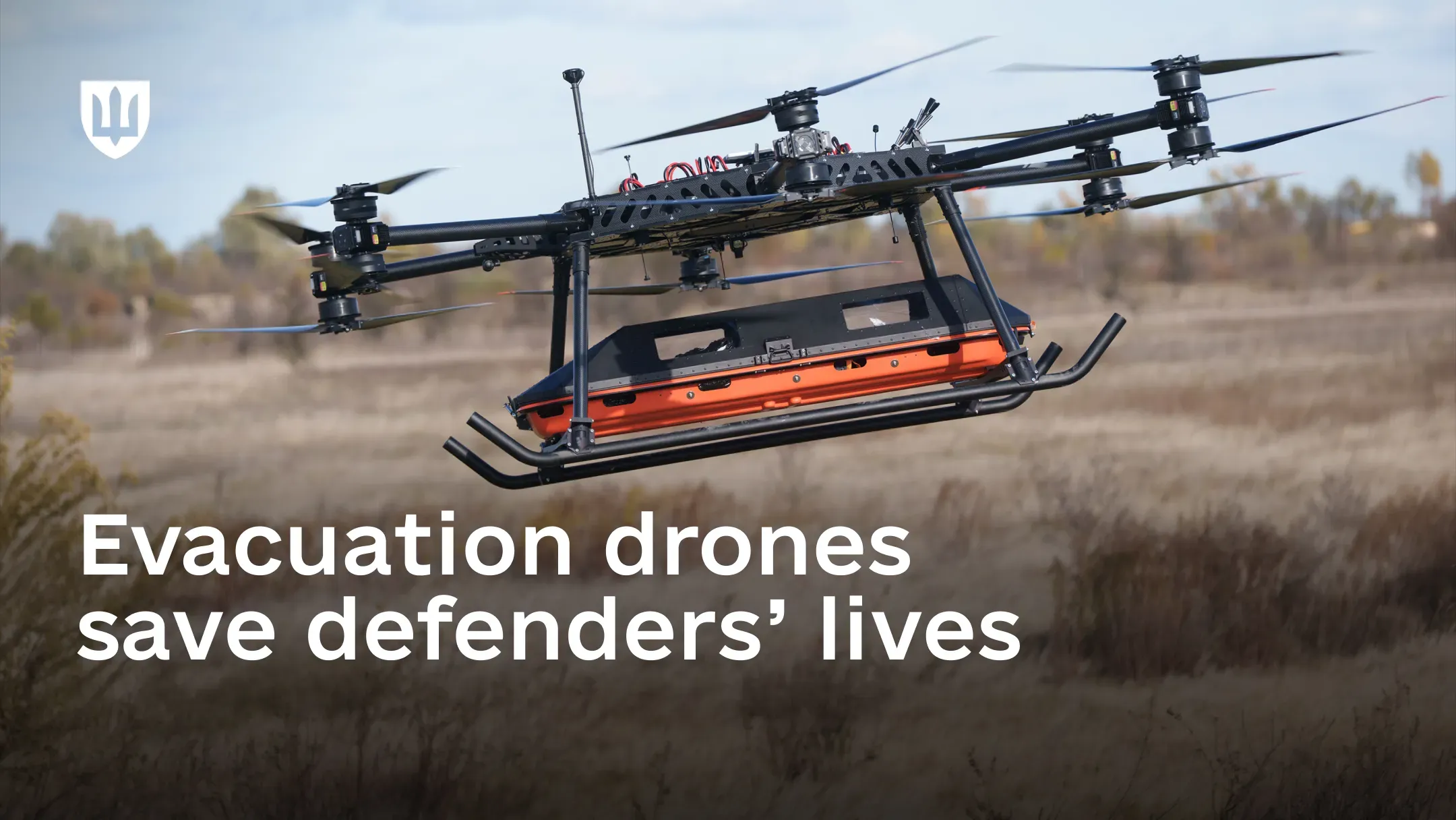
Ukraine's defence ministry on 28 October described aerial rescues conducted earlier in the month. An infantryman from the 30th Mechanised Brigade left an enemy-blocked position suspended from a Heavy Shot Ayudag-6. The 98 kg hexacopter can carry 130 kg and flew more than 15 km outbound on the mission. Nearby units covered its flight against interceptor drones.
StarGate carries a casualty in a capsule rather than on a winch. Associated Press spoke with manufacturer SkyFall and the operating regiment. SkyFall plans a pilot team; the regiment envisages adding the role to its medical company. Evacuation also requires specialist organisation.
A CODE 9.2 commander told Suspilne that StarGate took about a year to develop at troops' request. The bulky aircraft carries one person of up to 150 kg in a capsule. In his account, a rescue in the Kharkiv region required five days of preparation and cover from the whole regiment, followed by about thirty minutes of round-trip flying.
Uncrewed ground vehicles remain another option. The ministry reported more than 7,000 robot missions in January, mostly logistics, with casualty evacuation among their uses. They reduce the exposure of human teams in dangerous areas.
A KSE Institute study describes rapid growth in Ukrainian ground robots and their leading role in logistics and evacuation, while identifying mines and FPV drones as hazards. Choosing ground or air therefore depends on route, range and the time available for a casualty. October's missions show another operational option, one that still requires trained crews and substantial tactical coordination.
Documents and references
- Ministry of Defence of UkraineUkraine is the first in the world to develop evacuation drones
- Associated PressUkraine drone rescue reporting, 27 October 2026
- Suspilne KharkivAerial casualty evacuation in the Kharkiv region with StarGate
- Ministry of Defence of UkraineOver 7,000 missions in January: Ukraine expands ground robotic systems
- KSE InstituteThe Ukrainian defense technology market, March 2026