
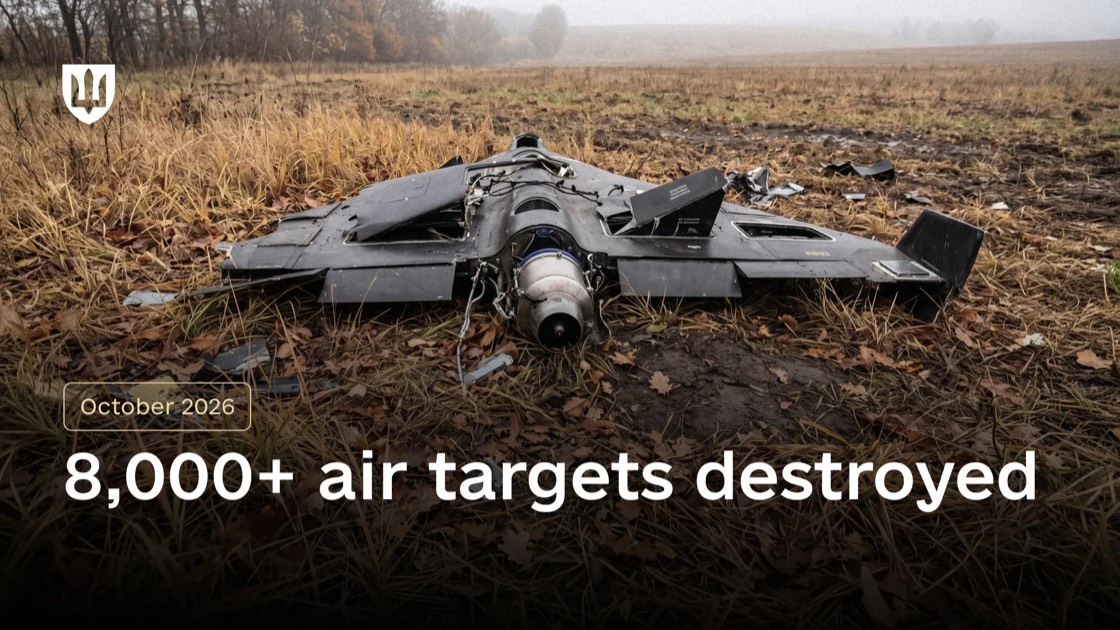
Russia launched 164 drones and three Kh-59/69 missiles overnight, according to the air force. Of the drones, 112 were jet-powered. By 08:00 Kyiv time, 137 had been neutralised, including 88 jet-powered craft. Impacts hit 23 locations; debris fell at six others.
The mix follows a shift visible over a full month. Ukraine’s defense ministry recorded 2,688 intercepted Shahed-238 attack drones in October alongside 4,455 Shahed-131/136, Gerbera and Parodiya decoys. Those monthly interception categories describe defensive activity; they are not the count of drones launched on the single night of 8 November.
In its September review, the ministry put jet-powered drones at roughly 400 kilometres per hour. Their speed shortens the interval between detection and interception, while small groups can be sent toward several regions. Ukraine uses aircraft, surface-to-air missiles, electronic warfare, mobile teams and drone units, allowing different responses according to a target’s path and type.
A private air-defense programme operates under military coordination. By March, one company had downed Shahed and Zala drones near Kharkiv; thirteen other groups were preparing. This widens local coverage.
Demand for interceptors remains pressing. In late October, Ukraine’s defense minister asked European partners for Patriot and IRIS-T missiles from existing stocks, and for portable air-defense systems against jet-powered drones. Those needs span different targets and layers of defense. The 8 November tally shows the load on detection and interception when many aircraft arrive in one night.
Documents and references
- LB.uaAir defense downed 137 of 164 drones overnight
- Ukraine Ministry of DefenceUkrainian air defense intercepted more than 8,000 air targets in October
- Ukraine Ministry of DefenceUkrainian air defense intercepted more than 4,700 air targets in September
- Ukraine Ministry of DefencePrivate air defense is now operational
- Ukraine Ministry of DefenceAir defence and drones: Ukraine briefs E5