
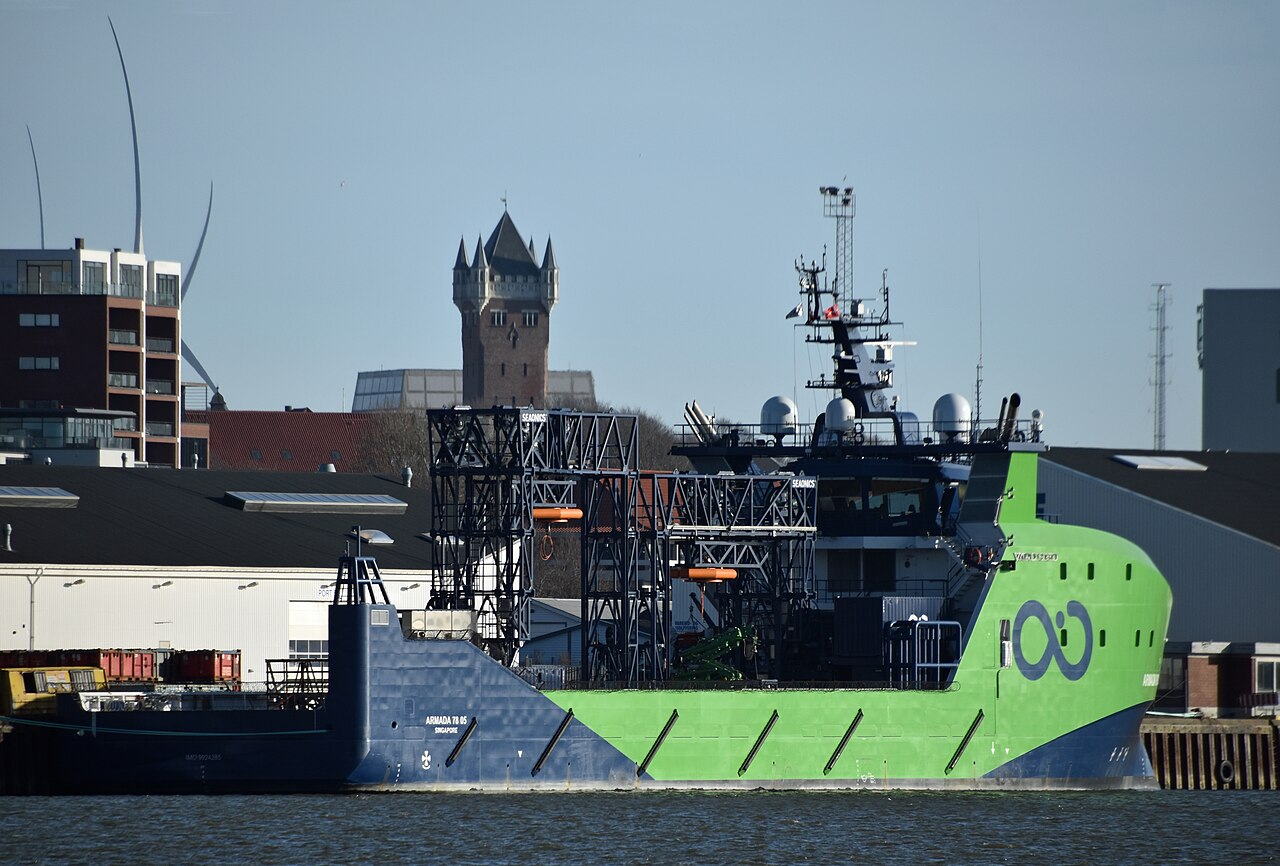
The UK presented Atlantic Net on 10 November as a £90 million undersea surveillance framework. The ministry plans to work with Hampshire-based Ocean Infinity Solutions; signature was expected that day. Sensors, uncrewed systems, communications and data are intended to form a Royal Navy-directed service. The project is expected to support almost 200 skilled jobs.
Ocean Infinity describes itself as the commercial mission partner tasked with helping the navy turn the concept into sustained operations. Its model combines autonomous, uncrewed and lean-crewed craft with advanced sensors and data analysis. Working with specialist partners, the company intends to bring maritime expertise and information processing together over the long term. Ocean Infinity aims to sustain persistent undersea surveillance across the North Atlantic.
Atlantic Net is the first operational part of Atlantic Bastion, unveiled in December 2025 to connect ships, aircraft and autonomous systems against undersea threats. At that point the government said £14 million of public and private investment had already been committed to sensor development and trials. Those trials concerned anti-submarine sensing and the protection of subsea cables and pipelines.
The timetable and allied dimension were set out in Oslo. The ministry expects the first phase of Atlantic Net to enter operation within months. The same day, all ten Joint Expeditionary Force maritime nations signed the Northern Navies Initiative, calling for joint planning and interoperable equipment. Britain’s undersea picture is intended to inform NATO and JEF partners as their navies coordinate patrols and support.
The challenge is to connect observations gathered at different depths and by different platforms. A British Dstl study of the Hybrid Navy examined sensing, communications and decisions together, rather than each craft in isolation. For Atlantic Net, the Royal Navy and Ocean Infinity will need to pass that information to the crews investigating or responding. The network’s value will depend on that flow as well as the number of sensors deployed.
Documents and references
- UK Ministry of Defence£90 million investment for new drones and sensors to protect undersea cables and hunt Russian submarines
- UK Ministry of DefenceNew Royal Navy-Led Northern Navies Initiative
- Ocean InfinityOcean Infinity selected as Commercial Mission Partner for Royal Navy Atlantic Net programme
- UK Ministry of DefenceUK unveils new undersea warfare technology to counter threat from Russia
- Defence Science and Technology LaboratoryHow Dstl contributed to the Hybrid Navy concept