
At Farnborough on 22 July flynas confirmed five additional A330-900s and twenty A321neos with Airbus. That brings its firm commitments to twenty A330neos and 56 A321neos within 235 firm Airbus orders overall. Airbus then counted 67 aircraft in flynas service: 61 A320neos, four A320ceos and two A330-300s.
flynas places the decision within its existing Airbus agreements. Chief executive Bander Almohanna links expansion to six Saudi bases, flynas Syria and new markets, including pilgrimage traffic. The airline puts its wider orderbook at 280 aircraft, of which 235 are now confirmed. It is staging aircraft purchases across several years of network growth.
The A321neo seats 180 to 220 in two classes, versus 150 to 180 for the A320neo. Airbus claims up to 20% lower fuel use per seat for the neo family versus the previous generation.
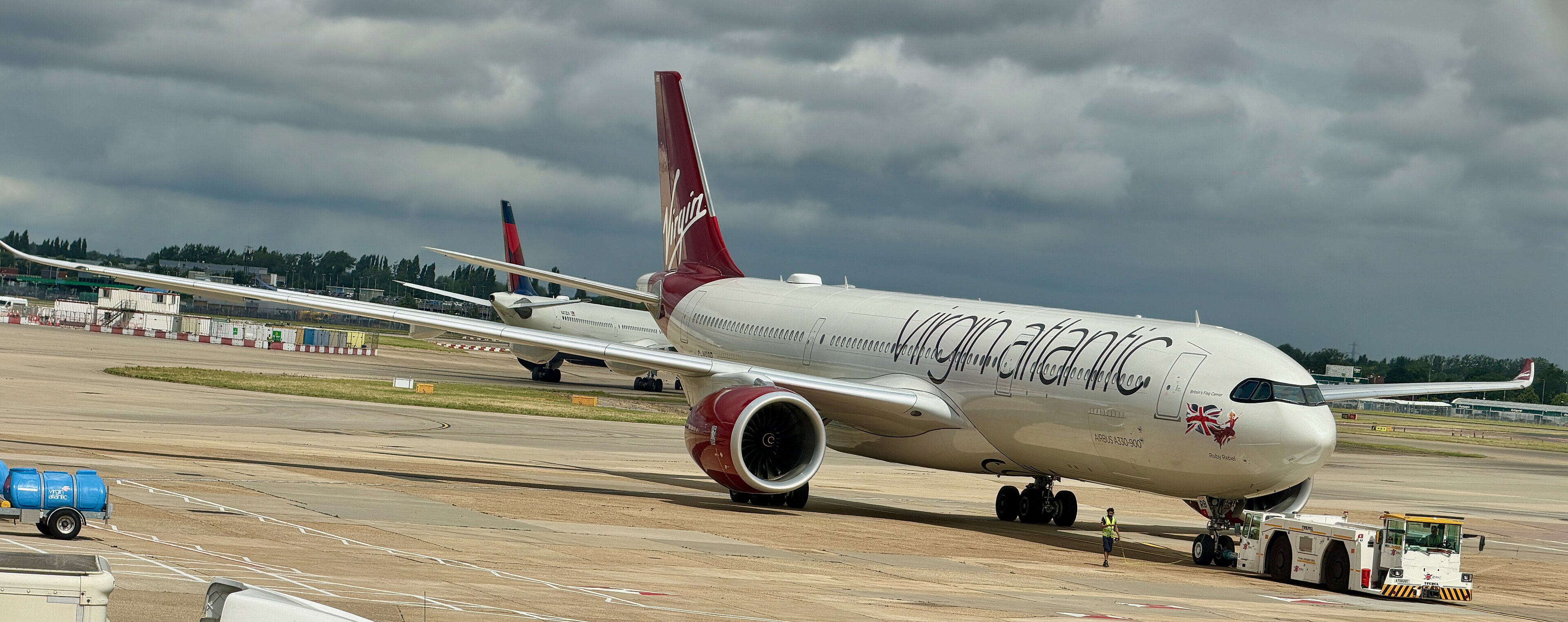
The A330-900 works at a different scale: two aisles, more seats and range for longer services. The A330neo updates the A330 family with Rolls-Royce Trent 7000 engines. Airbus claims 25% lower fuel use per seat than comparable earlier aircraft.
At Farnborough in 2024 flynas and Airbus signed a memorandum covering 75 A320neo-family jets and fifteen A330-900s. The manufacturer already linked widebodies to longer flights and Saudi pilgrimage traffic; flynas envisaged a two-class A330-900 cabin seating up to 400. That fleet direction predates the July 2026 confirmation.
The flynas prospectus records the next step: a firm November 2024 purchase agreement for fifteen A330-900s, with final delivery then scheduled for 2029. It also records an option for fifteen further A330s.
Capacity growth began earlier with single-aisle aircraft. In June 2023 flynas confirmed thirty further A320neo-family jets, bringing its Airbus order for that family to 120 at the time. Repeated single-aisle purchases followed by widebodies reflect expansion in stages: add density to the existing network, then serve markets where distance and passenger volume warrant a larger jet.
Documents and references
- Airbusflynas firms up additional A330-900 and A321neo aircraft
- flynasflynas confirms the purchase of 25 new Airbus aircraft
- Airbusflynas signs agreement for additional 75 A320neo Family aircraft and 15 A330neo
- flynasCompany prospectus, A330neo purchase agreement
- flynasflynas firms up additional 30 new A320neo Family aircraft
- AirbusA320 Family: a story of continuous innovation
- AirbusAirbus A330 Family: proven and versatile widebody