
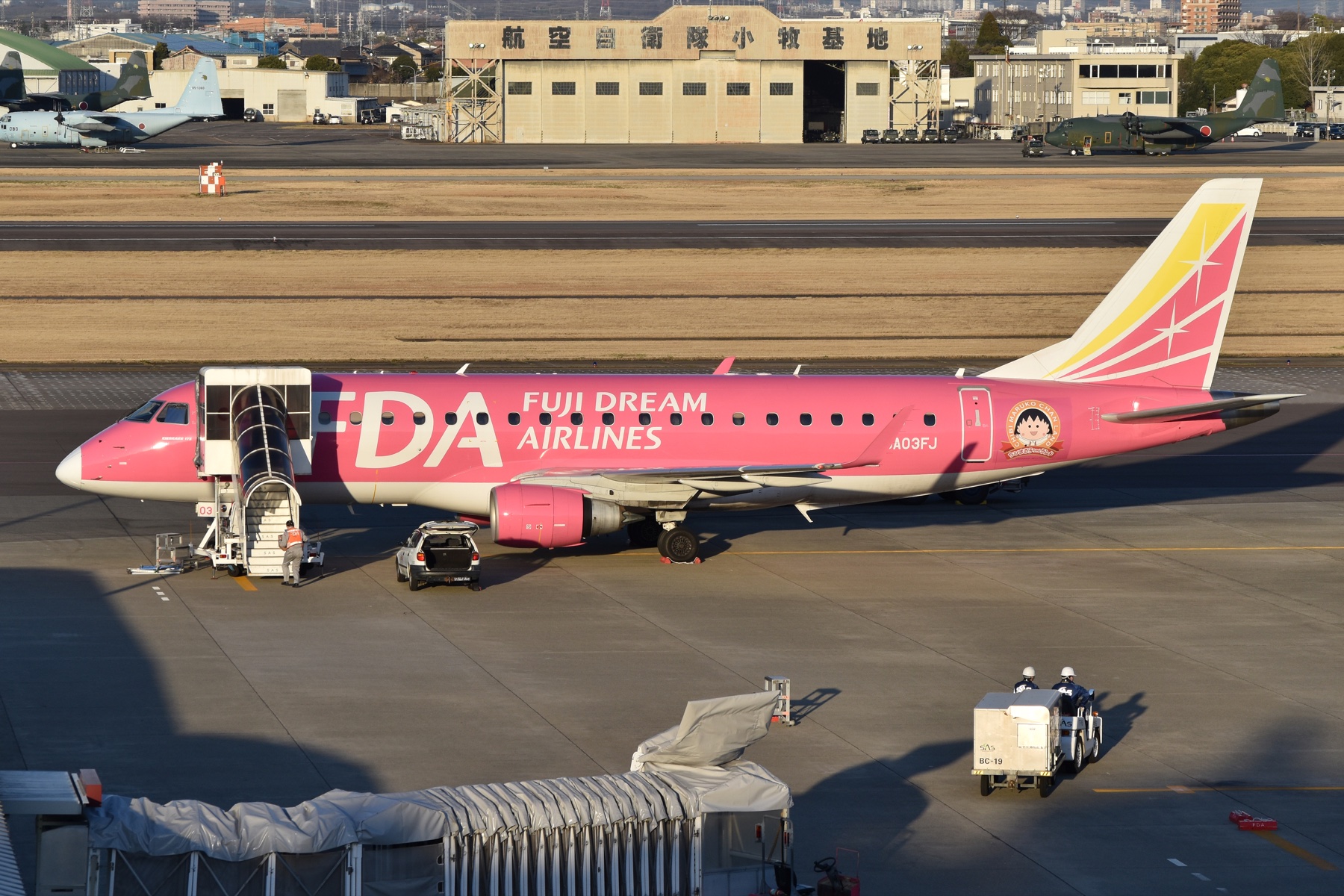
Fuji Dream booked two firm 84-seat E175s, listed for delivery in 2027 and 2028. The order continues investment in its all-Embraer regional fleet.
Embraer presents the E175 as a short- and medium-range aircraft with a cabin that airlines can configure for each market. For Fuji Dream, that size supports flights between regional cities without requiring the demand of a larger single-aisle jet. Embraer also highlights AHEAD PRO, its diagnostic system that consolidates aircraft data to optimise maintenance: aircraft availability matters on routes with limited flight frequencies.
Embraer’s E175 specification gives several cabin reference points: 76 seats in two classes, 78 in a standard single class and up to 88 in high density. Row pitch falls from 33 or 32 inches in the standard cabin to 29 inches in high density. The layouts show how more seats change the space available to each passenger within the same airframe.
The two aircraft extend an Embraer fleet of fifteen jets: two E170s and thirteen E175s. Fuji Dream serves 29 routes across 17 Japanese airports; the new E175s add capacity to this domestic network.
Fuji Dream’s published connections show how regional stops shape its network: Hanamaki–Fukuoka travels via Nagoya-Komaki, while Sapporo–Fukuoka can run via Matsumoto or Shizuoka depending on the service. The network combines nonstop sectors and two-leg journeys rather than relying on one national hub. Two additional E175s will give the airline more aircraft for its schedules.
Documents and references
- EmbraerFuji Dream orders additional E175s
- EmbraerE175
- Fuji Dream AirlinesConnecting flight information
- EmbraerE175 specification