
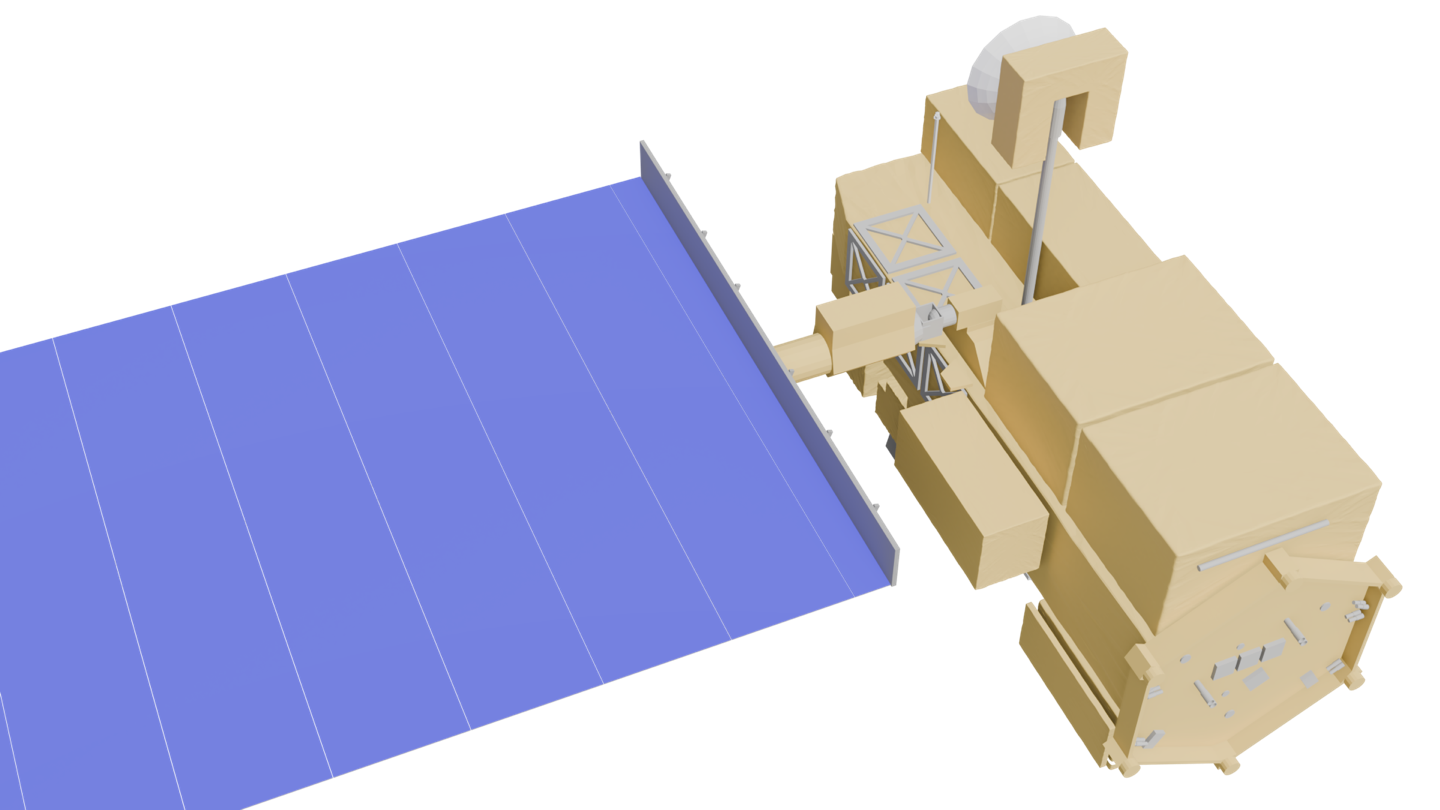
On November 17, NASA set December 1 as the date Terra will stop collecting science data. The team plans to use the remaining fuel to lower its orbit before switching off the spacecraft systems in January 2027. The schedule puts the final observation ahead of the spacecraft’s retirement.
Launched from Vandenberg in December 1999 for a six-year mission, Terra inaugurated NASA’s Earth Observing System. The satellite has drifted since the team stopped correcting its inclination in 2020. As the orbit shifts, so does the local time of its observations, a factor when comparing phenomena that evolve over the course of a day.
MODIS, one of Terra’s instruments, measures visible and infrared light across 36 spectral bands. Researchers use those measurements to map vegetation, land cover and ocean colour. Another MODIS flies on Aqua. Having the same kind of instrument on two spacecraft has given researchers two sets of observations to work with.
The archive can also be searched by science product. One ASTER collection, for example, estimates land surface temperature from thermal infrared observations made during the day and at night. The value describes the surface being observed, such as soil or vegetation. It measures something different from the air temperature reported in weather forecasts.
NASA has also worked to make measurements from different sensors comparable so that records can extend beyond Terra. Its cloud detection continuity product applies a common method to MODIS and VIIRS. That addresses a practical question in any long-term climate study. How can researchers keep a change in instruments from looking like a change in the phenomenon itself?
Earthdata Search provides access to collections held by NASA’s archive centres, and Worldview lets users explore imagery on a map. For a retrospective study, a researcher can locate a scene and its date first, then download the product containing the values needed for analysis. That is where the mission continues for its users, long after the final science pass.
Documents and references
- NASACalendrier de fin de mission de Terra
- NASAHistoire de Terra et de ses instruments
- NASAInstrument MODIS et produits scientifiques
- NASA EarthdataGuide du produit de continuité MODIS–VIIRS
- NASA EarthdataAccès au catalogue Earthdata et à Worldview
- NASA EarthdataCollection ASTER de température de surface