
Bids are due 21 December. NASA targets launch readiness in 2030 and at least five years of operation.
NASA’s power strategy frames the problem at the scale of the base. At the south pole, terrain can block the Sun even while other sites remain lit. Equipment in separate locations can therefore need electricity at the same time and have different energy sources available. A reactor delivers continuous power, but integrating it requires protecting crews and carrying electricity to the points of use.
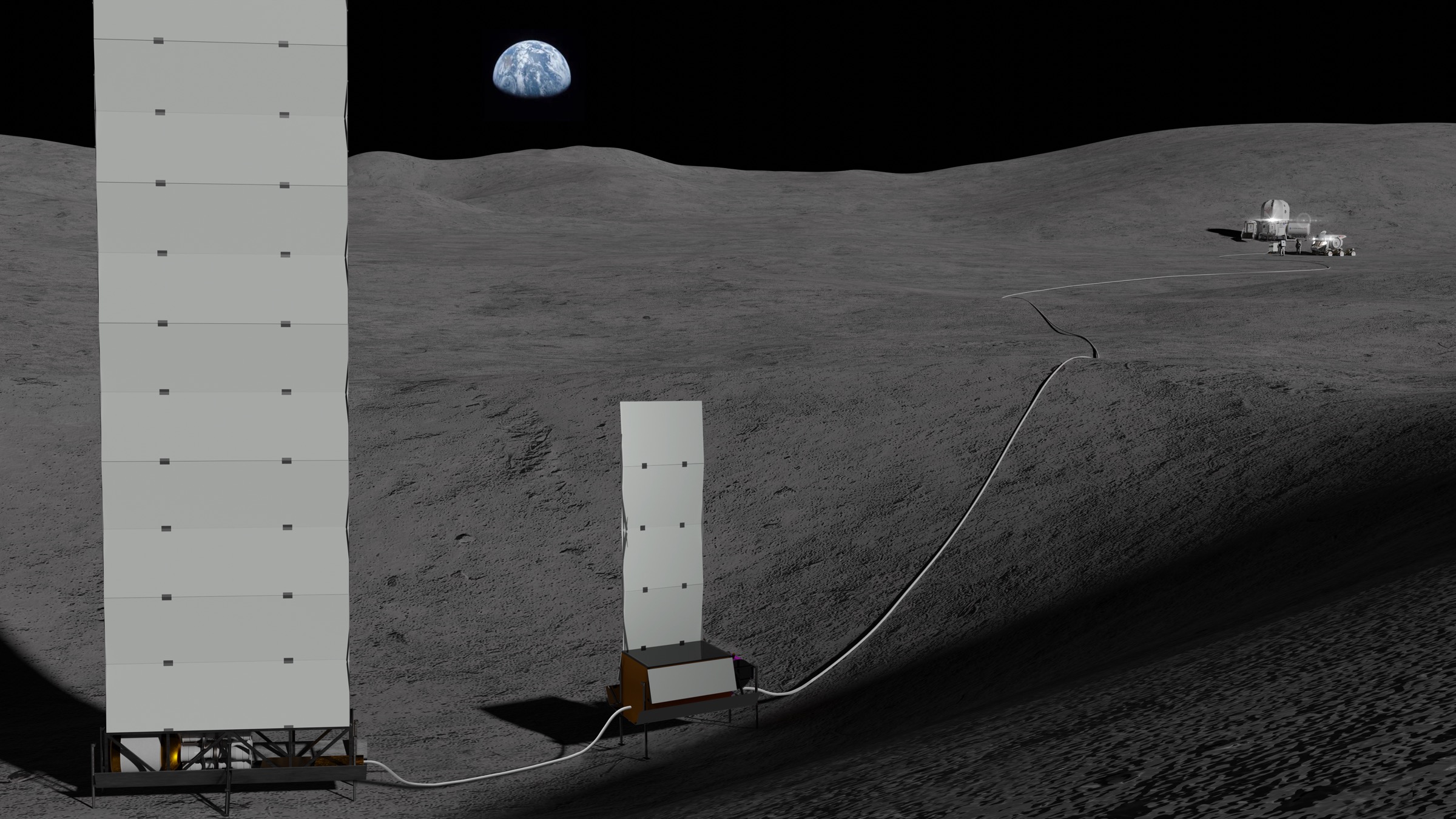
The agency is also developing vertical solar panels designed to capture sunlight when the Sun sits low over the horizon. The panels generate power when illuminated. A regenerative fuel cell can store some of that energy for later use. In a lunar grid, such storage would let a solar installation keep supplying equipment beyond its generating hours.
NASA and the U.S. Department of Energy demonstrated electricity generation from a small reactor in the 2018 Kilopower ground test in Nevada. The team simulated drops in power and component failures to see how the system responded. Moving to lunar equipment shifts the work towards a system designed for flight and years of operation.
Radioisotope generators are another family of stand-alone power sources. They use the heat given off by natural radioactive decay and have long powered some spacecraft and rovers, including Curiosity and Perseverance. Experience with these systems shows the value of a source that can operate without sunlight. A lunar base poses the same problem at a different scale, with several users drawing power at once.