
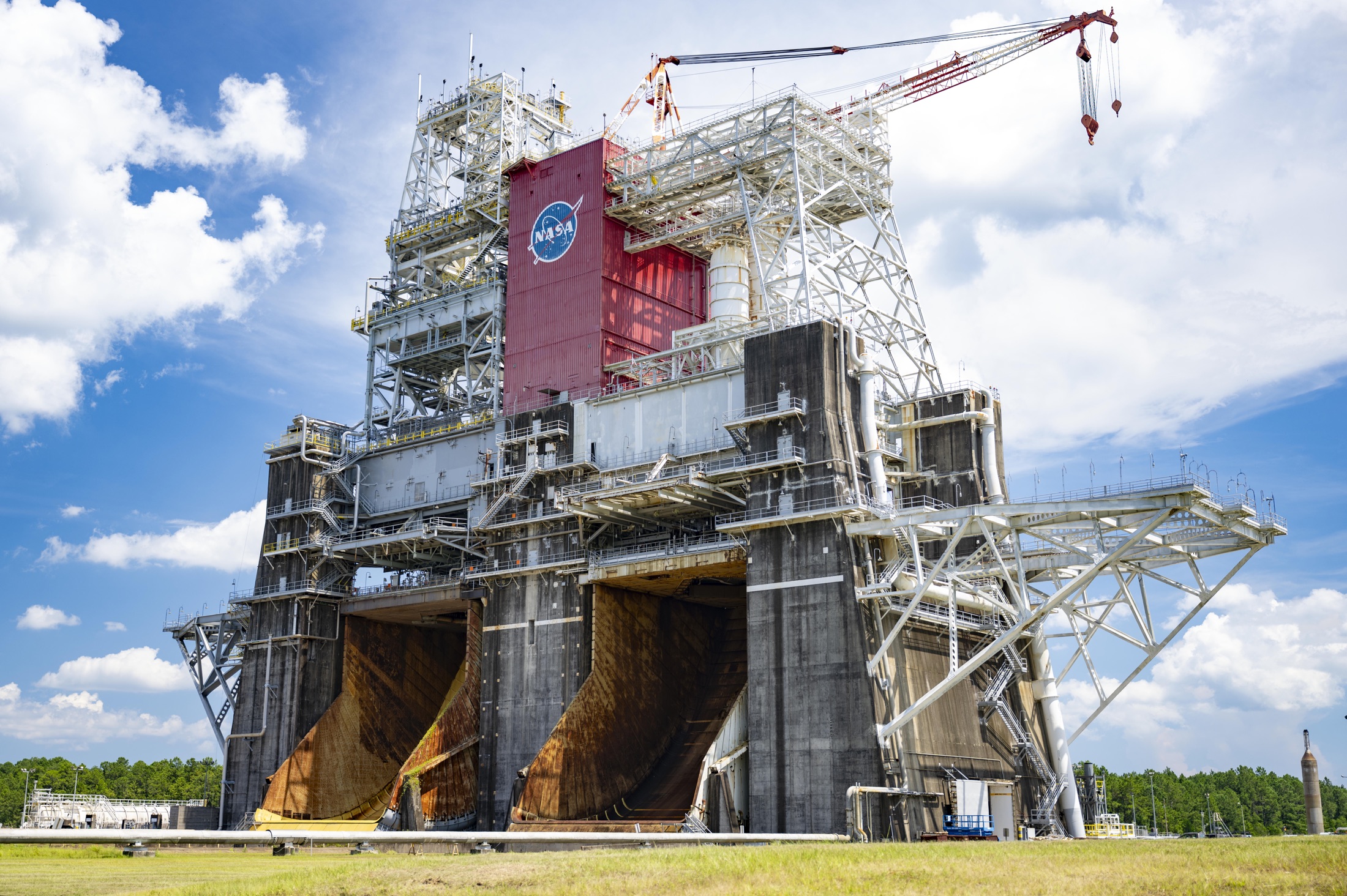
On July 24, NASA and Blue Origin announced an agreement to test New Glenn’s second stage at Stennis in Mississippi. Static-fire tests are targeted for autumn on the B-2 stand, which is designed for full rocket stages. The announcement covers access and preparations; it does not report a stage delivery or a completed firing.
The division of work is explicit. NASA will provide engineers, equipment and building services to design and install stand modifications; Blue Origin will prepare the test campaign. The arrangement is a reimbursable annex to a Space Act Agreement signed earlier in July. NASA supplies access and technical support while the company remains responsible for developing its stage.
B-2 is one of two vertical positions in the B complex. NASA says it can accommodate test articles up to 33 feet in diameter and has hosted Saturn V stages, a Shuttle propulsion test article and the SLS core-stage Green Run in 2020–21. Reusing the site brings an existing heavy test facility into service instead of requiring a new stand first.
New Glenn needs repeated ground campaigns to exercise systems and qualify configurations before flight. Its upper stage uses two BE-3U engines burning liquid oxygen and hydrogen; Blue Origin lists 200,000 pounds-force of vacuum thrust per engine. A static stand holds the stage during ignition, collecting data separately from launch operations at pad LC-36.
Separating tests from launches is Blue Origin’s stated rationale. Firing engines at a launch site can tie up equipment and complicate flight preparations. Moving upper-stage tests to Stennis is intended to reduce those conflicts, the company says, and add another path through its test network. NASA’s announcement gives neither a total cost nor a detailed modification schedule.
The partnership also sits within Artemis, without making the upper stage a crewed lunar system. NASA says New Glenn will launch some lunar missions, while Blue Origin is developing the Blue Moon lander. Stennis testing supports launcher development; it does not certify the vehicle, guarantee launch cadence or replace tests of the landing system.