
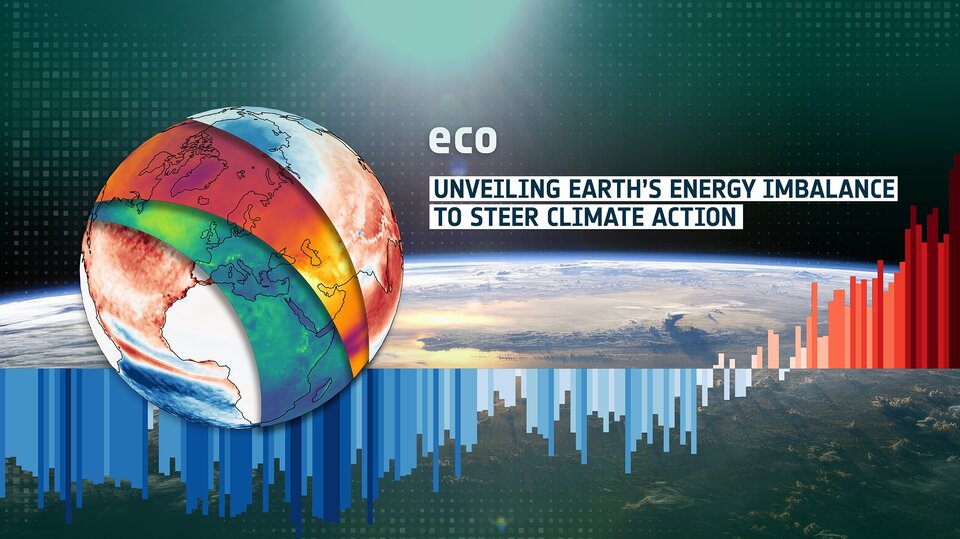
On 25 September the European Space Agency retained three Earth Explorer 12 candidates: ECO for Earth’s energy balance, Keystone for the upper atmosphere and CryoRad for the poles. Hydroterra+, focused on the water cycle, leaves the selection. ESA’s Earth observation board weighed scientific merit and programme considerations. It advanced further studies, not spacecraft construction.
The contest began with a 2023 call that drew 17 proposals; four were selected in April 2024 for an initial assessment. Scientific and industrial teams then worked through their aims and feasibility. In July 2026, all four concepts were discussed with users in Tallinn. This staged competition lets ESA compare very different observing instruments before committing to a single research mission.
ECO aims to calculate directly the difference between solar energy arriving at Earth and energy returned to space. Its concept combines Sun- and Earth-looking radiometers with visible and infrared imagers across a satellite constellation. That difference indicates how much heat the climate system is accumulating. EarthCARE already measures how clouds and aerosols alter radiation flows; ECO would add a complementary global measure rather than duplicate its detailed cloud observations.
Keystone would look much higher, between 50 and 250 kilometres altitude. A limb-sounding instrument spanning several spectral bands would measure atomic oxygen, winds and temperature, among other variables. Those data would connect the chemistry and dynamics of this sparsely observed region with changes in solar activity. The concept would thus connect chemical and dynamical processes usually measured separately.
CryoRad would instead use a passive low-frequency microwave radiometer operating from 0.4 to 2 GHz. Its aim is to estimate temperatures inside the great ice sheets down towards bedrock, along with properties of sea ice and polar waters. Internal temperature affects how ice flows and thus future sea-level change. The concept would complement other satellites’ measurements of ice height and extent rather than replace them.
ESA must choose one of the three concepts for a single research mission. The choice will therefore pit three scientific gaps against one another: measuring energy retained by Earth, probing a hard-to-reach atmospheric layer, or understanding conditions within ice sheets. Earth Explorers are designed to test new measurement methods, some of which later inform Europe’s operational observing services.