
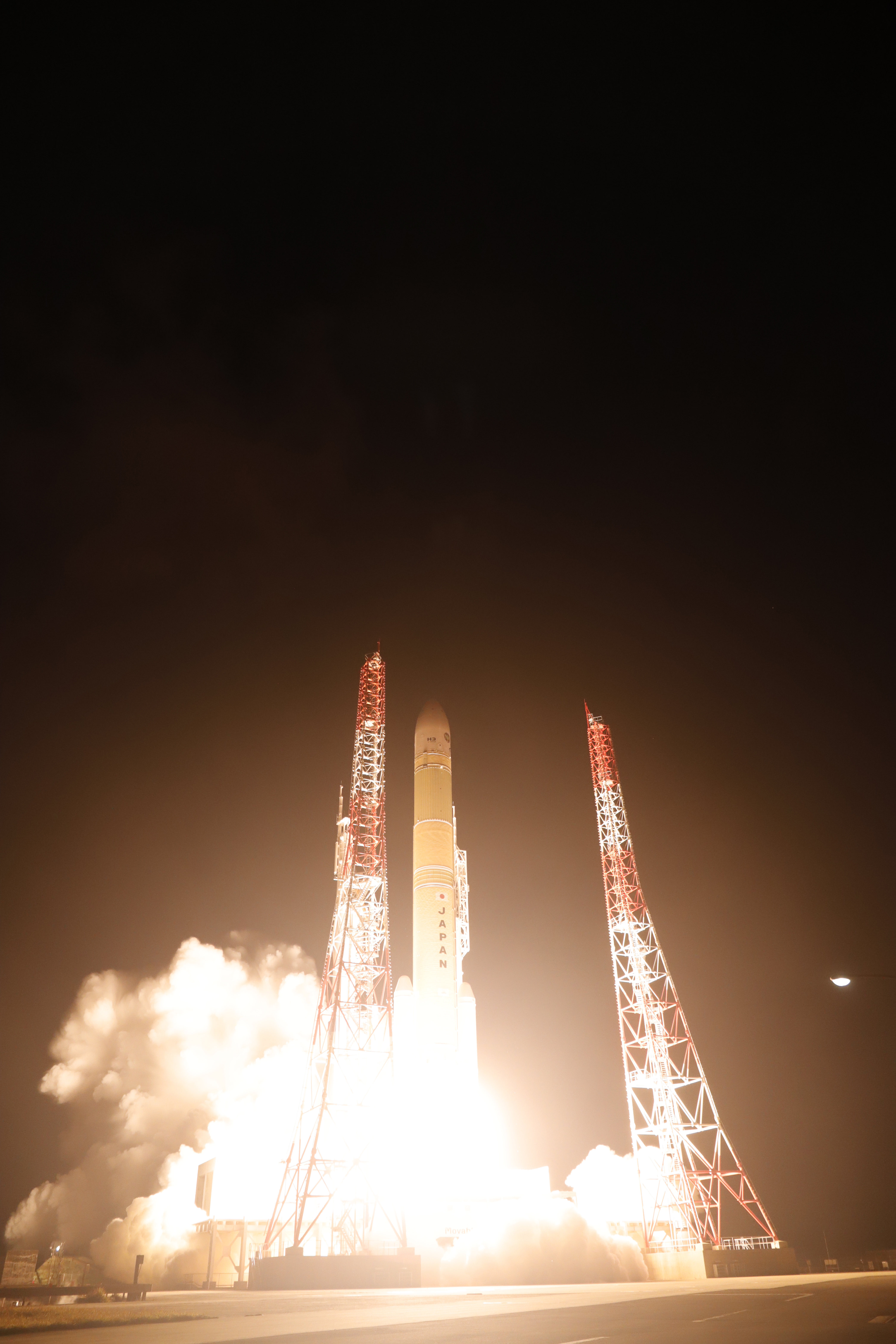
At 4:23 a.m. Japan time on 11 August, H3 flight 9 lifted off from Tanegashima carrying Michibiki-7, also designated QZS-7. JAXA reports a successful separation after 29 minutes and four seconds, into the planned orbit. The flight adds a spacecraft to Japan’s Quasi-Zenith Satellite System (QZSS); it does not itself mark the start of seven-satellite service.
QZSS, operated by Japan’s government, complements GPS navigation signals with satellites that remain high in the sky over Japan. That geometry helps maintain reception in dense urban areas and mountainous terrain, where satellites near the horizon can be blocked. The system’s augmentation services also target applications that need greater precision, from smart agriculture and logistics to disaster prevention.
The move to seven satellites changes the system’s intended role. QZSS began service in 2018 as a four-spacecraft constellation working alongside global systems. Japan’s Cabinet Office describes the planned seven-satellite arrangement as capable of providing QZSS positioning, navigation and timing (PNT) service on its own. QZS-7 is one of the final pieces of that architecture; reaching orbit is a milestone, while operations still require validation.
The schedule had already taken a setback in December 2025, when H3 failed to place Michibiki-5 in orbit after an upper-stage engine problem. The launcher later returned to flight, including a mission carrying six small satellites in June 2026, followed by QZS-7 in August. This success helps rebuild confidence in Japan’s launcher, while a longer run of flights is needed to establish reliability and support the cadence required by national programmes.
Japan’s Cabinet Office frames the seven-satellite expansion as resilience infrastructure: at least four QZSS spacecraft should then remain visible above Japan, allowing positioning from the Japanese system alone. That planned capability still depends on completing the constellation and operating its signals. Launching QZS-7 brings the programme closer to the goal without itself starting the new service.
QZSS also works with GPS receivers, increasing the number of signals available in Japan. The goal of independent Japanese positioning therefore coexists with the value of global systems to users. After this flight, the next step is to operate the spacecraft within the constellation, followed by a formal announcement of seven-satellite service once the technical conditions are met.
Documents and references
- JAXALaunch result of MICHIBIKI No. 7, Quasi-Zenith Satellite System (QZS-7) aboard H3 Launch Vehicle flight No.9
- Cabinet Office of JapanQuasi-Zenith Satellite System (QZSS)
- Cabinet Office of JapanQZSS Performance Standard and Service Performance Evaluation
- Space.comJapanese H3 rocket launches 10,800-pound navigation satellite to high Earth orbit
- Cabinet Office of JapanAdvantages of QZSS
- Cabinet Office of JapanQZSS is Becoming a Seven-satellite Constellation