
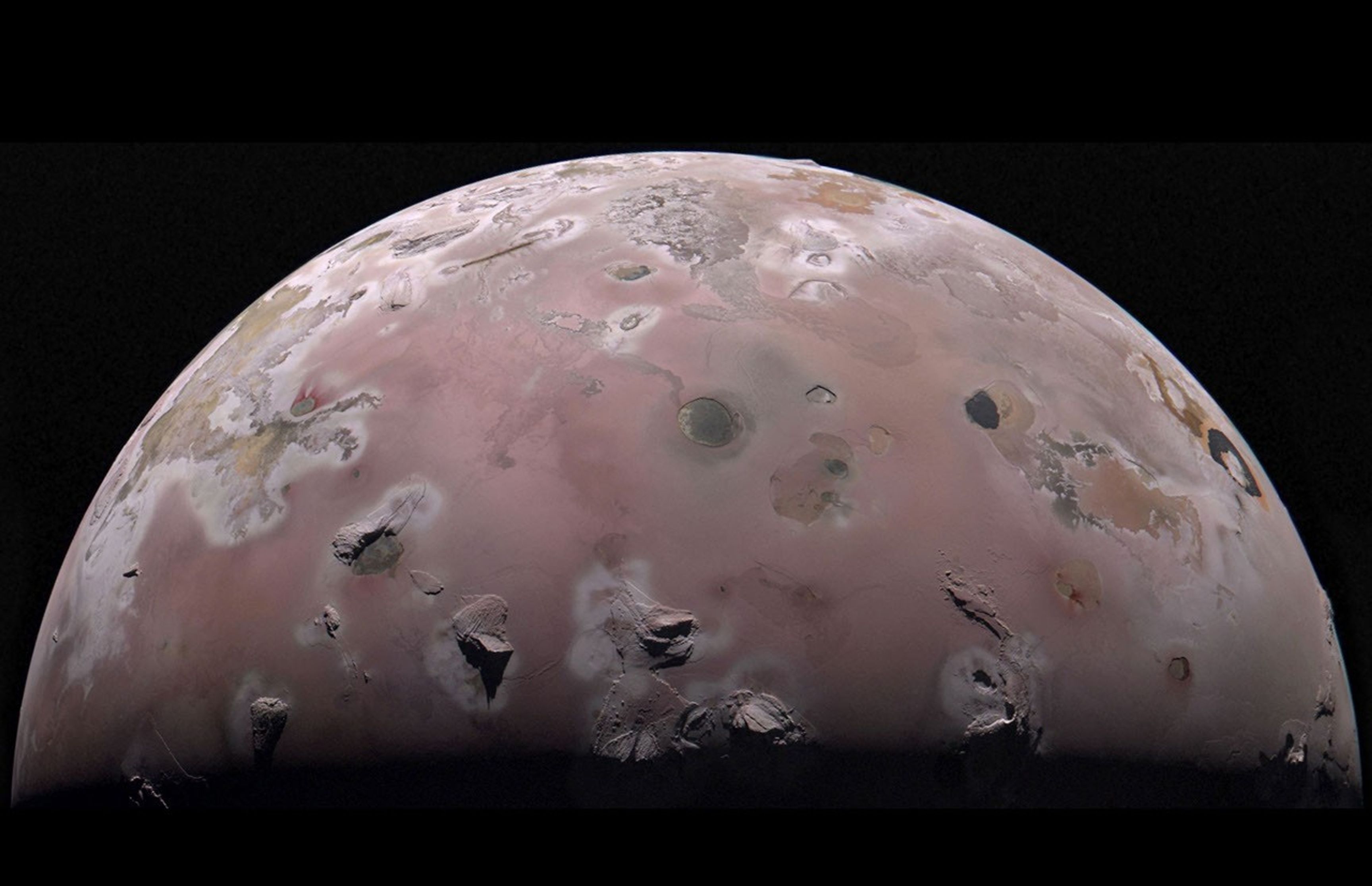
The study published on 22 July examines Juno measurements from flybys about 1,500 kilometres above Io in December 2023 and February 2024. Its microwave radiometer found a temperature rise exceeding 40 °F, roughly 22 °C, a few feet below the surface. Sunlight alone cannot explain that gradient.
The research paper explains the instrument’s advantage: microwave frequencies sample thermal emission from different depths after the researchers correct for reflected sky radiation. The authors also infer a low-density surface layer consistent with porous volcanic material and broad, relatively smooth areas. This approach complements infrared observations, which mainly register Io’s exposed hot surface and eruptions.
The result arose from an opportunity in Juno’s extended mission. Built primarily to study Jupiter, the spacecraft had its orbit altered by encounters with Ganymede and then Europa before its two close Io passes. A radiometer originally meant to probe Jupiter’s clouds could therefore observe a rocky moon.
A NASA analysis reported in 2025 had already combined microwave and infrared data, suggesting that slowly cooling lava lay beneath a solid crust across roughly 10% of Io’s surface. The new study compares that picture with another: steady background heat flowing through a conducting crust. Both fit the observations, yet they imply different routes for internal energy to escape into space.
Repeated gravitational stretching by Jupiter and neighbouring moons powers Io’s internal heat. Before the close passes, Juno’s team was already seeking to clarify how those forces relate to eruptions and the moon’s interior. Mapping buried warmth adds another piece to that investigation: visible hot spots alone cannot describe how heat crosses the whole moon.
Documents and references
- NASA / JPLNASA’s Juno Takes Temperature of Jupiter’s Fiery Moon Io
- Journal of Geophysical Research: PlanetsIo Sub-Surface Temperature Profile Observed by the Juno Microwave Radiometer
- NASA ScienceJuno mission overview
- NASANASA’s Juno Mission Gets Under Jupiter’s and Io’s Surface
- NASANASA’s Juno to Get Close Look at Jupiter’s Volcanic Moon Io on Dec. 30