
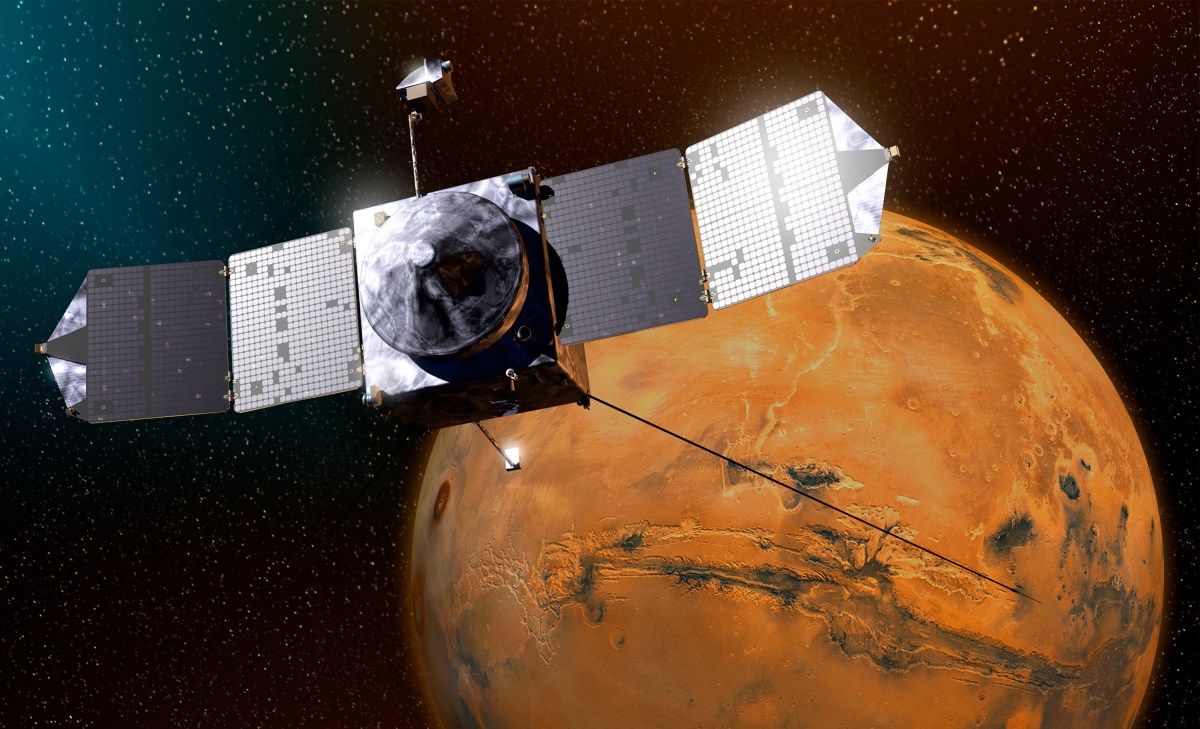
NASA awarded Blue Origin a firm-fixed-price contract with a maximum potential value of about $700 million. The company is to design, develop, integrate, launch and operate a Mars telecommunications orbiter, with delivery due by 31 December 2028. NASA targets operations around Mars by 2030.
The future orbiter will relay science data, images and navigation information for missions on or around Mars. It is a dedicated communications spacecraft, whereas current relays fly aboard exploration orbiters.
Today, NASA and ESA science orbiters provide much of the relay service. A rover sends data to a passing satellite with a larger antenna and greater transmission power for the link to Earth. This path raises the data rate available from the surface, where mass and power limits constrain direct transmissions.
Reliance on science missions creates a vulnerability: an ageing orbiter can remain essential to another programme’s communications. NASA was already studying a model in 2014 in which a commercial provider would own and operate relays, keeping the service available beyond individual science missions.
NASA broadened that work in 2024. Nine companies, including Blue Origin, SpaceX and Lockheed Martin, received small awards to study twelve concepts for Mars services: relay, imaging, payload hosting and delivery. The programme explored several ways for industry to provide functions now tied to public missions, placing communications within a broader market for Mars services.