
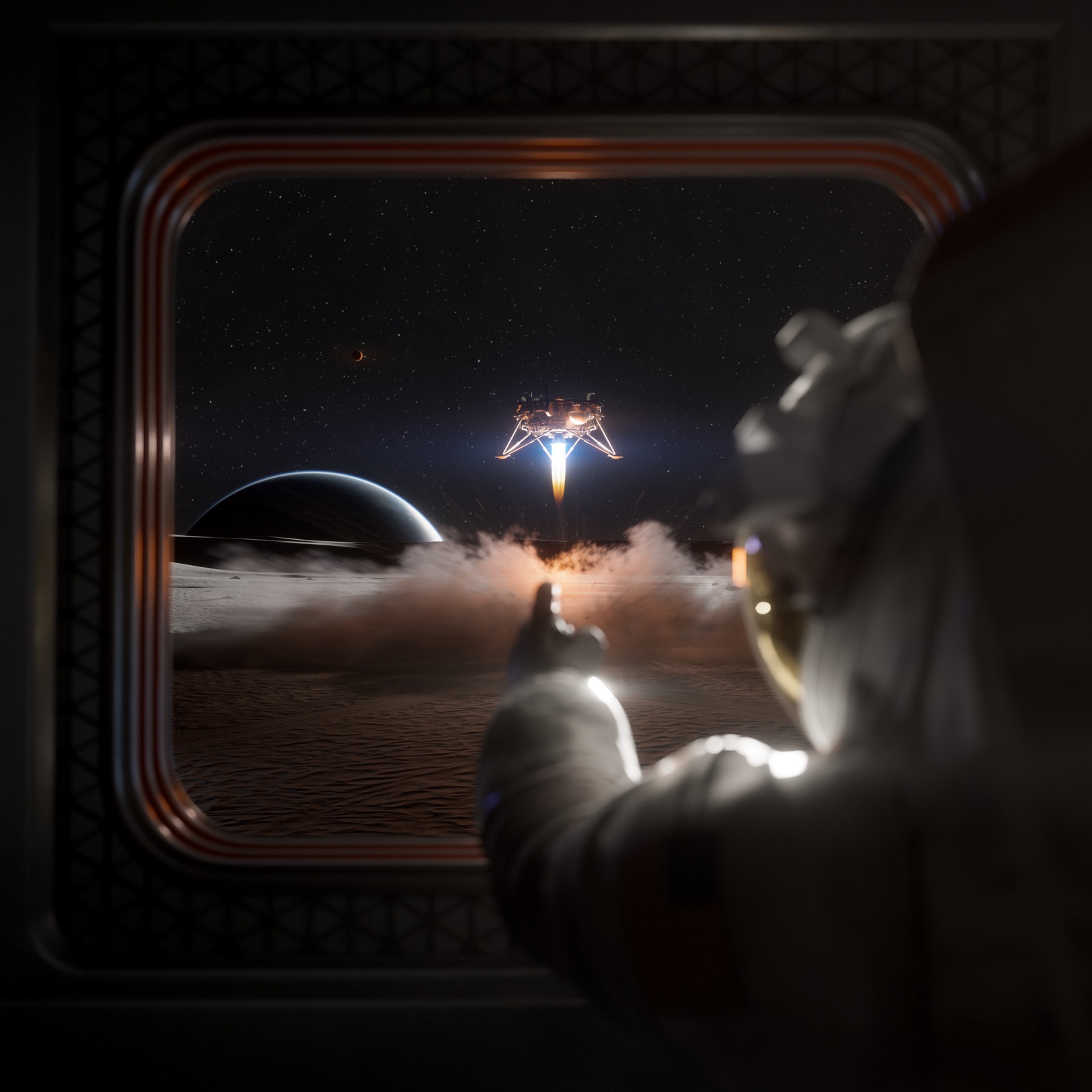
NASA awarded four lunar deliveries worth $590.4 million in total: two to Astrobotic, one to Firefly and one to Intuitive Machines, planned for late 2028. Each will carry three instruments: SCALPSS cameras, LRA laser retroreflectors and the LETS radiation spectrometer. The landers will be updated versions of previously flown designs.
CLPS means Commercial Lunar Payload Services. NASA buys an integrated service: payload preparation, mission operations, launch from Earth and lunar deployment. Eligible companies compete for deliveries as the agency’s needs evolve.
SCALPSS images the ground before and during a lander’s descent. Its stereo views reconstruct in three dimensions the area where engine plumes move lunar dust, informing future landings. LRA retroreflectors return laser pulses sent from orbit and provide a surface position marker. Together these instruments address both descent hazards and navigation for subsequent missions.
The providers bring different flight records. Intuitive Machines delivered six NASA instruments near the south pole with IM-1 in 2024. Firefly delivered ten payloads to Mare Crisium with Blue Ghost 1 in 2025. Astrobotic’s Peregrine launched in 2024 but suffered an anomaly and did not land.
The contractual framework dates to 2018, when NASA selected nine US companies eligible to bid for separate lunar delivery orders. Those CLPS indefinite-delivery contracts had a combined $2.6 billion ceiling over ten years. NASA buys transport to the surface for each instrument package while the companies conduct their own lander missions.