
On 17 August, NASA added All Points Logistics, Blue Origin, Firefly Aerospace and L3Harris to SPOC. They may provide facilities and prelaunch processing services for spacecraft and rocket hardware through delivery to the launch pad.
The multiple-award vehicle has a $100 million ceiling and runs through 1 February 2033; the ceiling is not guaranteed spending.
Kennedy Space Center describes support that can span assembly, processing, transport, handling, fueling, testing and integration with launch vehicles for orbital missions. A processing centre prepares hardware and hands it over to the launcher according to mission needs. Across NASA’s network, this step links spacecraft manufacturing with operations at the departure site and the launch sequence. Handling and fueling require suitable facilities and teams trained to work with sometimes hazardous hardware, well before transfer to the launch vehicle.
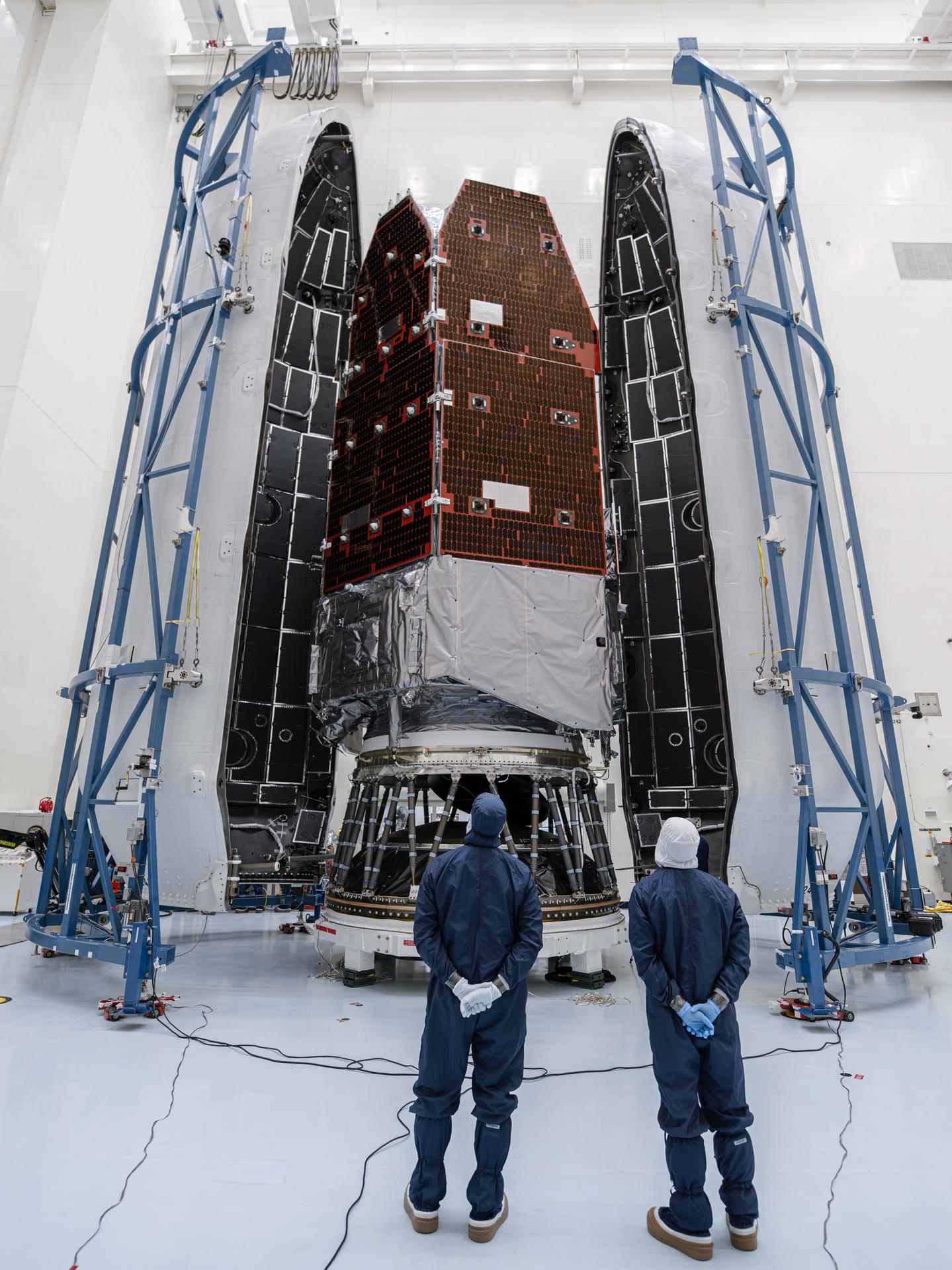
Roman shows that chain in practice. At Kennedy, teams enclosed the telescope inside Falcon Heavy’s fairing on 21 August at the Payload Hazardous Servicing Facility. The fairing maintained a controlled environment in transit and then protected the observatory during ascent. On 25 August, the encapsulated spacecraft moved to SpaceX’s hangar at Launch Complex 39A. These completed steps illustrate the handoff from payload processing to launch-vehicle integration.
NASA’s Kennedy-based Launch Services Program supports uncrewed launches ranging from weather satellites and telescopes to spacecraft bound for Mars. That range explains why prelaunch processing cannot follow one hardware sequence for every payload. Teams must coordinate spacecraft checks, transport and the interface with the selected launch vehicle before handing the integrated hardware to the pad.
Documents and references
- NASANASA Selects Companies to Provide Payload Processing Services
- NASALSP Overview
- NASA Kennedy Space CenterOrbital Launch Vehicles
- NASA ScienceNASA’s Roman Telescope Enclosed in SpaceX Falcon Heavy Rocket Fairing
- NASA ScienceNASA’s Roman Space Telescope Arrives at Hangar