
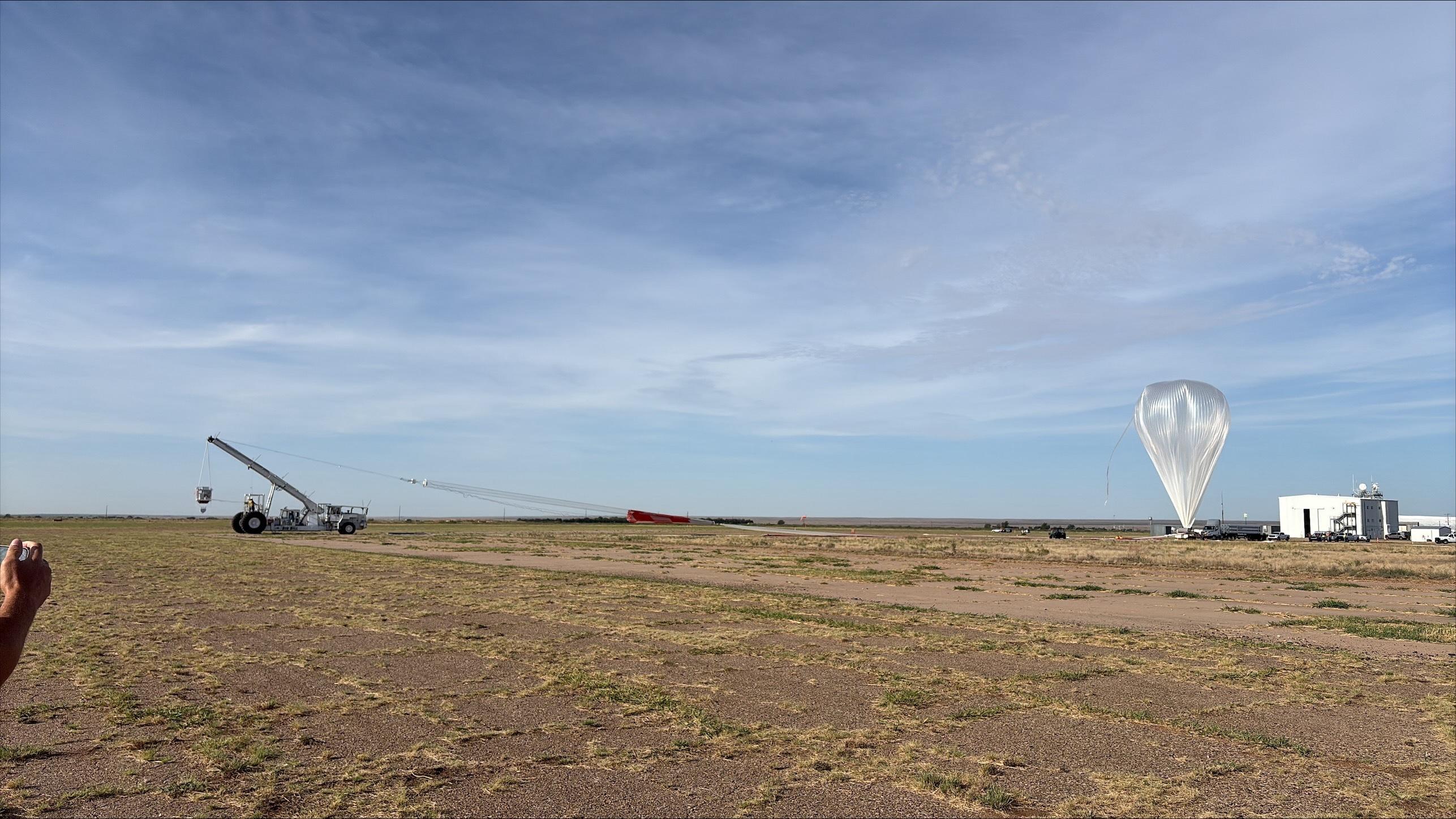
On 22 August, the Salter balloon lifted off from Fort Sumner at 8:31 a.m. local time, opening NASA’s 2026 campaign. It reached about 123,000 feet and flew for four hours and eight minutes. The flight tested hardware for later missions; roughly 100 experiments by students aged 11 to 18 rode as secondary payloads.
NASA had announced six planned flights for the campaign on 13 August. Four balloons were to carry technology demonstrations and secondary science experiments; another mission would study the Sun’s corona using a precise pointing system. Salter thus opened a series of flights with different objectives.
NASA describes Fort Sumner as its main domestic balloon launch site, with a hangar, payload integration facilities and an operations centre. That infrastructure makes repeated tests practical: teams can prepare complex instruments close to the launch area and examine how they performed after recovery. A balloon flight thus provides a maturation step between the laboratory and an orbital mission.
The agency’s balloon programme carries instruments above much of the atmosphere for astrophysics, Earth research and technology development. Flights can be prepared faster and at lower cost than spacecraft missions, with endurance and payload capacity varying by balloon design.
The Cubes in Space experiments point to another purpose of these flights: teaching teams to build a real payload under mass, integration and recovery constraints. NASA describes the programme as serving 11-to-18-year-olds on balloons and sounding rockets.