
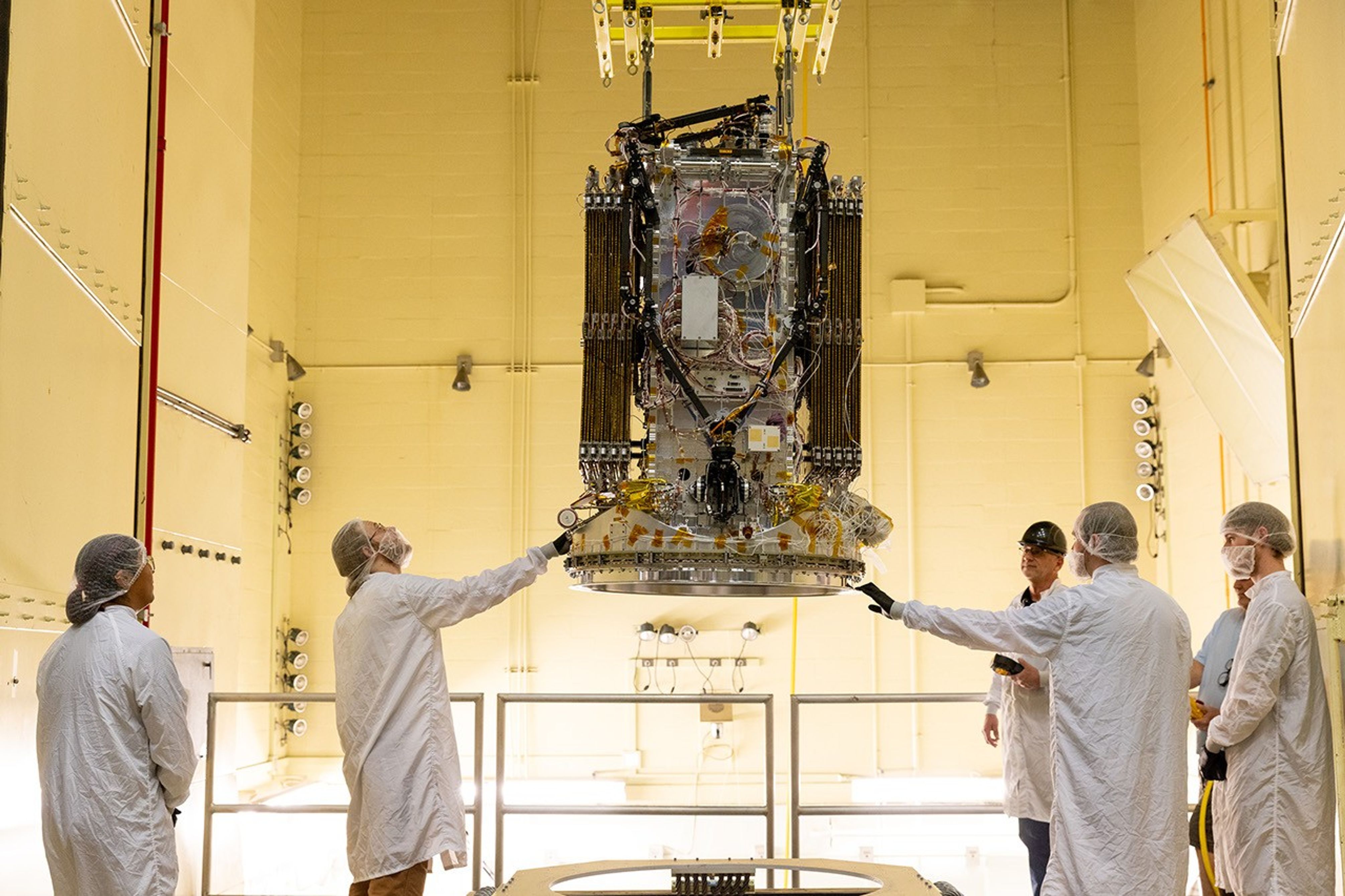
On 19 August, NASA and Katalyst said LINK would not capture Swift or raise its orbit because of an ongoing attitude-control issue. At that date, the spacecraft was expected to continue rendezvous and proximity tests to demonstrate in-orbit servicing capabilities.
Swift needed a boost because atmospheric drag lowers its low-Earth orbit, an effect intensified by a period of solar activity. Launched in 2004, the observatory detects gamma-ray bursts and rapidly points its ultraviolet, optical and X-ray telescopes. NASA’s 2025 contract with Katalyst was intended to extend those observations by moving Swift to a higher orbit.
Teams had oriented Swift to reduce drag and paused some science. After the boost was cancelled, its ultraviolet/optical and X-ray telescopes resumed observations on 26 August. Their shutdown in February had bought more time in orbit. This restart did not yet restore automatic alerts from the gamma-ray telescope.
A further update followed on 28 September: NASA said it ended its involvement in LINK on 3 September and that the spacecraft re-entered on 25 September. LINK had still tested its propulsion and deployed its three robotic arms; it passed within about 12 to 15 kilometres of Swift without attempting a closer approach.
By late September, the Burst Alert Telescope was again detecting gamma rays after its 18 September restart and calibration. On 21 September, controllers restored automatic slewing of the other two telescopes toward events it detects. NASA placed Swift at about 325 kilometres altitude and estimated it would reach the roughly 300-kilometre operational threshold in early to mid-October.