
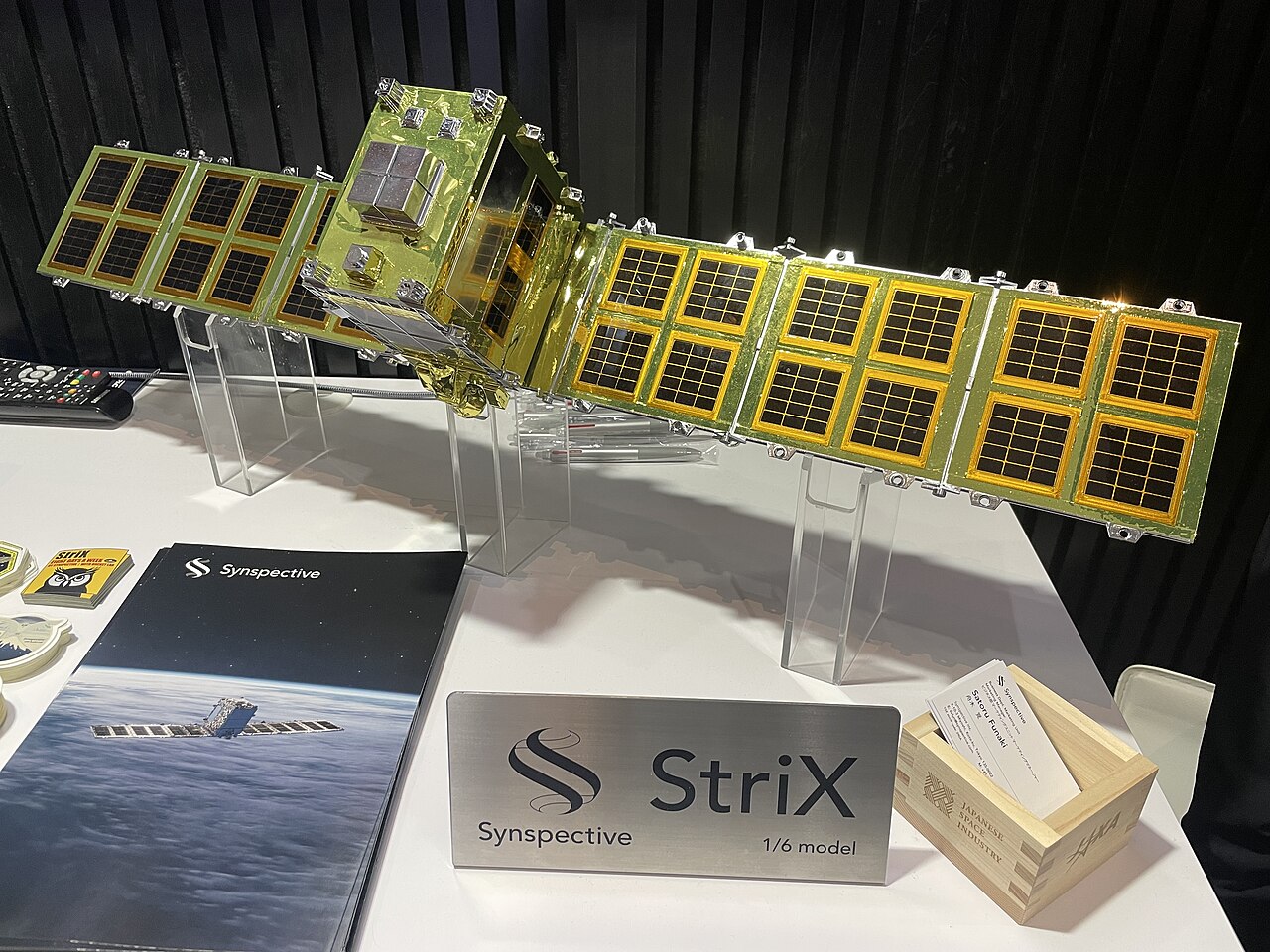
“Owlright Owlright Owlright” lifted off from Māhia at 12:39 p.m. local time on 26 September. Rocket Lab says Electron placed Synspective’s thirteenth StriX satellite in a 559-kilometre low Earth orbit. It was Electron’s 97th flight and its 18th launch of 2026, separate from the “Owl By The Dozen” mission flown on 19 September.
Synspective expects several months of testing and commissioning to verify the spacecraft’s imaging capability. Reaching orbit confirms transportation; the operator then has to establish that the antenna, instruments and data chain deliver usable products. For customers, that operational step matters more than the satellite’s position as number thirteen in a launch sequence.
Synthetic aperture radar can image by day or night and under cloud cover. A larger constellation aims to shorten the interval between observations of the same area. NASA training material explains why the technique is useful for floods and ground movement. How quickly images are processed and delivered on the ground still matters to the value of those additional orbital passes.
Synspective’s commercial model is evolving through OMNIA, announced on 15 September. It offers governments and companies access to shared constellation capacity and analysis tools, with direct downlink options for sensitive users. Once commissioned, satellite thirteen can add supply to that shared service.
Two StriX deliveries in eight days show what the transport partnership contributes to building the network. Rocket Lab lists fourteen further dedicated flights booked before 2030. Synspective will have to match that launch pace with regular commissioning in orbit to offer more imagery to customers.
Expansion also draws on Japanese public support. Synspective was selected under the JAXA-managed Space Strategy Fund for mass production and launch of small radar satellites, with the project scheduled through March 2030. The September flights therefore lead to an industrial question: whether manufacturing, launch and commissioning can continue regularly enough to sustain an observation service rather than a collection of isolated orbital successes.
Documents and references
- Rocket Lab97th Electron mission
- SynspectiveSynspective’s 13th SAR Satellite Successfully Reaches Target Orbit
- NASA ARSETDisaster Assessment Using Synthetic Apert Radar
- SynspectiveSynspective Announces Synspective OMNIA
- Rocket LabOwlright, Owlright, Owlright mission profile
- SynspectiveSynspective selected for Space Strategy Fund
- SynspectiveLaunch Mission