
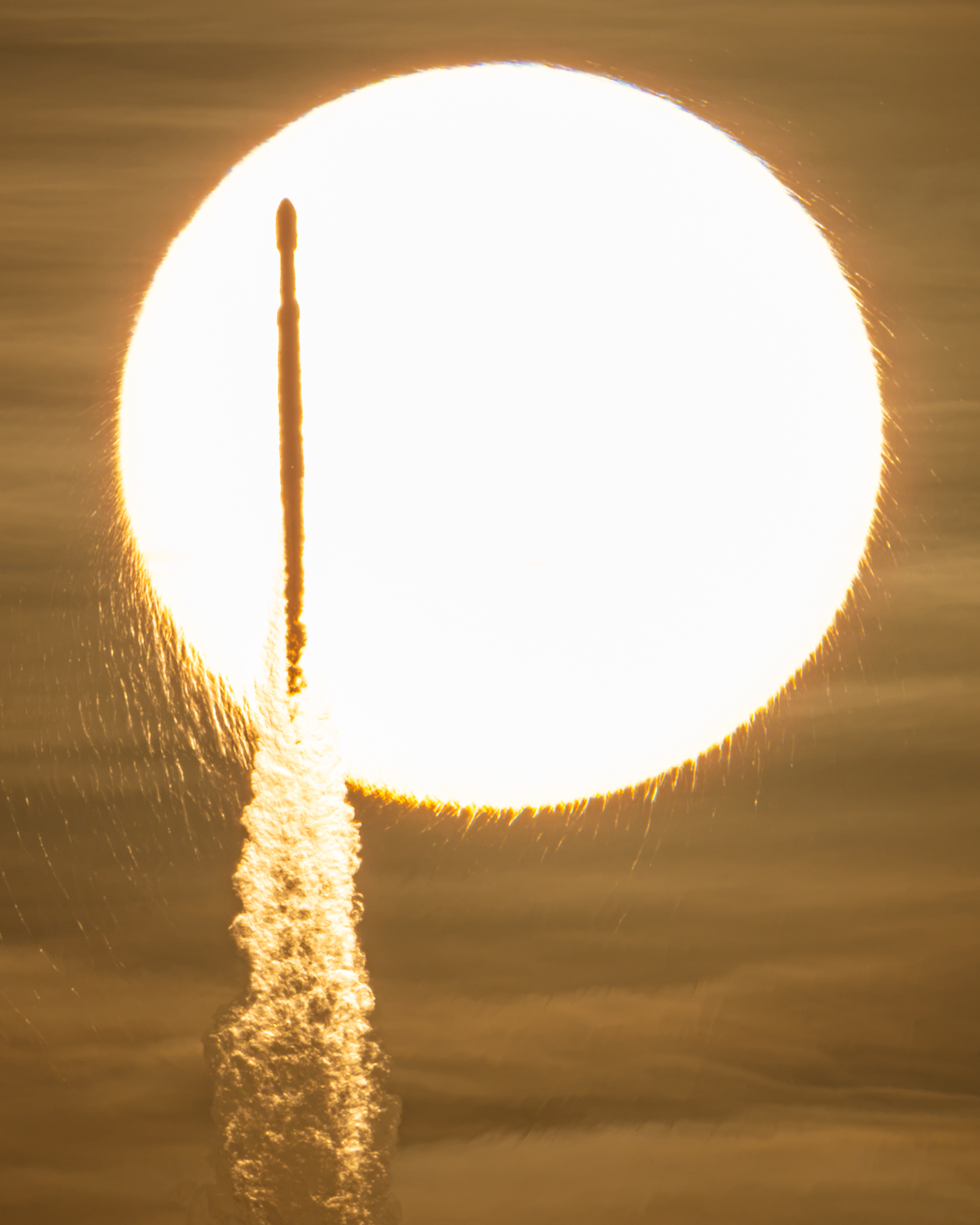
At 7:26 a.m. Florida time on 30 August, Falcon Heavy launched Roman toward L2, about one million miles away. The observatory separated 31 minutes later; ground controllers received telemetry and confirmed solar-array deployment. It begins a roughly three-month journey before orbital checks.
Roman honours Nancy Grace Roman, NASA’s first chief astronomer and an advocate for space observatories. First called WFIRST, the project answered a goal set by US astronomers in their 2010 decadal survey: conduct a wide-field infrared survey. Its 2.4-metre primary mirror is comparable in size to Hubble’s, but the Wide Field Instrument sees a patch of sky at least 100 times larger. The gain is statistical reach: measure far more galaxies and stars in less observing time.
That reach is aimed in part at dark energy, the name for the unknown cause of the universe’s apparent accelerated expansion. Roman will measure galaxy distances and distributions across cosmic time, allowing scientists to test explanations that include changing dark energy or limits to general relativity on the largest scales. It complements Webb’s deep observations: both work in infrared astronomy, while Roman emphasizes breadth and census-taking and Webb detailed study of selected targets.
The mission will also search for planets. Its microlensing survey will monitor hundreds of millions of stars in the Galactic bulge: the gravity of a foreground star and its planets can briefly magnify a background star. The technique finds worlds farther from their stars than transit surveys typically detect, as well as rogue planets. A separate coronagraph will test direct-imaging technology; NASA describes it as a demonstration, rather than Roman’s main route to finding habitable worlds.
Launch has yet to deliver scientific results. During the three-month journey to L2, teams are switching on, adjusting and calibrating the systems before surveys begin. NASA says the commissioning schedule may change as engineers assess the spacecraft. The solar panels and sunshade have deployed; the antenna and cover protecting the mirror still have to move into place. Around L2, a halo orbit will offer a steadier thermal setting and broad view of the sky. The mission's scientific return now depends on those checks and the quality of the data to follow.
Documents and references
- NASA ScienceRoman Launch
- NASANASA Completes Nancy Grace Roman Space Telescope Construction
- NASA ScienceWhy the Roman Space Telescope?
- NASA Jet Propulsion LaboratoryNASA’s Dark Universe-Seeking Nancy Grace Roman Space Telescope Launches
- NASA ScienceRoman Commissioning