
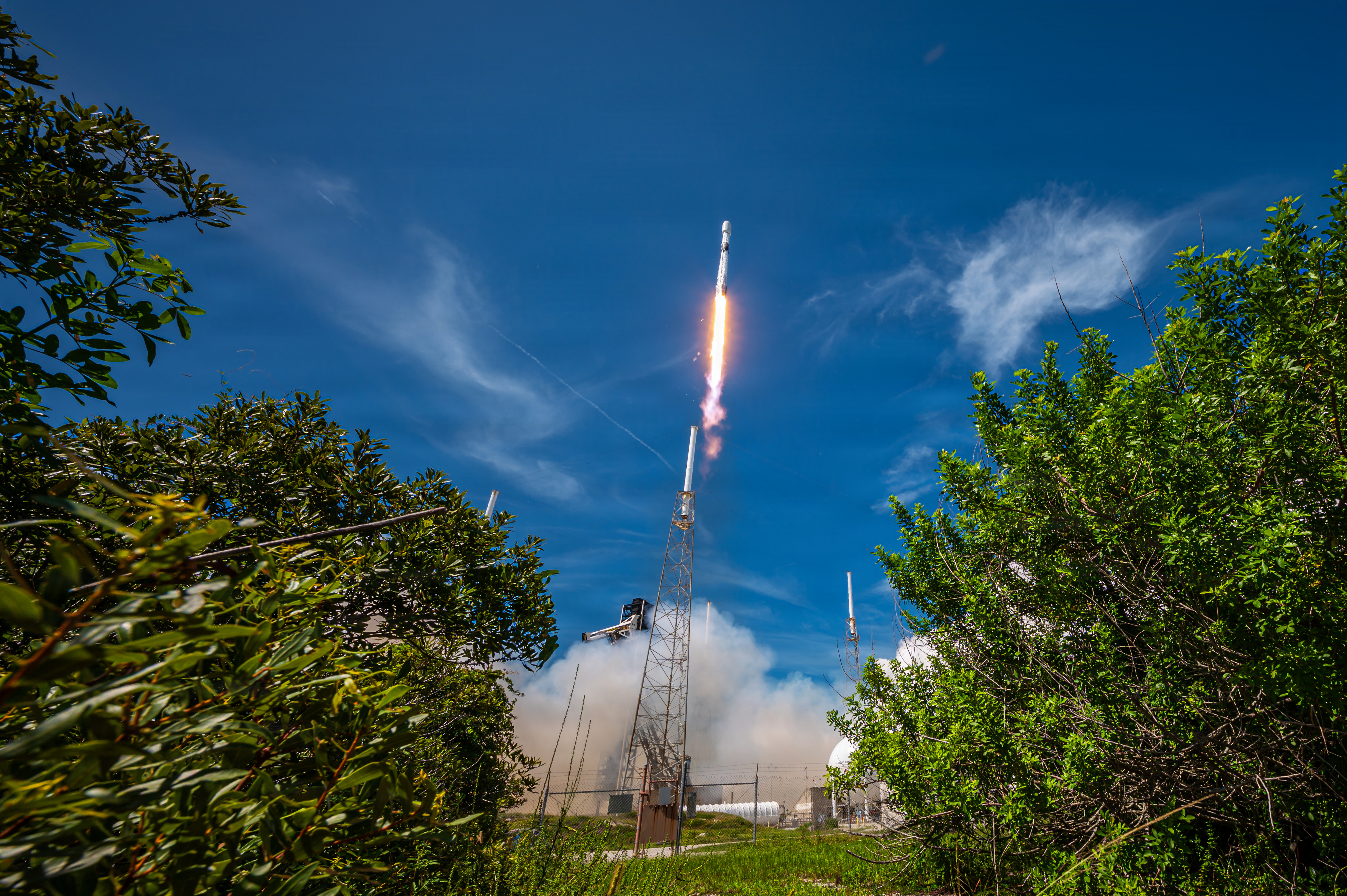
A Falcon 9 launched O3b mPOWER satellites 11, 12 and 13 from Cape Canaveral on 13 September. SES had ten of this generation in orbit; the trio completes the planned 13-satellite constellation. Launches are over, but the spacecraft must still reach operating orbit and be commissioned.
The flight was also the 700th mission for the Falcon family, Space.com reported, with the satellites released toward medium Earth orbit at about 8,000 kilometres altitude. That position distinguishes the system from low-orbit networks, which use many more spacecraft and frequently hand over coverage. O3b mPOWER uses this intermediate orbit to provide high-throughput connectivity with less latency than geostationary satellites.
Completing deployment follows a staged build-up of capacity. Satellites 9 and 10 launched in July 2025; SES said then that all thirteen could triple available capacity by 2027 compared with the configuration already in service. That projection is the company’s commercial target, not a measurement of traffic already carried: the result depends on commissioning and on demand from operators.
The system uses software-defined payloads that can steer beams and allocate bandwidth as demand changes. Boeing describes that flexibility as a way to move capacity without changing hardware in orbit. It cites mobile networks, government missions and remote sites, where demand changes with place and time. SES can redirect a beam toward a temporarily busier area. Such reconfiguration can also follow users on the move.
The decisive next phase is operational. Boeing forecasts service entry for the three new satellites in mid-2027, after orbit raising and initialization; the first ten are already serving customers. SES has therefore completed its launch programme before all planned capacity is commercially available. For customers, the value of the full constellation will depend on commissioning and the ground network as much as on the number of satellites in orbit.
Documents and references
- SESSES launch statement
- Space.comFalcon 9 flight report
- SESSES 2025 launch update
- BoeingBoeing payload explainer
- BoeingBoeing constellation status