
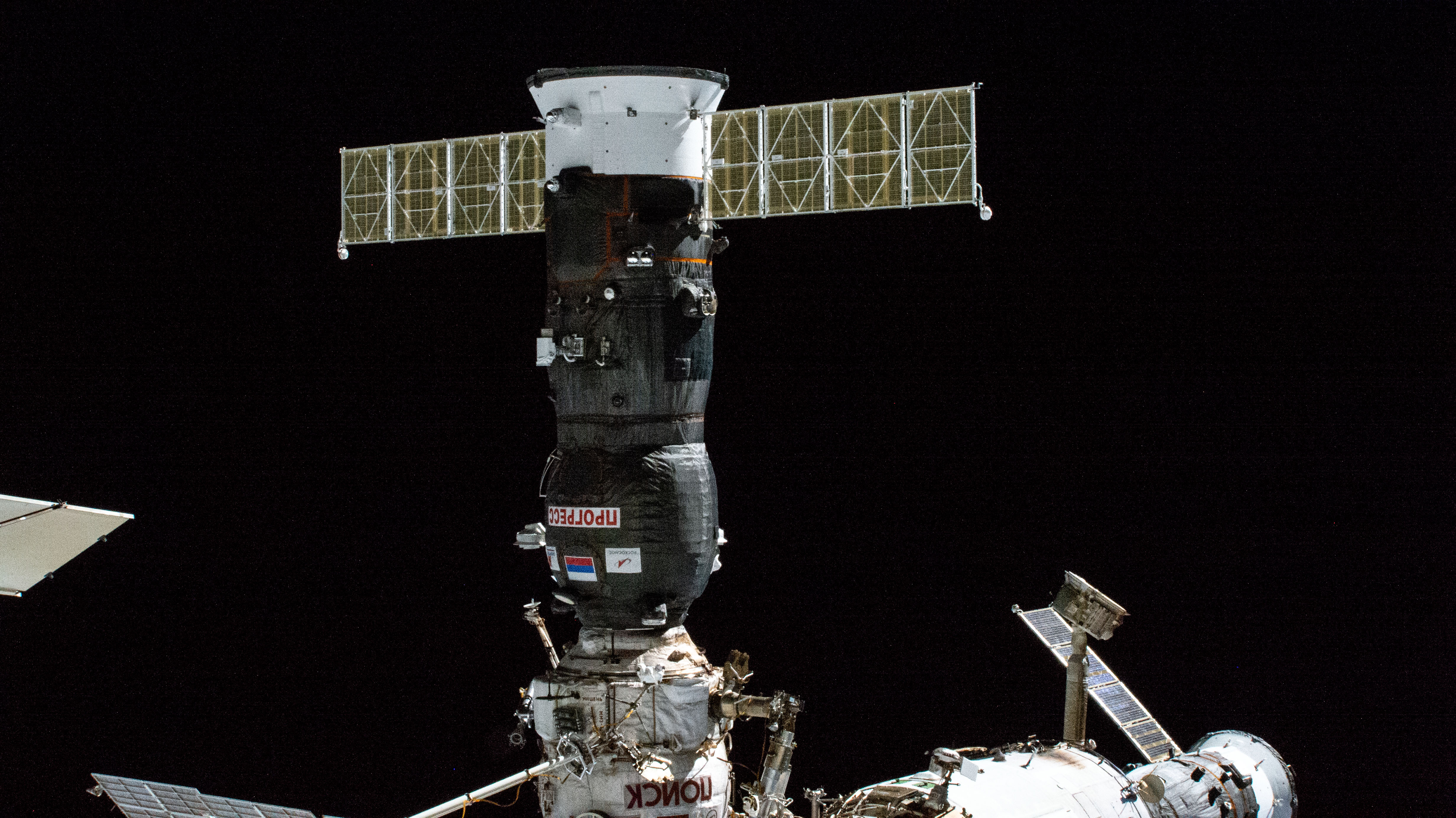
Progress 95 lifted off from Baikonur on a Soyuz rocket at 22:21 UTC on April 25, already April 26 in Kazakhstan. NASA confirmed that the uncrewed Russian vehicle was in orbit with about three tons of food, fuel and supplies for Expedition 74. Automatic docking was then planned for April 27 at Zvezda’s aft port.
Space.com called Progress 95 the second Russian freighter launched to the ISS in 2026, after Progress 94 in March. It was headed for Zvezda’s aft port, vacated by Progress 93 on April 20. Launch and docking remained separate milestones.
Progress is built for that task. NASA describes an automated, uncrewed vehicle derived from Soyuz that carries supplies and fuel, and whose engines can raise the ISS orbit or adjust its orientation. Propellant is therefore part of a broader station-service capability: while docked, the freighter itself can contribute to orbital operations.
The destination port first had to be cleared. NASA reported on April 20 that Progress 93 would leave Zvezda’s aft port after seven months, packed with waste for disposal during atmospheric re-entry. Releasing an older freighter makes room for the next one and removes material no longer needed aboard. Station logistics therefore includes departures and waste handling as well as incoming supplies.
NASA’s ISS reference guide separates the dry cargo, water, gases and propellant that a Progress vehicle can deliver. A roughly three-ton flight therefore supports several station needs at once: the crew’s daily life, the cabin environment and orbital operations. After the April 25 launch, rendezvous and unloading were the steps needed to turn transported mass into usable reserves aboard the laboratory.