
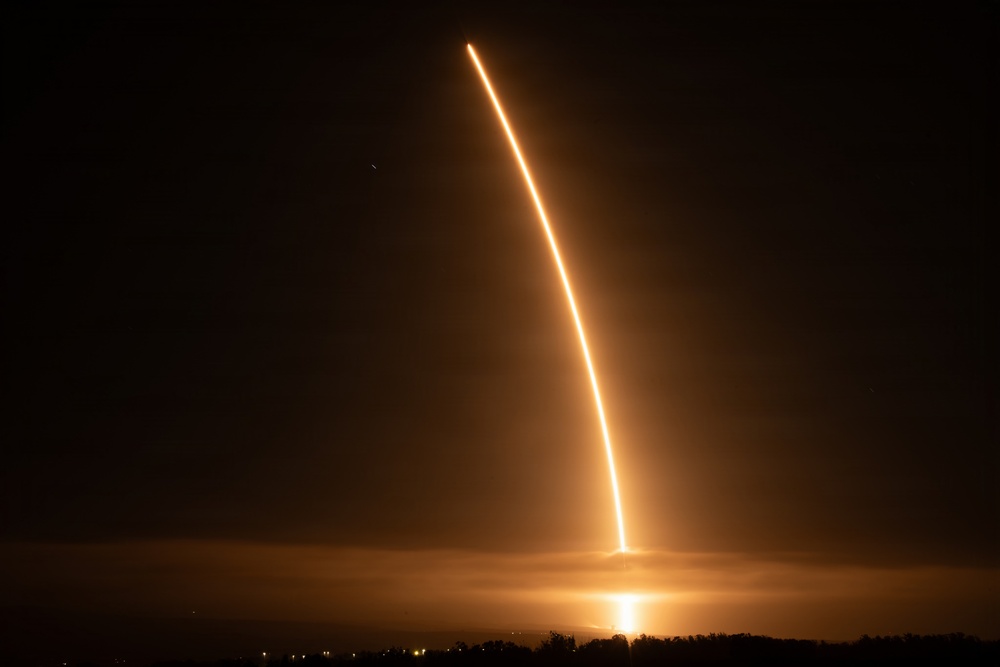
On April 26, a Falcon 9 left Vandenberg carrying 25 Starlink V2 Mini satellites. Spaceflight Now counted it as SpaceX’s 50th Falcon 9 flight of the year. Liftoff came at 14:37 UTC, and the upper stage deployed the spacecraft a little more than an hour later.
The B1088 first stage was making its 15th flight. Padzero records a 40-day gap since its previous mission and a landing on the Of Course I Still Love You droneship. Recovery gives the 50-flight milestone industrial meaning: the cadence depends on refurbishment and inspection of flown stages as well as production of new satellites.
Starlink’s technical report says the V2 Mini generation increases per-satellite throughput and uses laser links between spacecraft. Adding 25 units is therefore more than an orbital count: each batch is intended to thicken network coverage and capacity. Those family specifications do not establish the precise configuration or active service status of every satellite launched that day.
Space Launch Live records how the slot was set: first targeted for April 25, the flight moved to April 26 and underwent two short timing adjustments the preceding day. Its status changed from “in flight” to “success” at 15:43 UTC on launch day. These steps show the scheduling flexibility behind a high flight rate: a launch window may shift, while the public record separately confirms liftoff and mission outcome.
Space.com counted 42 Starlink missions among SpaceX’s first 50 launches of 2026. Falcon 9’s cadence is therefore closely tied to recurring internal demand alongside flights for other customers. The April 26 milestone shows how a constellation operator can give its launcher a dense, regular manifest while drawing on its own satellite production capacity.
Documents and references
- Spaceflight NowSpaceX flies 25 Starlink satellites to orbit on its 50th Falcon 9 launch of the year
- Space.comSpaceX launches its 50th mission of the year
- StarlinkProgress 2024
- Space Launch LiveStarlink Group 17-16 launch results
- PadzeroSpaceX Falcon 9 Starlink Group 17-16 launch