
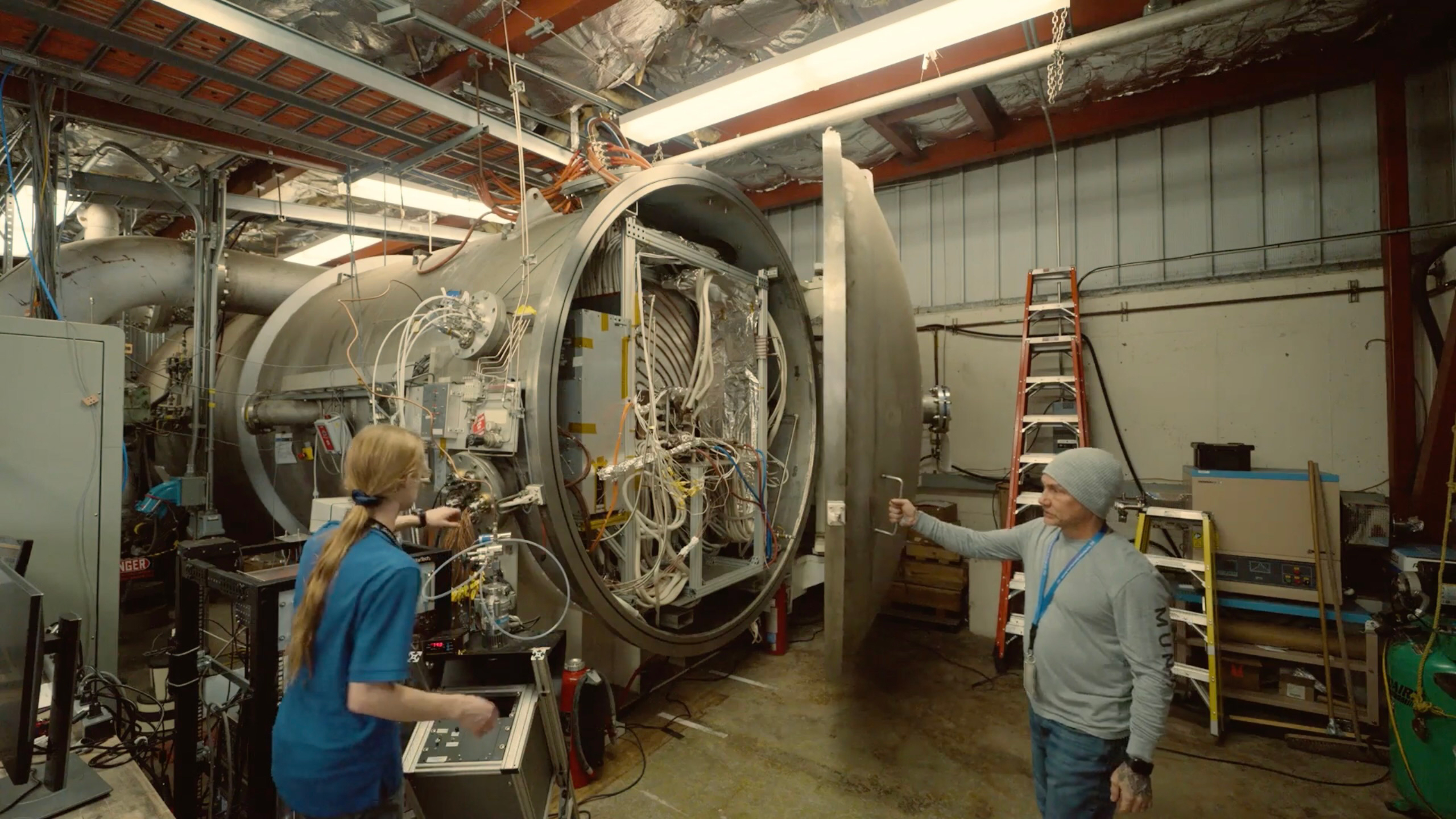
NASA’s Jet Propulsion Laboratory reported on April 28 that a lithium-vapour magnetoplasmadynamic thruster reached 120 kilowatts in a February 24 test. Engineers fired it five times inside a specialised vacuum chamber. This was a ground demonstration of a prototype at power well above the electric thrusters currently flying on NASA spacecraft.
An MPD engine drives a strong current through plasma; its interaction with a magnetic field accelerates material to produce thrust. Lithium feeds a design intended for much higher power than common electric engines. Instantaneous thrust remains modest compared with a chemical rocket, but sustained operation can build substantial velocity over time.
The Psyche probe shows the current scale of electric propulsion in service. Its mission documentation describes four Hall thrusters fed with xenon and powered by large solar arrays. JPL says the new test used more than 25 times their electrical power. That comparison concerns power, rather than a demonstrated journey time to Mars.
Thermal endurance is a central engineering challenge. A Princeton study of a 30-kilowatt lithium MPD thruster models electrode temperatures and the handling of reactive lithium in a protected enclosure. That work helps frame JPL’s result: reaching 120 kilowatts establishes a power level, while the lifetime of hot components must be demonstrated for sustained operations.
NASA’s nuclear electric propulsion work funds the research because supplying such power far from the Sun is a major design problem. Pairing a reactor with efficient electric engines could reduce propellant mass for heavy Mars payloads. The February firing established operation at a new power level; endurance across a mission remains the next engineering problem.