
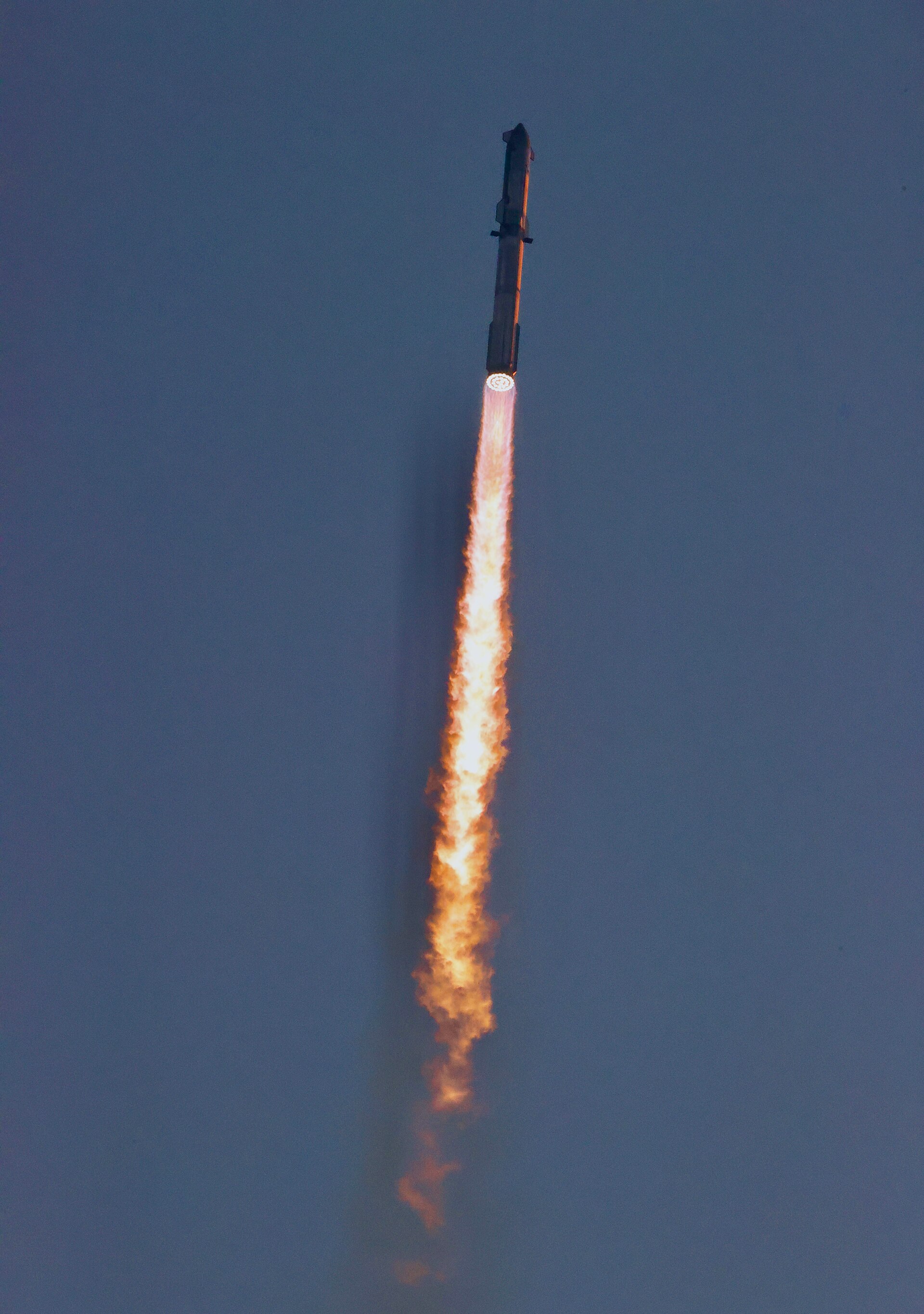
On 28 September, Starship reached orbit for the first time and deployed 26 Starlink V3 satellites, SpaceX reports. The company says it contacted each spacecraft; they are to raise their orbits before serving customers. One engine on each stage shut down during ascent. Super Heavy splashed down in the Gulf of Mexico; Starship deorbited before splashing down in the Pacific.
Flight 13 had released 20 Starlink V3 satellites in July on a trajectory expected to bring them back into the atmosphere roughly twenty minutes later. SpaceX was testing deployment and communications. In September, a Starship engine relight inserted the vehicle into orbit before it released 26 satellites intended to remain there. The advance lies in the trajectory as well as the deployment.
Starship pairs a Super Heavy booster with a spacecraft that also serves as the upper stage. SpaceX designs both for reuse; on Flight 14 they ended their missions at sea. Raptor engines burn liquid methane and oxygen. The orbital relight, satellite release and deorbit linked three manoeuvres needed for a complete space-transport mission.
NASA is developing a Starship variant with SpaceX to land crews on the Moon. Its inspector general reported programme delays and technical challenges in March. Remaining demonstrations include vehicle-to-vehicle cryogenic propellant transfer to support a lunar mission. Flight 14 supplies data on the launcher and its orbital operations; the transfer is a separate step in the lander programme.
Blue Origin is developing a second NASA lander, Blue Moon, giving the agency two industrial paths for later lunar missions. Both systems aim to carry astronauts down to the surface and back to lunar orbit, though their architectures differ. Starship’s next programme steps combine repeatable orbital operations with tests specific to the lander.
Documents and references
- SpaceXStarship Flight 14
- SpaceXStarship’s Thirteenth Flight Test
- SpaceXStarship vehicle overview
- NASA Office of Inspector GeneralNASA’s Management of the Human Landing System Contracts (IG-26-004)
- NASANASA Selects Blue Origin as Second Artemis Lunar Lander Provider