
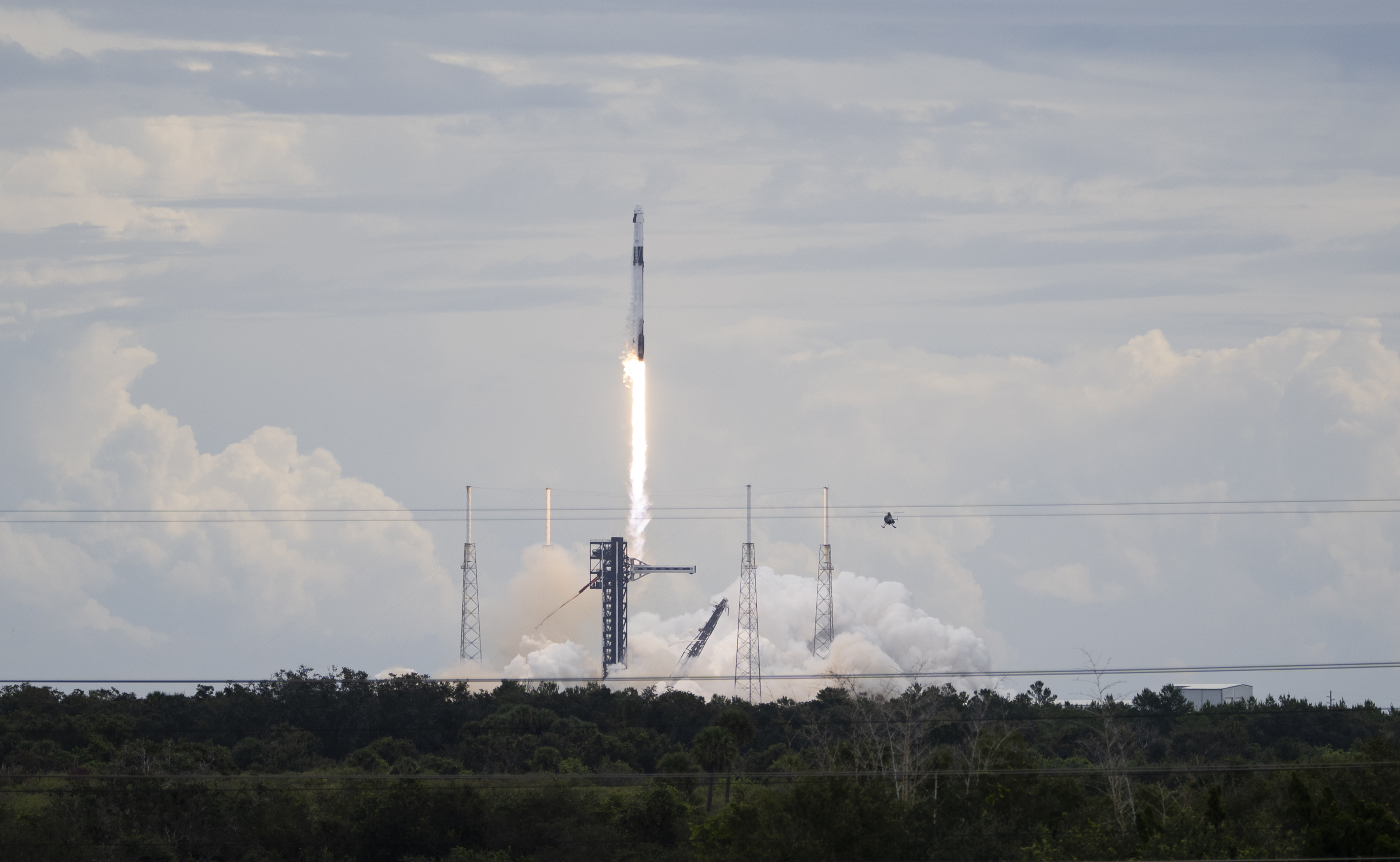
A Falcon 9 rocket sent Crew-13 into orbit on 1 October at 11:10 a.m. Florida time from Cape Canaveral’s Launch Complex 40. Aboard Dragon were NASA astronauts Jessica Watkins and Luke Delaney, Canadian Joshua Kutryk and Russian cosmonaut Sergey Teteryatnikov. They were bound for a long-duration science mission on the International Space Station.
The crew flew in Grace, a Dragon spacecraft previously used for the private Axiom-4 mission in 2025. SpaceX monitored its automatic manoeuvres from Hawthorne, California, while NASA followed station operations from Houston. Dragon is designed to approach and dock with the ISS autonomously; the crew can take manual control if needed. Crew-13 is SpaceX’s 13th crew rotation to the ISS under the Commercial Crew Program.
Dragon docked at Harmony’s forward port at 7:05 p.m. Eastern, 7 hours and 55 minutes after liftoff. NASA called it the fastest trip to the station by a U.S. spacecraft. The four astronauts entered the ISS at 9:19 p.m. and joined the Expedition 75 crew. Their arrival begins the handover before Crew-12 returns to Earth.
Aboard the station, the crew will conduct experiments with human stem-cell-derived tissues to study conditions including heart disease and Parkinson’s. Other work covers plant growth with a largely autonomous facility, blood-flow abnormalities in microgravity and an inflight diagnostic device. The plant facility also allows crops to grow in pillows placed at a crew-selected location around the station.
NASA awarded transport contracts to SpaceX and Boeing in 2014. Dragon can carry up to seven passengers, but carries four crew on NASA flights. NASA assigns routine transport to low Earth orbit to private companies, freeing more of its own resources for exploration beyond the station.
Documents and references
- NASANASA’s SpaceX Crew-13 Launches to International Space Station
- NASAWhat You Need to Know About NASA’s SpaceX Crew-13 Mission
- NASADragon Docks Bringing SpaceX Crew-13 to Station
- NASACrew-13 Members Enter Station, Join Expedition 75
- NASACrew-13 Research Advances Health, Food, and Deep-Space Science
- NASACommercial Crew Spacecraft