
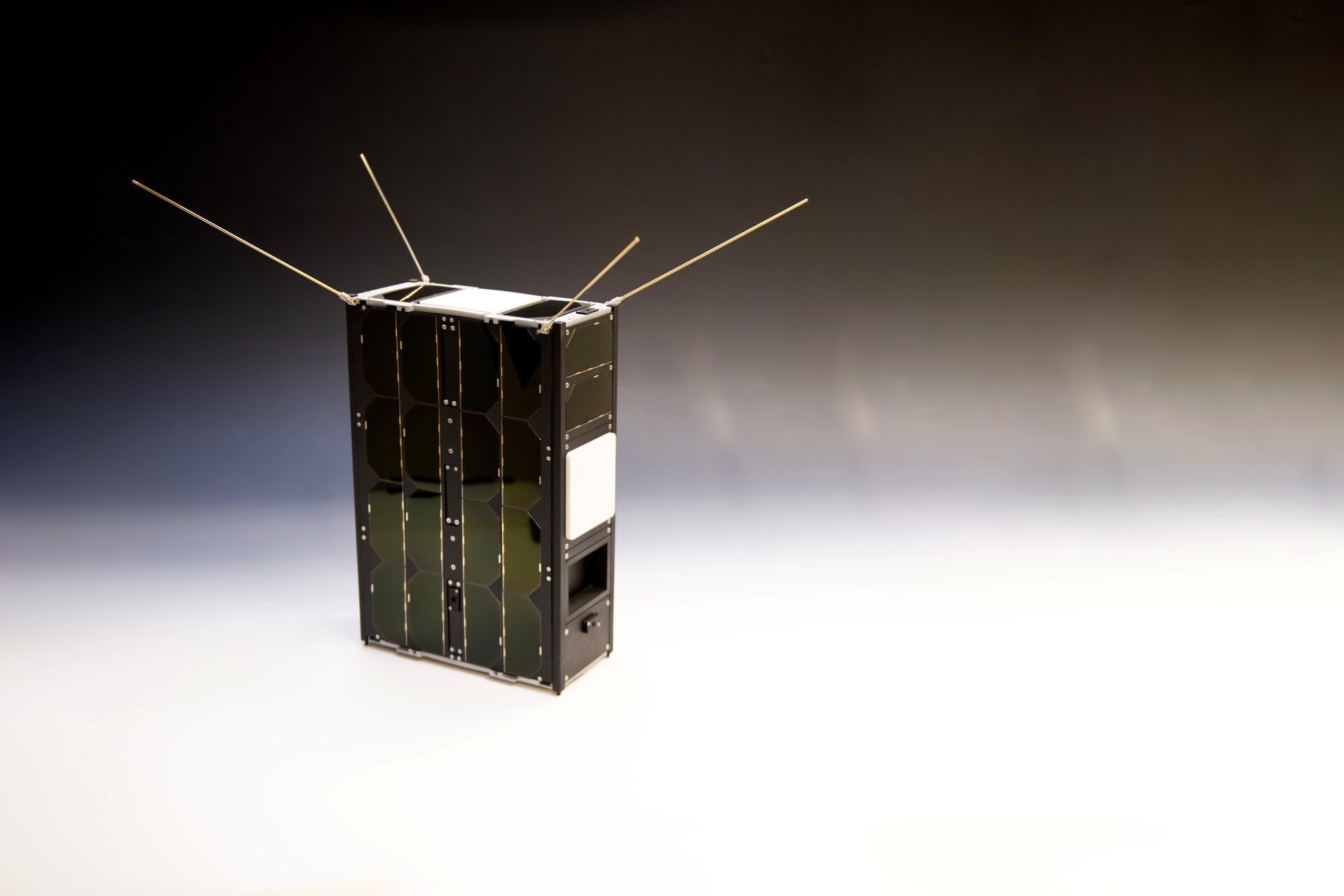
ESA reported on 2 October that GOMX-5 had launched the previous day on Transporter-18. Developed with Danish company GomSpace, the CubeSat is meant to show that a small satellite can bring propulsion online soon enough to change orbit if a collision risk emerges. ESA also plans to check new antennas, radios and onboard computers in orbit: the mission evaluates an integrated satellite platform.
GOMX-5 carries an iodine electric-propulsion subsystem designed for early orbital adjustments and collision avoidance.
An electric thruster uses onboard power to accelerate charged particles. Thrust is low, but the system is efficient and compact: a small propellant supply can change a satellite’s velocity over time. It therefore suits gradual orbital corrections rather than sudden acceleration. Chemical rockets burn fuel to produce strong thrust; electric propulsion instead accelerates propellant through electromagnetic fields. Its efficiency allows repeated small corrections with less propellant, but low thrust means operators must plan manoeuvres early. Giving a CubeSat that ability turns an otherwise passive object into a spacecraft able to manage its own path.
The challenge is startup: GomSpace aims to automate checkout, previously manual and liable to take a week, and complete commissioning within 48 hours. The satellite must verify its health and subsystems before it can respond to a hazardous conjunction.
It supports ESA’s Zero Debris approach: keep satellites manoeuvrable and limit collision fragments. It also tests a tracking solar panel and maritime receiver to detect ships and offshore platforms.
Documents and references
- European Space AgencyGOMX-5 successfully launched
- NASACubeSats Will Take Over the Skies, Thanks to Electric Propulsion
- European Space AgencyGOMX-5 integration is step towards safer seas and cleaner orbits