
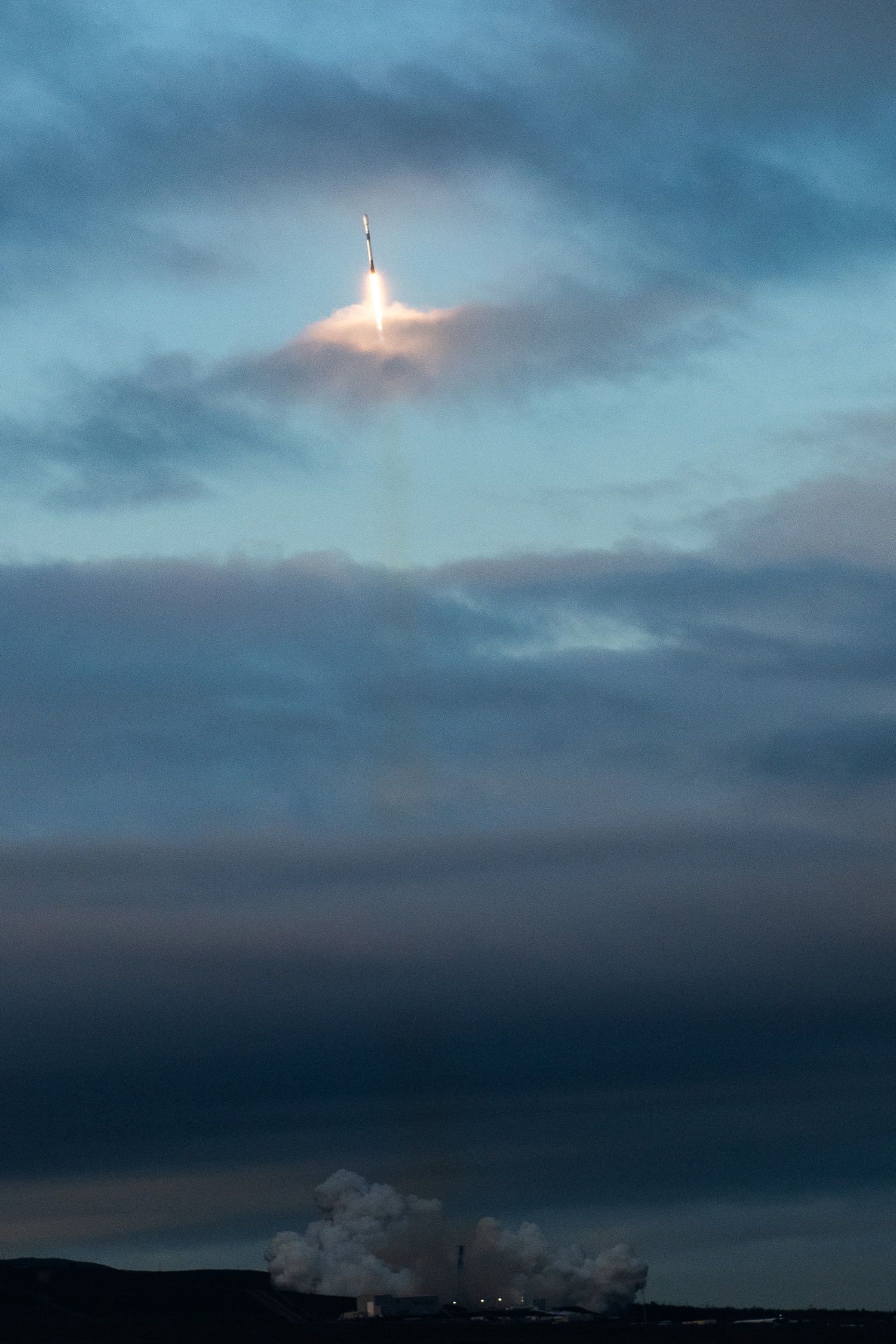
On 10 October SDA announced that 21 Northrop Grumman-built Tranche 1 transport satellites had reached orbit. Falcon 9 launched them from Vandenberg; they form the fourth orbital plane and bring the total to 84. The launch followed an automatic countdown halt on 5 October.
The spacecraft form the transport layer of a low-latency military network designed to connect users beyond line of sight. Optical links between satellites and Ka-band communications are intended to move data quickly, including information for missile warning and tracking. Multiple orbital planes distribute the network across many nodes.
The Tranche 1 factsheet describes a target architecture of 154 operational satellites: 126 for transport and 28 for tracking, plus four missile-defence demonstrators. Optical terminals, Ka-band radios and ground operations centres make up the system. Satellites in orbit undergo commissioning before the network can provide its planned functions; initial capability is expected in 2027.
The July launch put 21 York Space Systems transport satellites in orbit, bringing the total to 63. SDA then expected testing, checkout and orbit raising after insertion. Northrop Grumman’s batch continues that cadence and broadens industrial participation as teams commission each group of spacecraft.
SDA designed the proliferated constellation to keep services available if some satellites become unavailable. The agency lists rapid data transport and threat tracking among its intended uses. The next milestone is integrating spacecraft with ground operations, then checking that the mesh exchanges data reliably across the network.
Documents and references
- Space Development AgencySDA delivers fourth orbital plane of Tranche 1 satellites
- Space Development AgencyTransport Layer
- Space Development AgencyProliferated Warfighter Space Architecture Tranche 1 factsheet
- Space Development AgencySDA successfully completes third launch of Tranche 1 satellites
- Space Development AgencyFrequently Asked Questions