
On 23 October NASA detailed Artemis III, a crewed Earth-orbit flight planned for 2027. Orion will dock first with Blue Moon, whose cabin the crew will enter, then with Starship without crew ingress. The second test may last up to two hours. No lunar landing is planned.
The architecture for later lunar landings is changing in parallel. In another 23 October document, NASA said both providers had revised how their landers would meet Orion for 2028 missions. Starship would aggregate propellant in Earth orbit before taking the Orion-lander stack toward low lunar orbit; Blue Origin plans three transfer stages and an elliptical polar lunar orbit. These are concepts for subsequent Moon flights, not the two Artemis III demonstrators. NASA says readiness will determine which provider is first to land a crew.
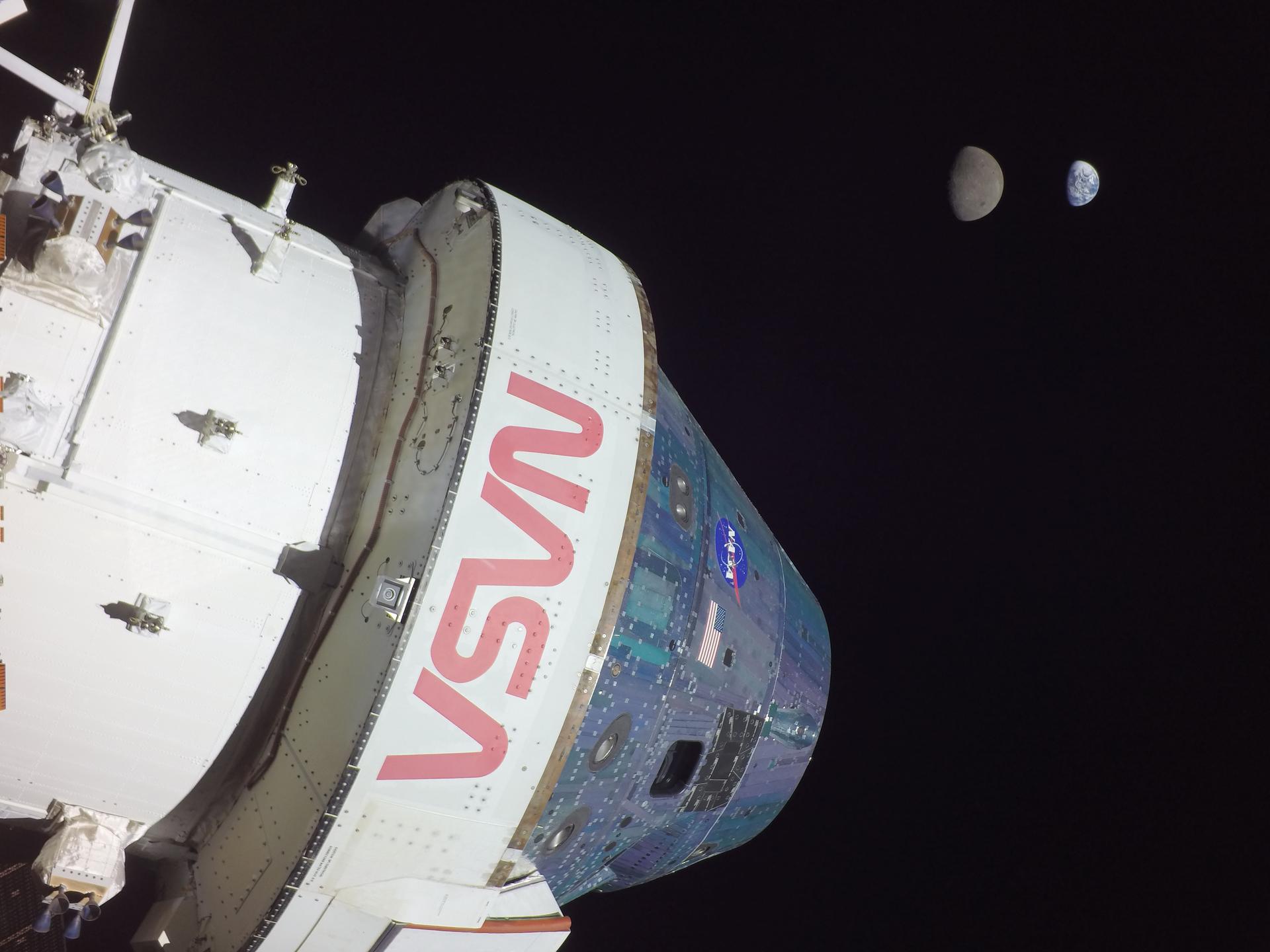
The Orion spacecraft for the flight passed a ground milestone in August when its crew module was joined to the European Service Module. ESA says the latter supplies propulsion, power, thermal control, air and water; its engines will support orbital manoeuvres and rendezvous. ESA astronaut Luca Parmitano is therefore not Europe’s only contribution to the test. Joining the two modules prepares the spacecraft for the complex trajectories now described.
NASA’s Orion reference guide describes a capsule built to support crews for days, with its supplies and onboard systems. Artemis III will use that base to focus new testing on interfaces between vehicles. While astronauts live in Orion, controllers from several organisations must share tracking, communications and approach decisions. Two successful dockings would not by themselves prove that a lander can descend to and return from the Moon, but would remove some unknowns before that step.
NASA’s public briefing on 23 October reaffirmed a 2028 target for the first crewed return to the lunar surface and the preparatory role of the 2027 flight. The dates remain targets: both demonstrators, SLS, Orion and test teams must be ready within a shared window. The next concrete evidence will be ground docking tests, launch of the test vehicles and measurements in orbit. NASA can then judge which procedures are mature enough for the following lunar mission.