
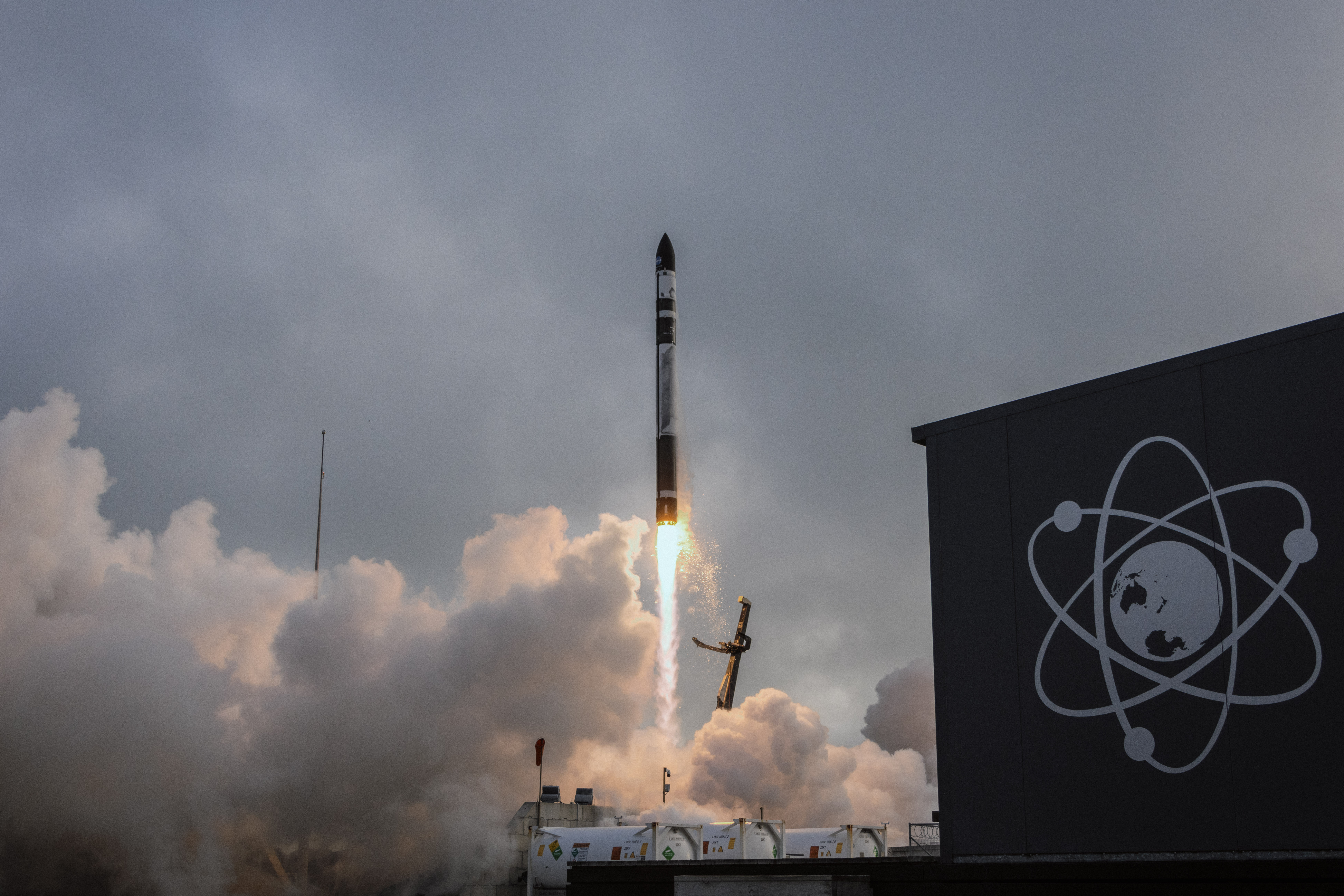
On 23 October a Rocket Lab Electron launched three HawkEye 360 satellites from Māhia, New Zealand. The “We’re Not Hawking Around” mission lifted off at 8:11 p.m. local time, or 07:11 UTC, towards a 520-kilometre orbit. The spacecraft form Cluster 16 for radio-frequency intelligence.
HawkEye 360 says it established contact with all three satellites after deployment. Its team has begun checks before service entry. Cluster 16 carries antennas designed to collect several radio-signal types while downlinking mission data. That offers more flexibility during an orbital pass: a spacecraft can use its time over an area of interest to observe while transferring results to the ground network. Part of this cluster’s capacity is assigned to a customer whose identity has not been disclosed.
HawkEye 360’s method relies on three spacecraft flying in formation. They detect radio emissions, characterise them and combine their measurements to estimate where an emitter is located. The signals may come from communications, radar or equipment interfering with satellite navigation. The output is a map of electromagnetic activity, distinct from a photograph of the observed area. It can guide maritime analysis or the monitoring of jamming and complement optical or radar imagery when the position and likely character of an emission need clarification. The company says its constellation already has more than thirty satellites.
This launch followed Cluster 15 by three days. That group rode a SpaceX Falcon 9 on Bandwagon-5 from Florida, and HawkEye 360 also contacted its three satellites and began commissioning. Clusters 15 and 16 introduce the same antenna concept for simultaneous collection and downlink. The closely spaced launches, one on a rideshare and the other on a dedicated Electron, illustrate two ways to replenish a constellation: share a larger rocket or reserve a small launcher for the customer’s preferred orbit and timing.
The companies’ relationship predates this flight. In June 2025 Electron carried Cluster 12 along with Kestrel-0A, an experimental satellite intended to test future improvements. That mission was part of a multi-launch agreement with Rocket Lab. Cluster 16 is the third Electron mission dedicated to HawkEye 360 radio-sensing satellites. For the operator, successive groups can replace older spacecraft, add reception capability and increase useful passes over monitored areas. Cluster 16’s operational contribution will follow the checks now underway after initial contact.
Documents and references
- Rocket LabWe’re Not Hawking Around mission
- HawkEye 360HawkEye 360 Successfully Launches Cluster 16 with Advanced Collection and Downlink Capabilities
- HawkEye 360Technology
- HawkEye 360HawkEye 360 Successfully Launches Cluster 15
- Rocket LabGet The Hawk Outta Here