
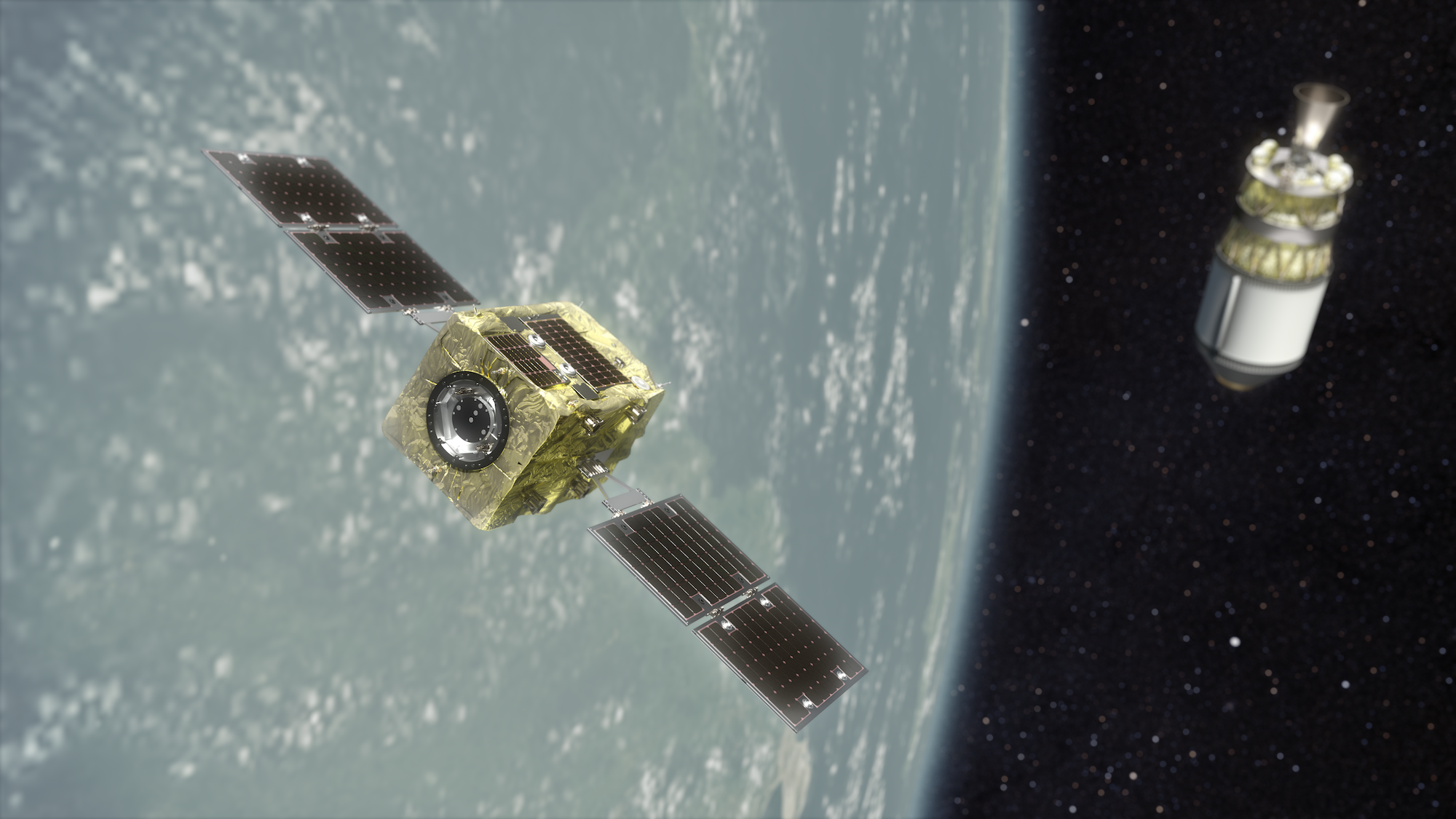
Astroscale UK announced a £15 million Ministry of Defence contract for LEDA on 28 October. With BAE Systems and Open Cosmos, it is to build, launch and operate a vehicle able to approach objects in orbit and inspect them. It aims to clarify activity near British satellites.
Britain’s September space strategy makes defence and national security central priorities. Communications, navigation and observation rely on satellites whose loss would affect far more than military operations. The strategy identifies in-orbit servicing as a possible way to extend spacecraft life and improve resilience. LEDA adds proximity and observation capability to that picture, distinct from a commercial maintenance service.
Astroscale has already flown ADRAS-J near an abandoned Japanese rocket stage. The mission approached and observed the uncooperative object and ended operations in 2026. That experience matters for LEDA: approaching an object that does not communicate its intentions requires precise measurement of its position and motion. It is a technical precedent, not evidence that the new vehicle has been built or launched.
Another Astroscale programme shows the continuity of this team: in September it was preparing ELSA-M to remove an old commercial satellite. Its expertise also covers operating near other objects and managing collision risk. LEDA directs that know-how towards a British defence need. The mission also shows how defence inspection differs from physically removing debris.
Britain’s National Space Operations Centre already combines civilian and military needs for orbital awareness. It tracks objects and risks to support safe operations. Close inspection could add detail on an object’s condition to that broader monitoring. If completed, the mission could give operators observations that an orbital catalogue cannot provide.
Documents and references
- AstroscaleAstroscale Awarded £15 million MOD Contract as UK Government Strengthens Focus on Resilience in Space
- UK GovernmentUK Space Strategy
- AstroscaleAstroscale’s ADRAS-J Mission Completes Operations, Begins Deorbit
- UK GovernmentCross-government Space Domain Awareness requirements
- AstroscaleAstroscale UK Strengthens Mission Readiness for World’s First Active Debris Removal Mission