
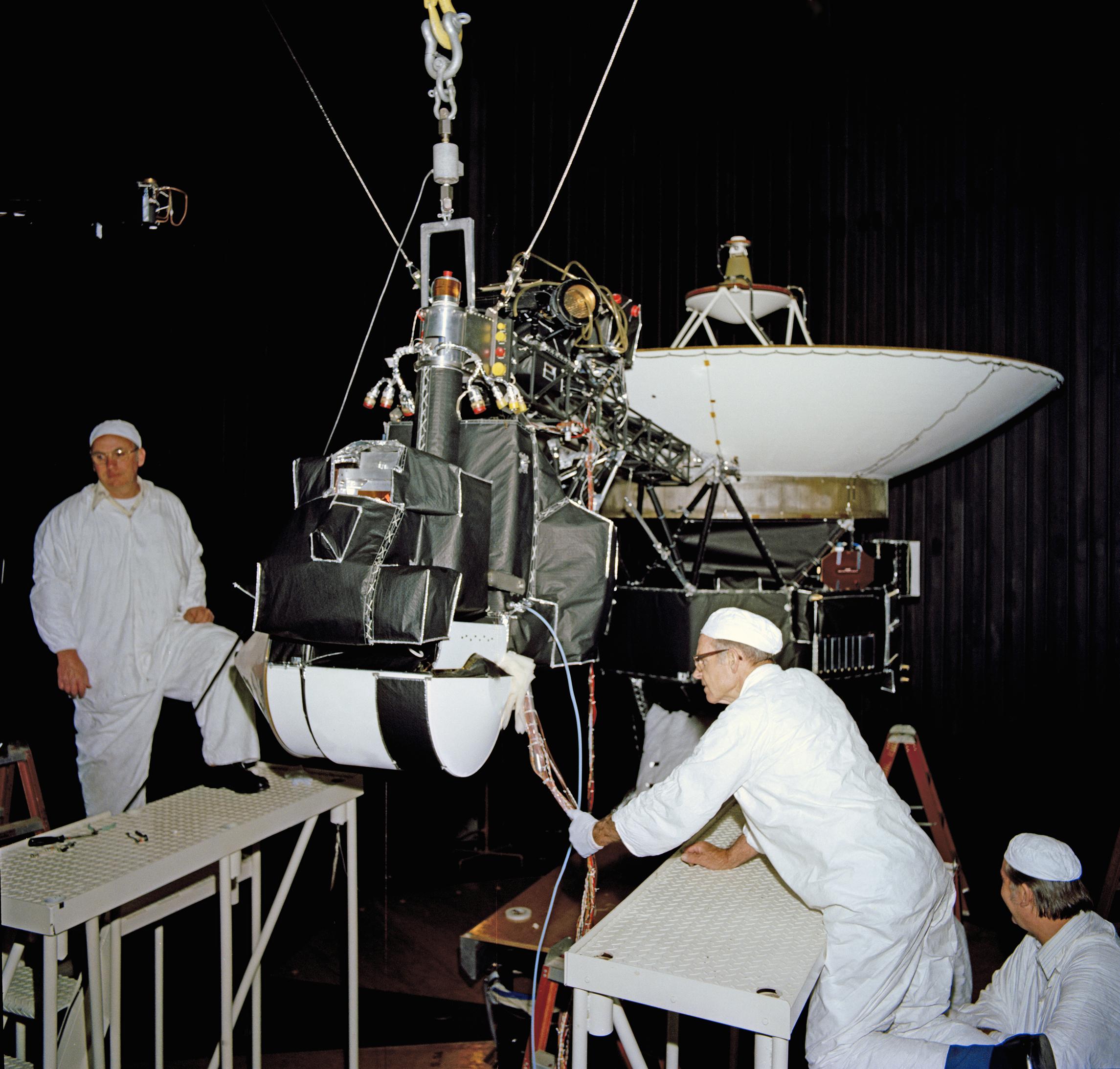
Voyager 1 switched three thermal devices to lower-power alternatives in September. Its signal vanished on 18 and 19 October, returning on the 20th. On 29 October, JPL reported that one thruster group had switched to backups and forecast the one-light-day milestone for 18 November.
The operation, nicknamed the Big Bang, was first performed on Voyager 2. There, the simultaneous switch avoided another science-instrument shutdown before the end of 2026 and should extend use of its three active instruments by at least a year. That experience prepared the intervention on the more distant Voyager 1, whose power margin is thinner.
Voyager 1 draws electricity from radioisotope generators whose output falls by roughly four watts each year. In April NASA had already switched off its low-energy charged-particle detector to protect the remaining margin. September’s switch heats sensitive parts with less electricity and, JPL says, avoids another science shutdown as early as summer 2027.
The mission status table lists two science instruments still active on Voyager 1: its magnetometer and plasma-wave subsystem. One measures the magnetic field; the other detects plasma oscillations around the spacecraft. Keeping both preserves complementary views of the interstellar environment that cameras switched off decades ago cannot replace.
Voyager data reach the Deep Space Network, with antenna complexes in California, Spain and Australia. NASA describes a science stream of about 160 bits per second and several hours of tracking each day. At such a distance, diagnosis requires waiting for a command and its response to travel in opposite directions. The network is therefore an essential part of maintaining the spacecraft.