
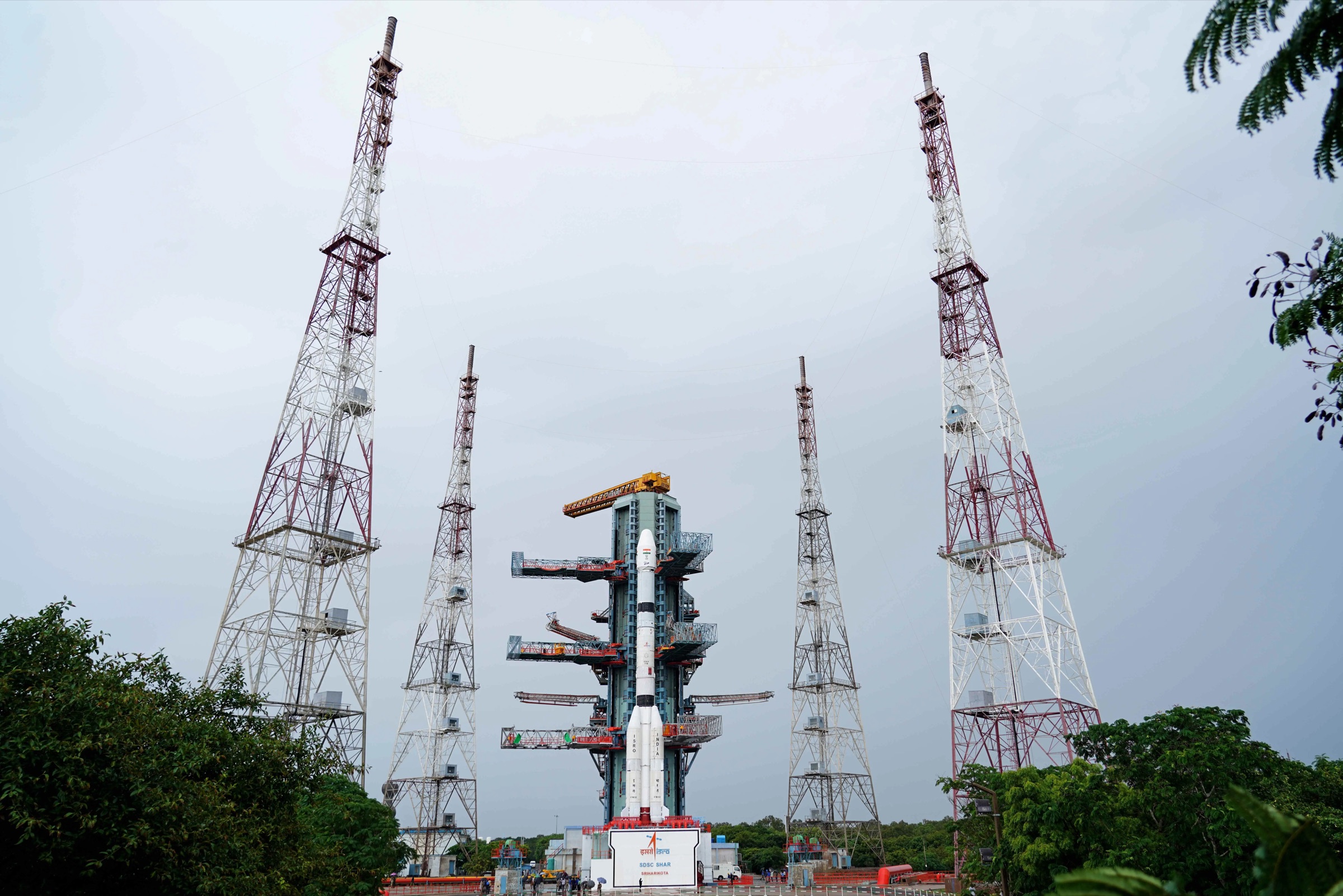
On 30 October, India’s GSLV-F18 rocket placed NVS-03 in its intended transfer orbit from the Satish Dhawan Space Centre at Sriharikota. ISRO reported a successful launch, the twentieth flight of the GSLV family. The satellite is destined for NavIC, India’s positioning, navigation and timing service.
NVS-03 is the third satellite in a new series intended to sustain the IRNSS/NavIC constellation. It carries an Indian atomic clock alongside procured clocks, components essential to measuring the travel time of navigation signals precisely. The addition of the L1 band complements the L5 and S signals already used.
ISRO’s annual report describes a five-satellite NVS series intended to replace or augment ageing spacecraft already in orbit. Renewal matters for a navigation service that relies on a constellation and ground stations, not one satellite alone. NVS-03 is part of that gradual refresh. The annual report frames the series as a way to preserve the existing service while introducing new capabilities over successive satellite deployments.
ISRO’s spacecraft list shows why renewal matters: NVS-01 provides navigation service, while NVS-02, launched in 2025, is listed as not operational. NVS-03 appears with a 30 October launch date and no operational status. The reported result is orbital insertion; usable signals depend on subsequent commissioning work.
NavIC provides a civilian positioning service and a restricted service for authorised users. Its coverage includes India and roughly 1,500 kilometres beyond it, according to ISRO’s technical documentation. The additional L1 signal is designed to make receivers more interoperable with other global navigation systems, a practical factor in adoption.